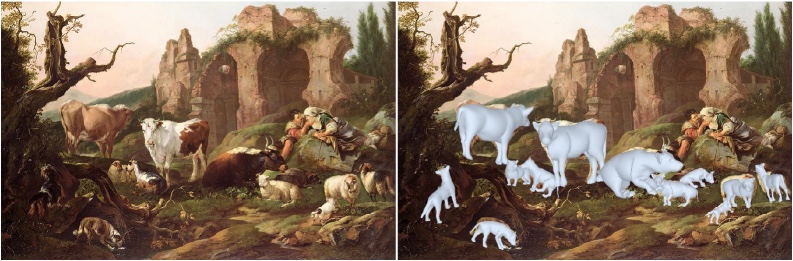
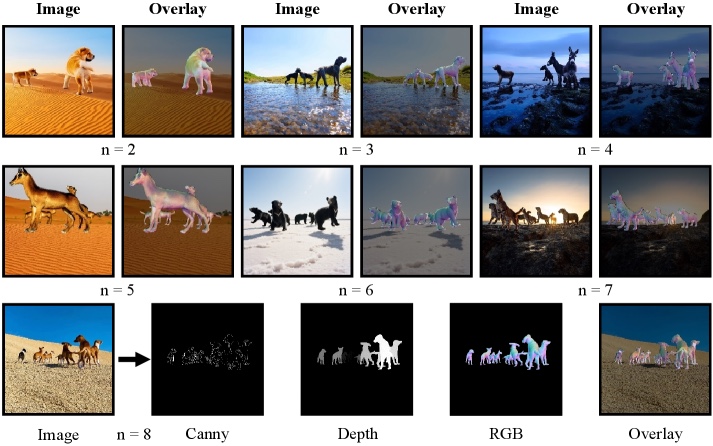
Reconstructing a single object from a photo is hard enough. Now imagine eight overlapping dogs in a chaotic backyard shot — different breeds, half-occluded, all tangled together — and a model that pulls every one of them out as a separate, posed, 3D mesh. That is exactly what SAM 3D Animal does, and it just dropped on arXiv as the newest branch of Meta’s Segment Anything family.
The Story
Back in November 2025, Meta shipped SAM 3D — two models, SAM 3D Objects and SAM 3D Body, that “3Dfy” anything in a 2D image in seconds. The Body model nailed humans. But animals are a different beast: wildly varying anatomy across species, fur that hides silhouettes, and the awkward fact that animals rarely pose alone. Most prior work quietly assumed a single, centered, fully-visible critter. The real world does not cooperate.
SAM 3D Animal — from a team across the University of Cambridge, SUSTech, Tsinghua, and IMATI-CNR Milan — is the first promptable framework for multi-animal 3D reconstruction from a single image. Built on the SMAL+ parametric animal template, it reconstructs every instance in a scene jointly, and it takes the same kind of prompts that made SAM famous: drop in keypoints to lock skeletal alignment, or paint a mask to disambiguate who-is-who in a pile of overlapping bodies.
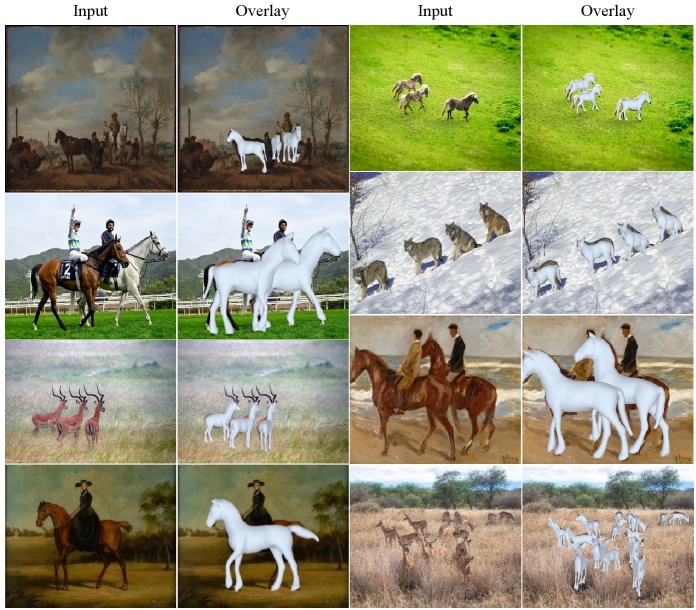
To train it, the team built Herd3D, a new multi-animal 3D dataset of 5,000+ images deliberately stuffed with the hard cases: 2-to-8 animals per frame, species interactions, and heavy occlusion. On the Animal3D, APTv2, and Animal Kingdom benchmarks, the framework posts state-of-the-art numbers against both model-based and model-free competitors.
Why You Should Care
“A model that turns animal photos into 3D” sounds niche until you sit with it. Animals are one of the last stubborn frontiers in the AI-3D pipeline. Human bodies got solved fast because we had decades of parametric models (SMPL and friends) and oceans of mocap data. Animals had neither — yet they fill our games, films, ads, and natural-history docs.
- Game & film artists: a posed, mesh-ready creature from a single reference photo is a brutal time sink today. Promptable multi-instance recovery means you can throw a real photo of a herd at it and walk away with riggable bases.
- The prompt paradigm: this is SAM’s core idea — interactive, click-to-correct segmentation — finally extended into 3D animals. If the model misreads a pose, you fix it with a keypoint instead of restarting.
- Occlusion is the headline: jointly reasoning about overlapping instances is the part that breaks naive pipelines. Solve crowds, and you unlock wildlife footage, livestock analytics, and ecology research, not just clean studio shots.

Try It / Follow Them
- Read the paper: arXiv 2605.07604 (HTML version here).
- Play with the broader family right now: Meta’s Segment Anything Playground already lets you 3Dfy objects and bodies from your own uploads.
- SAM 3D Objects and SAM 3D Body are open source — checkpoints, inference code, and datasets on GitHub. Watch that repo for the Animal weights to land.
IK3D Lab Take
The clever move here isn’t “3D animals” — it’s importing SAM’s interaction model wholesale. The lesson of the last two years of AI-3D is that fully automatic almost-right is less useful to a working artist than nearly-automatic with a fast correction loop. A keypoint nudge beats a re-roll every time. SAM 3D Animal bets on that loop, and aims it at the messiest input imaginable: a crowd of overlapping creatures in a real photo.
Honest caveat: this is a research drop, SMAL+ is still a template-driven model (don’t expect production-grade fur and muscle yet), and the Animal checkpoint isn’t on the playground at the time of writing. But the trajectory is unmistakable. Meta solved humans, then objects, now herds. The day you photograph your dog and drop a riggable, posed mesh straight into Blender is no longer a question of if — only which checkpoint.