For two years, Gaussian splatting lived in the weird zone between research demo and production workaround — powerful, but awkward to plug into real pipelines. That era just ended. In the space of a few weeks, both OpenUSD v26.03 and the Khronos glTF standard formally adopted 3DGS as a first-class data type. Splats are no longer a side format. They’re infrastructure.
The Story
Two announcements landed within weeks of each other, each significant on its own. Together they signal a turning point.
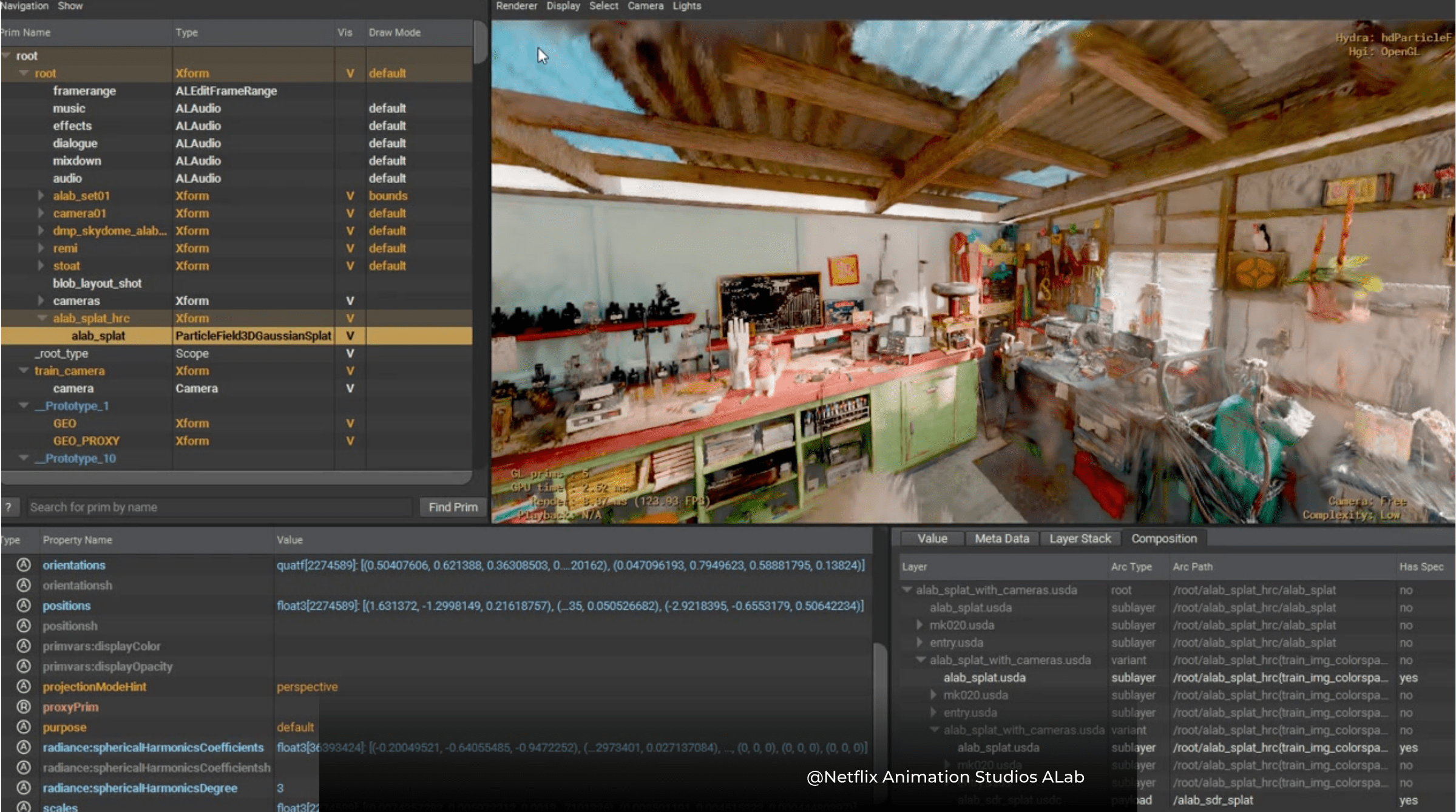
March 23, 2026 — OpenUSD v26.03 ships a Gaussian Splatting schema. The Alliance for OpenUSD released version 26.03 with a brand new primitive type: UsdVolParticleField3DGaussianSplat. That mouthful matters. It means Gaussian splat data — position, orientation, scale, colour, opacity, per-Gaussian — now lives natively inside a .usd scene, on equal footing with meshes, lights, cameras, and volumes. The release also ships a reference renderer (hdParticleField) so you can preview splats directly in usdview, plus a PLY-to-USD conversion script so you can migrate existing captures immediately. Oh, and WebAssembly build support — so USD (and your splats inside it) can now run in a browser.
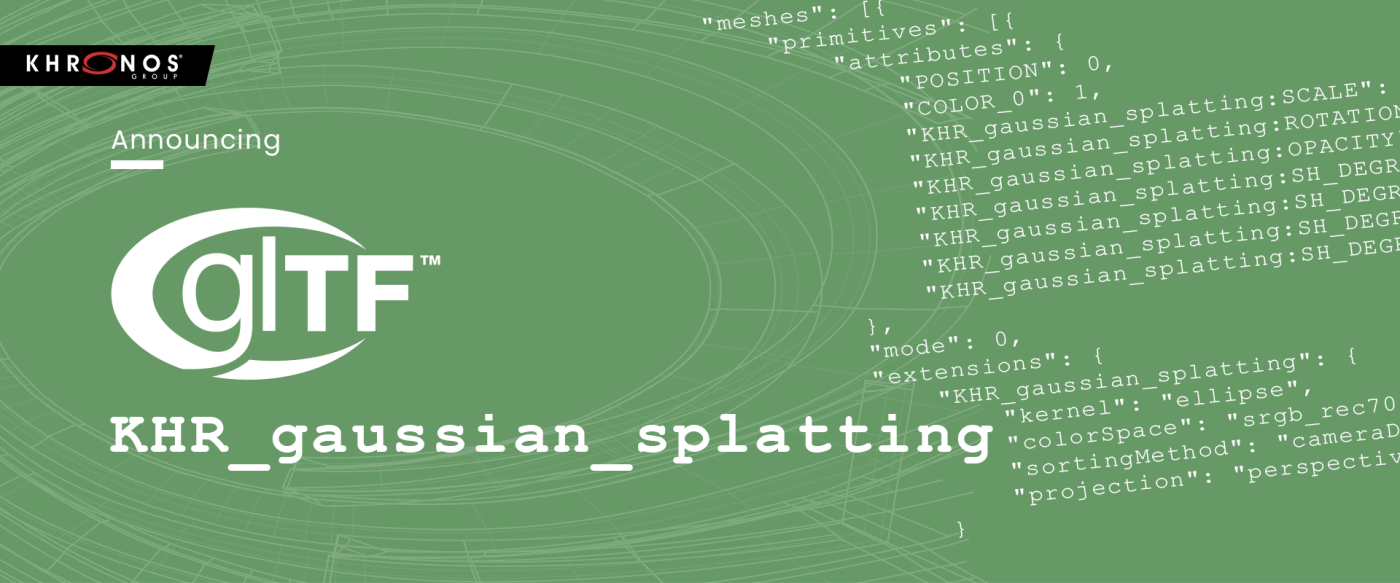
February 4, 2026 — Khronos Group publishes the release candidate for KHR_gaussian_splatting. This is the glTF 2.0 extension that standardises how splat data is stored in .glb/.gltf files. The spec is algorithm-agnostic, meaning it works with future splat variants beyond the classic 3DGS. For software that doesn’t yet render splats natively, the spec includes a graceful fallback to point cloud display — so nothing breaks. Compression extensions (SPZ format from Niantic Spatial, plus Qualcomm’s L-GSC) are already proposed, targeting up to 90% file size reduction while preserving visual fidelity. Full ratification is expected Q2 2026.
Why You Should Care
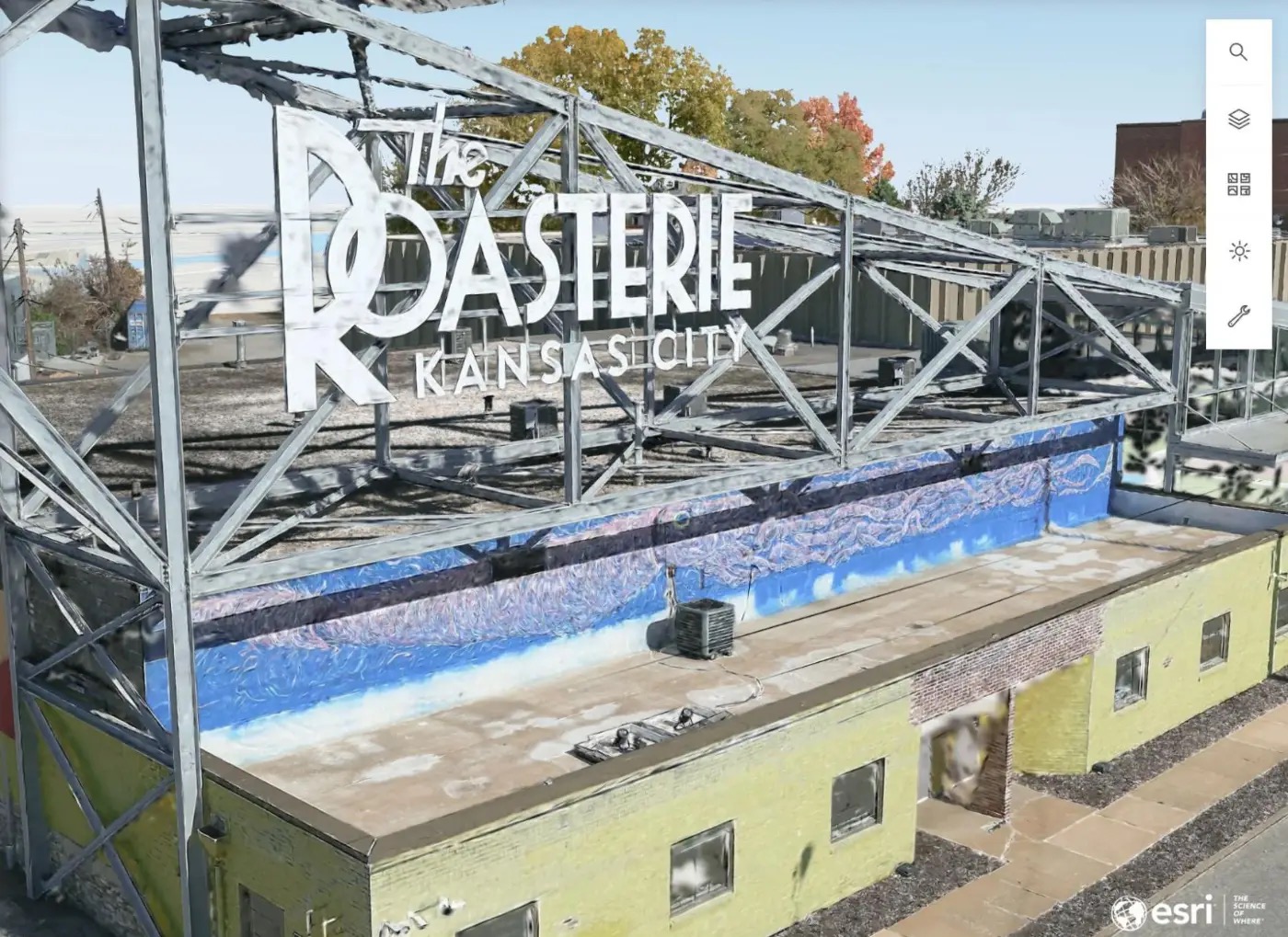
If you’re capturing real environments — architecture, heritage sites, sets, product scans — the old workflow was painful: capture → export PLY → write a custom importer → deal with it breaking in every DCC tool. The PLY format wasn’t built for pipelines. It was built for point cloud research. You were essentially carrying a live raccoon through a customs checkpoint.
With native USD support, your splat capture now flows through Houdini, Karma XPU, RenderMan, and any renderer or asset management system built on USD — which at this point means most of the VFX and virtual production industry. Framestore and ILM were already using splats in production; now they get to do it without duct tape.
On the game/web/AR side, glTF is the lingua franca — Three.js, Babylon.js, Unity, Unreal, Apple RealityKit, and every WebXR runtime understands it. A standardized .glb containing a Gaussian splat scene with 90% compression is a very different proposition from a raw PLY file. Think: AR apps that load real-world captures instantly, web viewers without custom loaders, game engines importing photogrammetry splats as first-class assets.
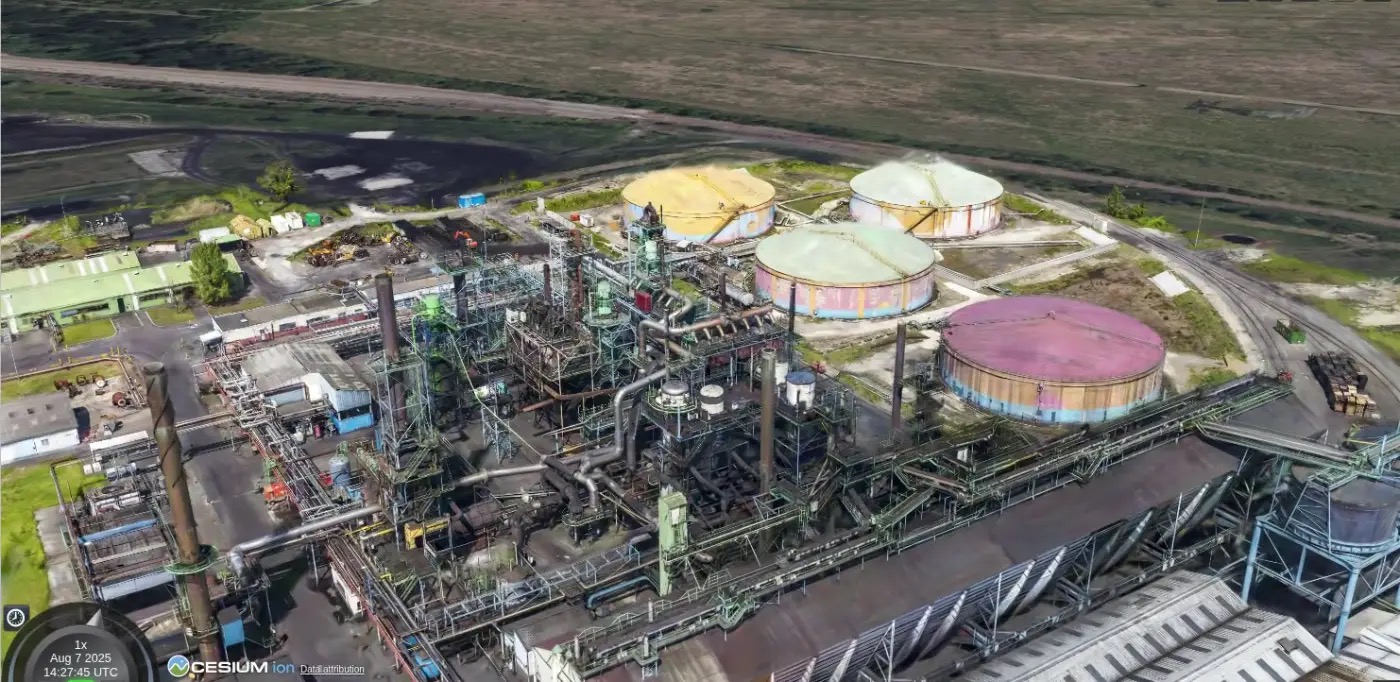
The broader arc is worth stepping back to appreciate. In 2023, Gaussian splatting was a paper out of Inria with a GitHub repo and some jaw-dropping videos. In 2024, the tools exploded — Luma AI, Polycam, RealityScan, Nerfstudio, a dozen plugins. In 2025, studios started using splats in actual productions. And now, in early 2026, the two dominant 3D interchange standards have formally said: this is a real format. That’s a three-year sprint from research novelty to industry infrastructure. For reference, it took PBR materials nearly a decade to reach the same level of standardisation.
Try It / Follow It
- OpenUSD v26.03 — github.com/PixarAnimationStudios/OpenUSD — Build from source or grab a pre-built package. The PLY converter script is included. Drop in a
.plyfrom any Gaussian splatting app and try it in usdview. - KHR_gaussian_splatting spec — Khronos announcement — The RC is public. Early adopter libraries and exporters are already appearing on GitHub.
- Capture with Luma AI, Polycam, or RealityScan — export a PLY, run through the USD converter, drop into Houdini or usdview and see it render natively. That workflow is possible today.
- Watch r/3DGaussianSplatting and radiancefields.com — the community is already experimenting with the new standards.
IK3D Lab Take
This is the kind of news that doesn’t generate a big YouTube video but changes everything quietly. Standardisation isn’t glamorous — but it’s what separates formats that die after their moment of hype from formats that become the plumbing everyone builds on.
The fact that it happened at both the DCC pipeline layer (USD) and the delivery/runtime layer (glTF) almost simultaneously suggests a coordinated moment of industry consensus: Gaussian splatting is here to stay. For 3D artists, architects, and game devs who’ve been holding off because the tooling felt too unstable — the foundation just got poured. Time to build.