Hook
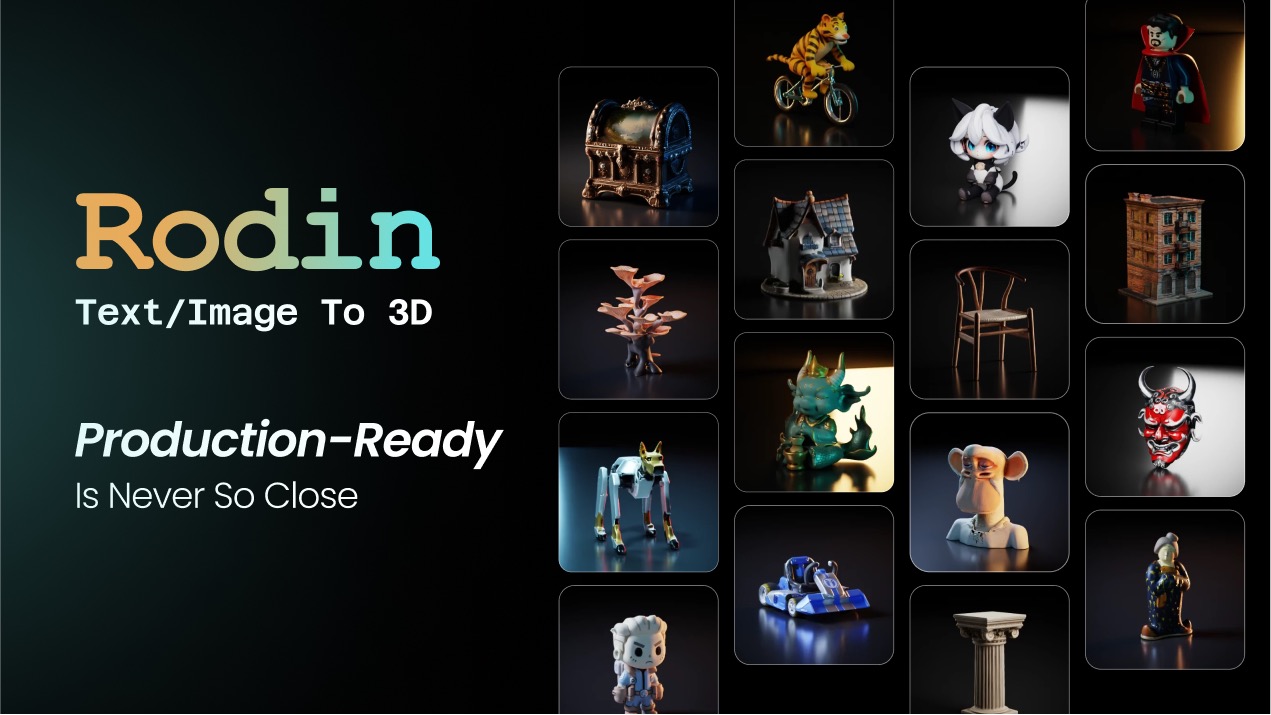
On May 26, Deemos shipped Rodin Gen-2.5 and dropped a quiet bomb: the world’s first AI 3D generator that spits out models past 10 million polygons — and can rough out a million-poly mesh in four seconds. But the headline number isn’t even the best part. The feature that actually changes your workflow is the one nobody put on the banner.
The Story
If you’ve followed the Lab, you know Rodin already. We covered Rodin Gen-2 Edit back in March when it let you select a part of a model and re-sculpt it with a text prompt. Gen-2.5 is the San Francisco team’s next swing, built on top of their SIGGRAPH 2025 Best Paper-winning research, and it goes after the thing that has always separated “AI demo” from “asset I can actually ship.”
Deemos teased the launch with a deliberately annoying riddle: “Is ultra-detailed geometry the biggest upgrade in Rodin Gen-2.5? No — not even close.” The real answer is pose-free multi-view reconstruction. You can now feed the model several photos of the same object shot from arbitrary, uncalibrated angles — no turntable, no clean studio rig, no “please photograph the front, then exactly 45 degrees” nonsense — and Gen-2.5 fuses them into one consistent 3D model. Anyone who has wrestled with photogrammetry or pose estimation knows why that’s the actual story.
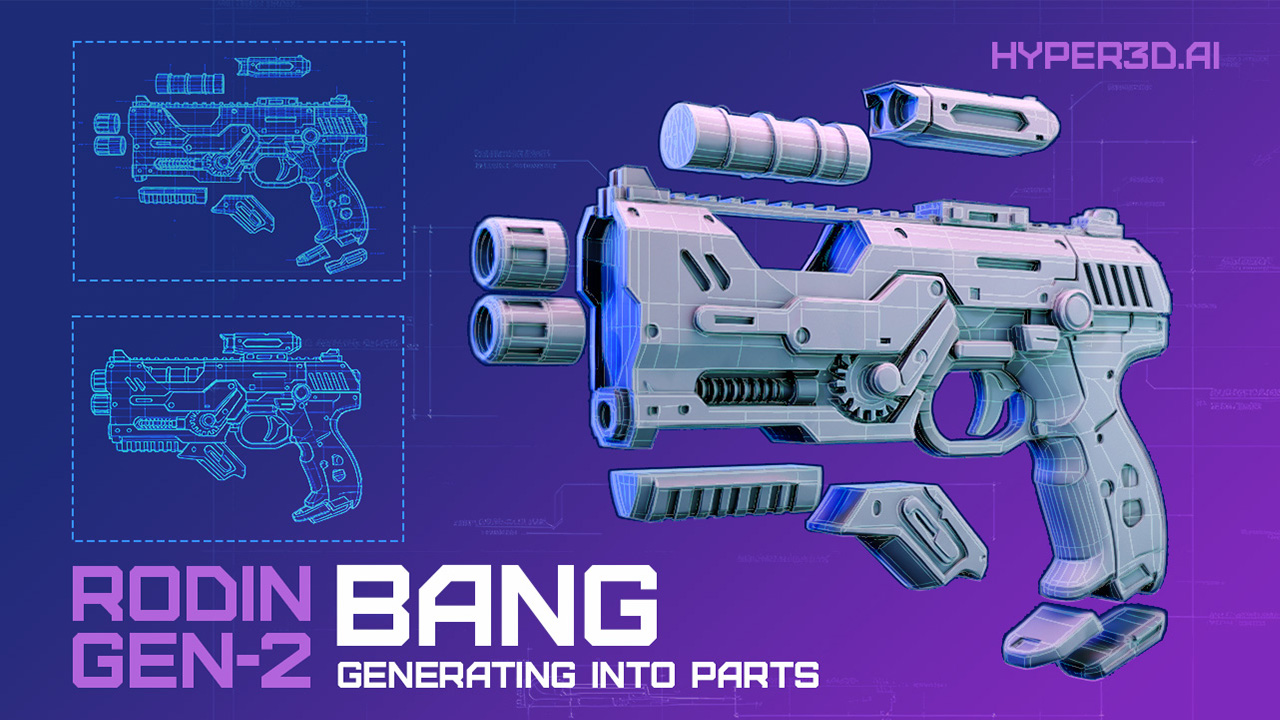
The geometry leap is real too. Gen-2.5 offers adaptive generation tiers — a ~4-second draft up through 9-, 20-, 40- and 80-second high-fidelity passes — and outputs raw meshes north of 10M polygons when you want maximum detail. Crucially, it doesn’t stop at a triangle soup: you can request quad meshes for clean editing, or smart low-poly versions for game engines and AR. Texturing went 3D-native, with proper 360° coverage and consistent PBR materials up to 4K — including a delighting pass that strips baked lighting into clean albedo maps.
Why You Should Care
Most text/image-to-3D tools have been stuck in “cute prototype” territory: lovely silhouettes, mushy topology, and textures that fall apart the second a camera moves around the back. Three things in Gen-2.5 attack that directly:
- Topology you can actually use. Quad output and smart low-poly mean the result lands in Blender or Unreal without a retopo nightmare.
- Multi-view in the wild. Pose-free reconstruction turns a handful of casual phone snaps into a usable model — a genuine bridge between photogrammetry and generative 3D.
- Cost. NVIDIA’s own case study has Lowe’s using Rodin to build a 30,000+ item catalog at under $1 per model. That’s e-commerce scale, not hobby scale.
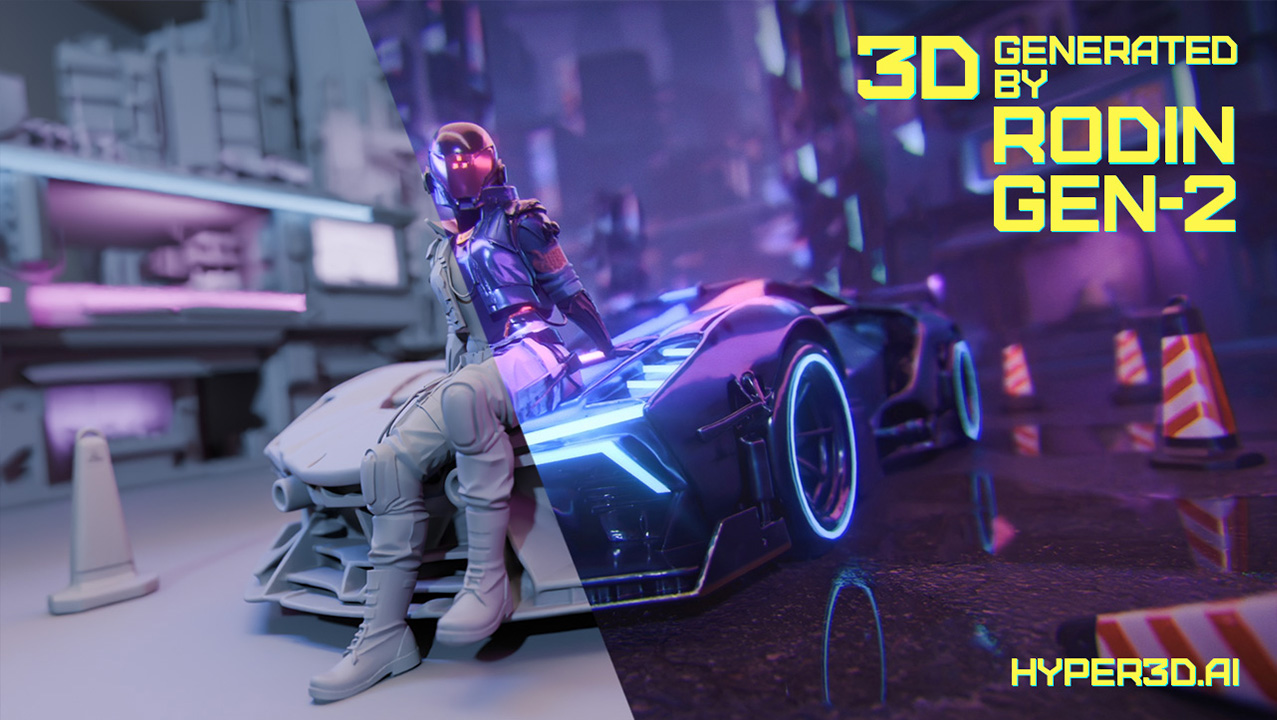
Be honest about the limits, though. 10M-polygon raw output is impressive but heavy — you’ll be leaning on that smart low-poly path for anything real-time. Multi-view fusion is only as good as your reference coverage; blind spots still get hallucinated. And like every generator, it’s a brilliant starting block, not a finish line. The artists winning with this stuff treat it as a 90%-of-the-way-there sculpt they then own and refine.
Try It
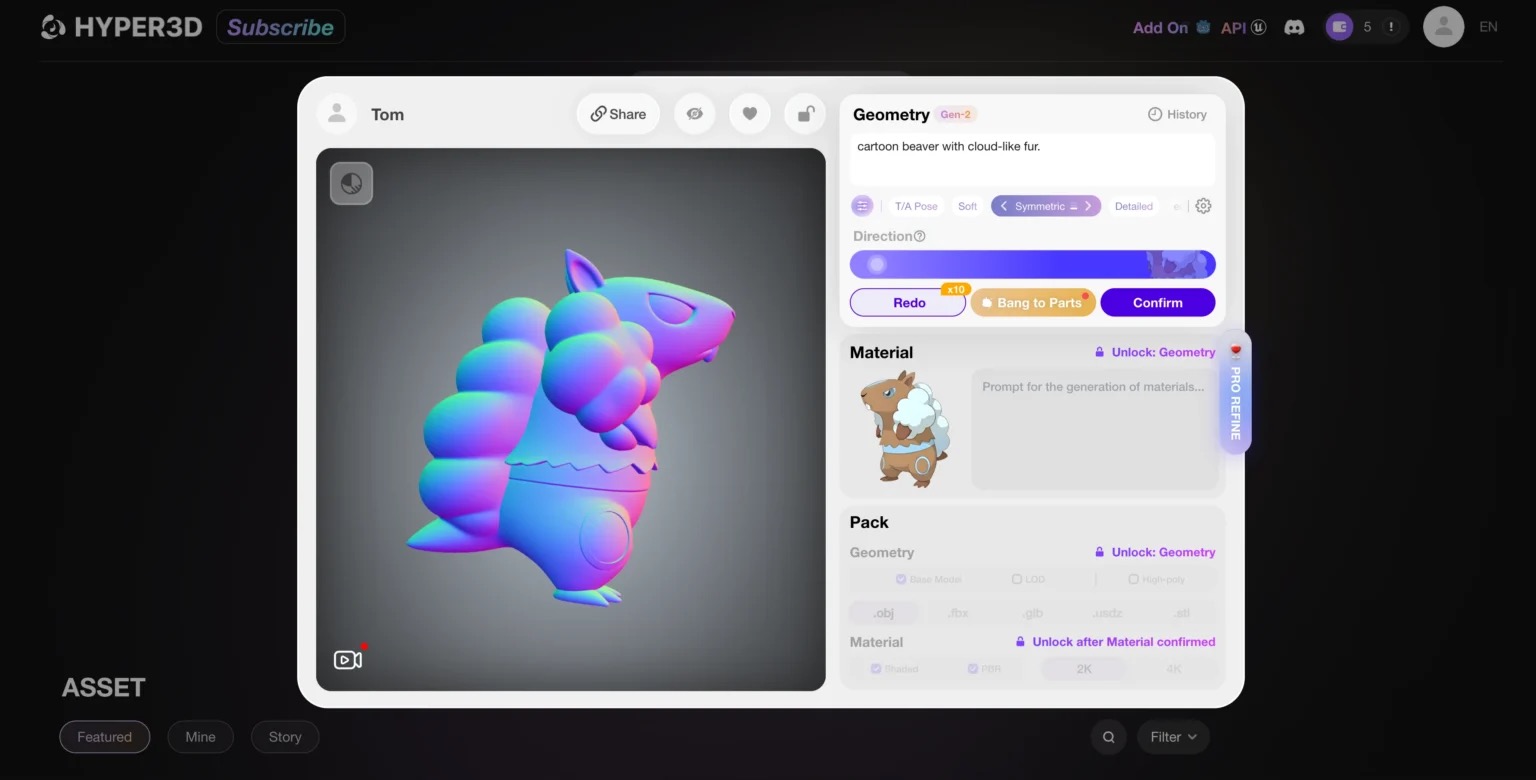
Gen-2.5 is live right now through the Hyper3D web app, the API, and enterprise deployment. Generation is free to preview; you pay per download on a credit model (roughly $0.50–$1.50 per asset depending on complexity), and there’s a $1 first-month promo to kick the tires. Exports cover GLB, FBX, OBJ, USDZ and STL, so it slots into a Blender, Unreal, or 3D-printing pipeline without friction. Follow Deemos at @DeemosTech for the multi-view demos — that’s where the real magic shows up.
IK3D Lab Take
The 10-million-polygon flex will grab the headlines, but Deemos is right — it’s not the point. Pose-free multi-view is the unlock. The whole promise of generative 3D was “give it what you have and get a model back,” and “what you have” is almost never a clean, calibrated capture — it’s five messy photos off your phone. Gen-2.5 meeting you there is more important than any polygon count. Pair that with usable quad topology and you’ve got the rarest thing in this space: an AI 3D tool that respects how artists actually work. Feed it your reference, but keep your sculpting brush warm — the last 10% is still yours.