For two years, every “AI for 3D” headline ended the same way: open a browser, paste a prompt, copy the result back into Blender. On April 28, Anthropic burned that workflow down. Claude now lives inside Blender, SketchUp, Autodesk Fusion, Adobe Creative Cloud, Ableton, Resolume, Affinity, and Splice. Not as a side panel reading your screen — as a real participant with hands on your Python API.
The Story
Anthropic dropped Claude for Creative Work with nine launch partners and one big idea: stop pretending the chatbot is the product. The product is the connector — a thin, MCP-based bridge that lets Claude introspect a scene, write a script, run it, read the result, and iterate. The Blender connector was built by the Blender devs themselves, and Anthropic became a Corporate Patron of the Blender Development Fund to keep the Python API healthy enough to support this kind of work.
The lineup is more interesting than another “we partnered with Adobe” press release would suggest. Look at who is on it:
- Blender — natural-language interface to the Python API. Analyze a scene, debug a broken modifier stack, batch-rename 400 collection objects, write a custom operator on the fly.
- SketchUp — describe a room or a site concept in plain text, get a SketchUp-ready model to refine.
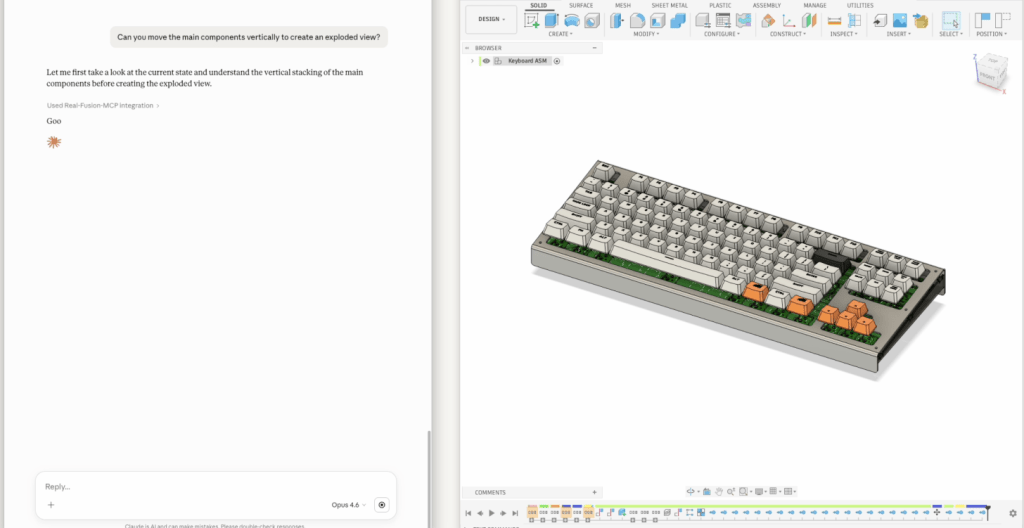
- Autodesk Fusion — parametric CAD via conversation. Modify a feature tree, sketch a profile, regenerate.
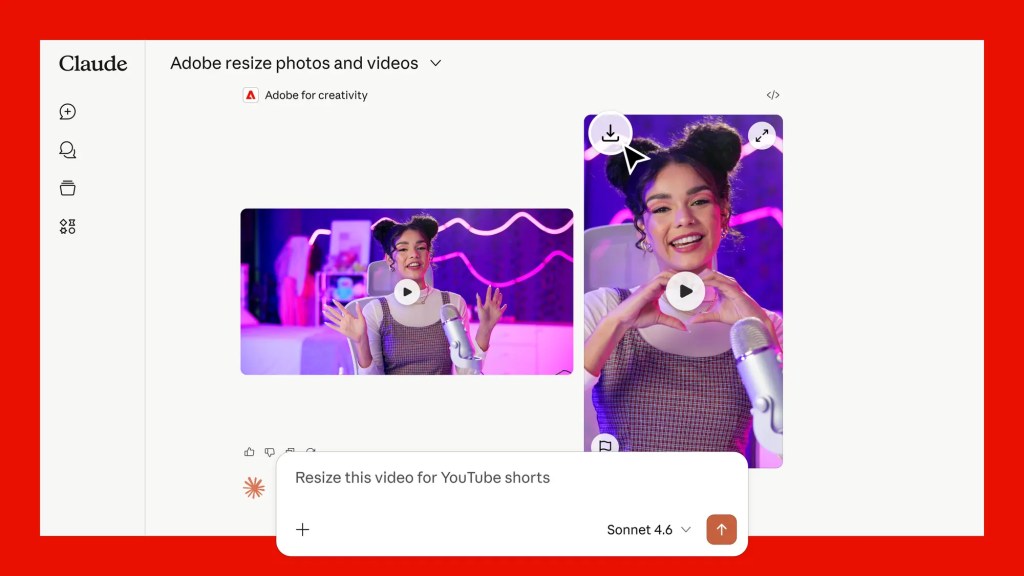
- Adobe for Creativity — one connector, 50+ Creative Cloud apps. Photoshop, Premiere, Express.
- Ableton — Claude grounded in official Live and Push docs. Stop guessing about racks and sidechain routing.
- Resolume Arena & Wire — real-time control for VJs. The first AI integration that actually fits a live show.
- Affinity by Canva, Splice — production housekeeping and royalty-free sample search.
The architectural choice that matters: everything is built on MCP. The Blender connector isn’t a Claude product — it’s an open protocol implementation that any MCP-capable model can talk to. Anthropic ships the partnership; the ecosystem inherits the plumbing.
Why You Should Care
Three things shift the moment you actually use this:
1. The copy-paste tax disappears. “Generate a Python script that rigs a chain of 12 bones along a curve” used to mean: prompt, copy, paste into Blender’s text editor, run, read traceback, paste traceback back into the chat, repeat. Now Claude runs the script itself, reads the error, and fixes it without your hands leaving the model.
2. Cross-app pipelines become one conversation. “Re-export every material from this Blender file as PBR textures, drop them in a Photoshop document with the right blend modes, and prep a Premiere sequence for the turntable render.” That sentence used to be a Tuesday afternoon. With three connectors active in the same session, it’s a paragraph.
3. The MCP bet just got validated at scale. Every studio that hesitated to commit to an AI vendor lock-in now has a paved road: build to the protocol, swap the model later. That’s the part the press releases are under-selling.
Try It / Follow Them
- Official announcement → anthropic.com/news/claude-for-creative-work
- Enable the Blender connector inside Blender 5.1 (the Blender Foundation has install docs on the Development Fund page).
- Connectors are toggled in Claude under Settings → Connectors. You’ll need a paid plan and the desktop app for the local-software bridges.
- 9to5Mac has the cleanest plain-English breakdown → read here.
IK3D Lab Take
This is the first AI-for-3D announcement in two years that doesn’t make us roll our eyes. Not because Claude is suddenly better at modeling — it isn’t, and Anthropic is honest about that (“Claude cannot replace a creator’s taste and imagination”). It’s because the shape of the integration is finally right. Tools meet the artist where the artist already works. The model writes Python; you keep taste. The protocol is open; vendors compete on quality, not lock-in.
The funny part: Anthropic just spent its competitive moat — model quality — on something deeply unsexy: making other people’s software better. That’s a bet that the next decade of creative tooling looks less like ChatGPT and more like a swarm of specialized agents living inside the apps you already love. We agree. And if Blender’s Python API stays as healthy as that Patron donation suggests, the next 12 months in 3D are going to be very loud.
Now go install it. The era of “AI assistant that lives in another tab” is officially over.