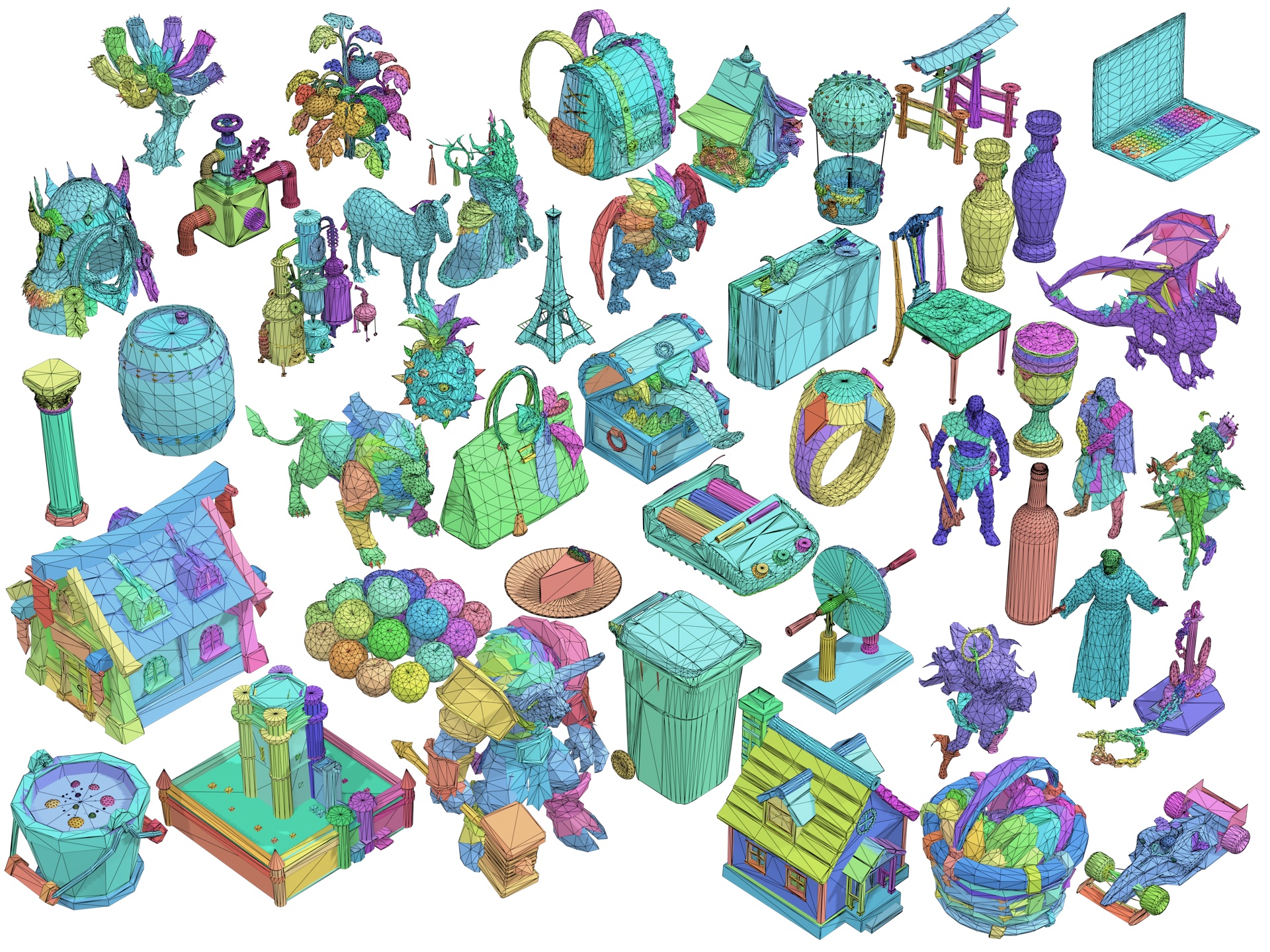
Every AI 3D tool can hand you a shape. Almost none can hand you a shape you’d actually want to open in Blender. The mesh underneath is usually a melted mess of triangles — impossible to edit, animate, or optimize.
Meshy just dropped a paper that attacks that exact problem. It’s called Meshy T2, and it builds artist-friendly meshes from a single image in a median of 6 seconds. Not minutes. Seconds.
The Story
If you follow the Lab, you know we care a lot about the wireframe. We covered MeshRipple in July — a research paper arguing that the real unsolved problem in AI 3D isn’t the shape, it’s the topology. The edges. How the surface is wired together.
Meshy T2 is the production answer to that same question. It comes from Meshy AI, the team behind one of the most-used text-to-3D tools on the planet. The paper landed on arXiv on July 28, 2026, and the code repo went up in early August.
Here’s why it matters. Most “artist-mesh” generators — MeshAnything, BPT, DeepMesh — write the mesh out one vertex at a time, like typing a sentence letter by letter. It’s slow (49 to 1210 seconds per model) and fragile. One wrong token early and the whole mesh falls apart. Their success rate can drop below 30%.
How It Works
Meshy T2 throws out the one-vertex-at-a-time approach. Instead it uses flow matching — the same fast generation math behind modern image models — and runs it in two stages.
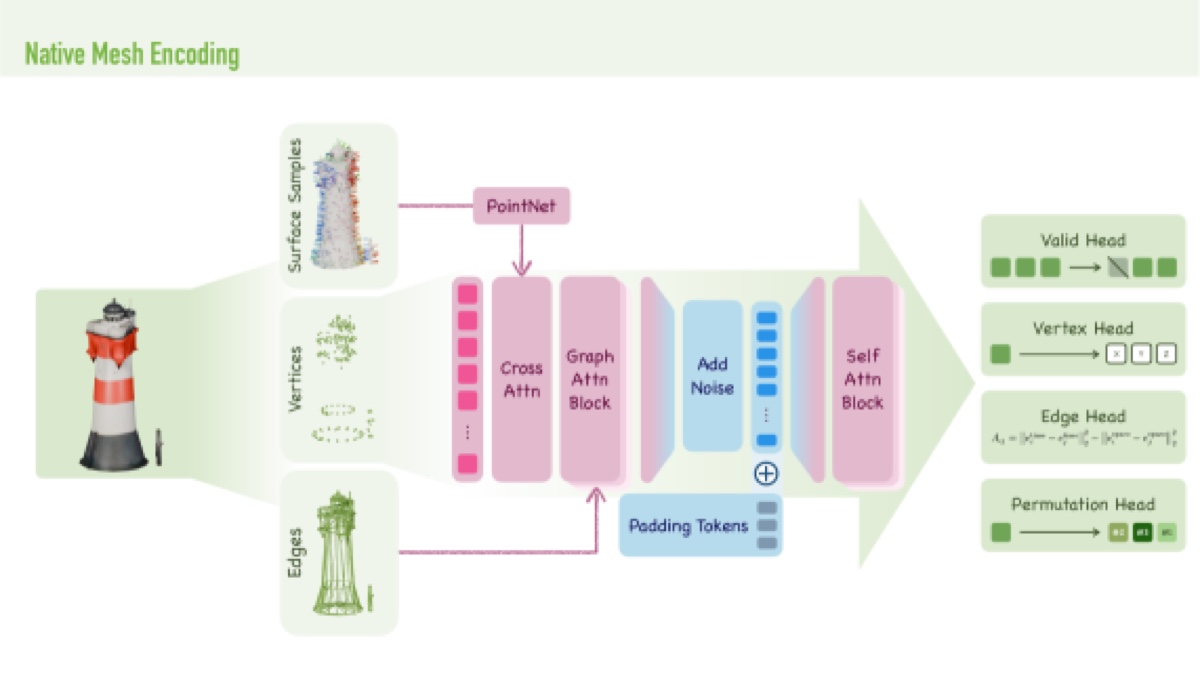
Stage one looks at your reference image and blocks out a rough 64³ voxel shape, a coarse 3D sketch. Stage two fills that scaffold with the real mesh: every vertex, every edge, and the face winding order, all decoded in a single pass. No welding, no rounding, no quantization. The geometry stays exact.
The clever part is the vertex-set VAE. It encodes a mesh as one continuous token per vertex, and because vertices and edges are generated together, multi-part objects split into clean connected pieces on their own. No separate part-by-part step needed.
Why You Should Care
Three numbers tell the whole story.
6 seconds. That’s the median time from image to finished mesh — over an order of magnitude faster than the autoregressive crowd. Fast enough to actually sit inside a creative loop instead of a coffee break.
100% success rate. On the paper’s retopology test, it finished a valid mesh every single time. The old methods managed between 28% and 96%. When a tool fails one time in three, you can’t build a pipeline on it. This you can.
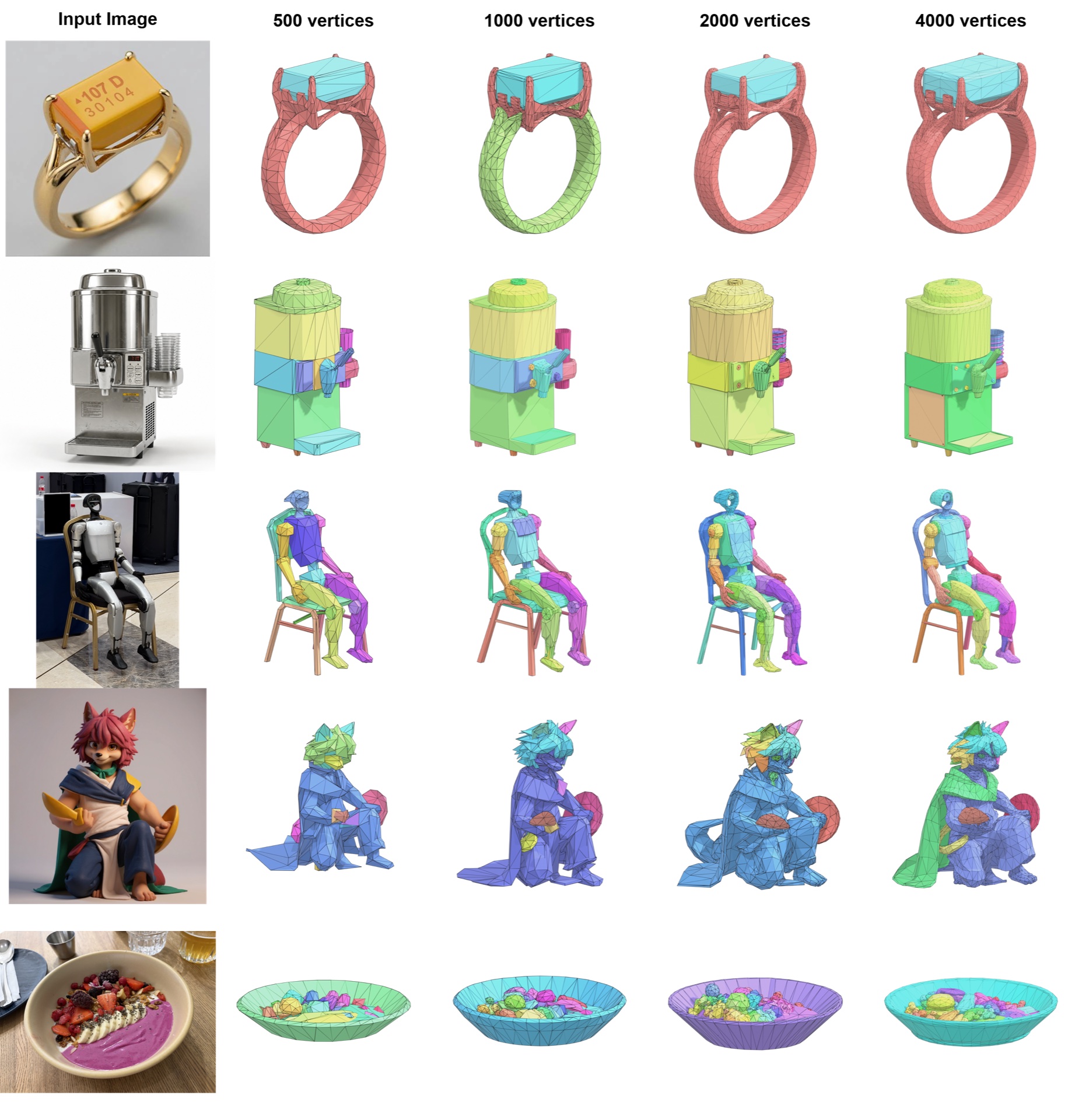
You set the face budget. Before it decodes, you tell it how many vertices you want. Roughly two faces per vertex. Need a lightweight game asset? Ask for it. Need denser hero geometry? Ask for that. The topology comes out clean either way — the kind of edge flow you’d normally pay a retopo artist to make.
Try It / Follow Them
A heads-up on honesty: as of early August, the GitHub repo is a placeholder. Code and weights are “coming soon” under a non-commercial license (CC BY-NC-SA 4.0). So you can’t run it locally yet.
But Meshy ships fast, and their existing platform at meshy.ai already does text- and image-to-3D. Expect this topology engine to land there. Read the paper, star the repo, and watch for the release.
IK3D Lab Take
Speed was never the interesting part of AI 3D — plenty of tools are fast at making garbage. The interesting part is whether the thing they make survives contact with a real editor. Meshy T2 is one of the first that clearly does: exact geometry, a face count you control, and topology that decomposes into parts on its own.
Pair the fast production tool with the research it echoes — Meshy T2 alongside MeshRipple — and you can feel the whole field turning a corner. The dead-mesh era of AI 3D is ending. What comes out the other side is a shape you can actually build on. That’s the one that matters to us.


This is a fascinating development for AI-assisted 3D workflows. The focus on topology rather than just visual quality is especially important for artists, since a beautiful model is not very useful if the mesh becomes difficult to edit, animate, or optimize. The combination of fast generation, controllable face budgets, and cleaner topology could make AI-generated assets much more practical for real production pipelines. I’m particularly interested to see how Meshy T2 performs once the code and weights are publicly available.
Meshy T2 sounds like a dream for Blender artists. But since I’m really into NBA 2K27 builds right now, I’ve been using 2k27.org to check Badge Requirements and compare player builds. It is way more practical for my gaming needs than worrying about 3D topology. Great find on the AI tool though! Badge Requirements