Hook
Unity just flipped the switch on the thing it has been teasing all year: as of May 1, 2026, Unity AI is in open beta for every Unity 6 developer. Not a closed waitlist, not a GDC sizzle reel — it is in your Editor right now. An agentic assistant that plans before it builds, generators that spit out materials, sounds, sprites and 3D assets, and a rollback system for when the robot guesses wrong. This is the moment the “prompt-to-game” pitch stopped being a keynote promise and became a menu item.
The Story
Unity has been circling generative AI for two years, but the early bets (Muse, Sentis) felt bolted on. The 2026 version is different because it lives inside the project. The headline piece is an agentic in-Editor assistant that understands your scene hierarchy, your scripts, and your asset layout — then acts on them. Ask it to wire up vehicle controls for a demolition-derby prototype and it writes the C#, sets up the components, and drops the placeholders in.
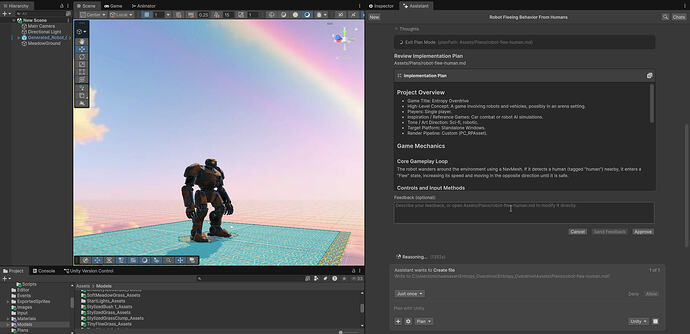
The smartest design decision is Plan Mode. Instead of letting the agent loose to mutate your project on a vibe, it first drafts an implementation plan you read and approve. It is the same “show me the diff before you commit” instinct that makes coding agents trustworthy, ported to game dev. Paired with a checkpoint and rollback system, you get a safety net: if the agent’s pass makes things worse, you snap back to the last known-good state.
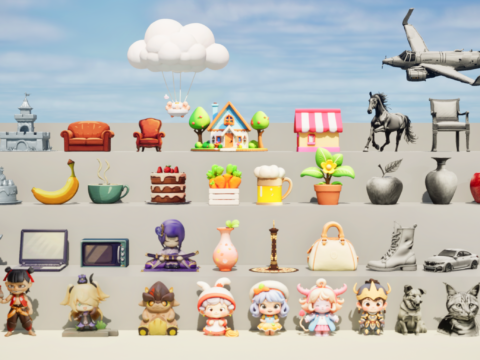
Around the assistant sits a stack of generators for the unglamorous-but-constant work: materials, sounds, cubemaps, and 2D/3D placeholder assets. There is a Profiler analysis mode that reads your performance data and suggests optimizations, a Figma-to-UI workflow, and custom editor-tool generation so the agent can build you a bespoke inspector on request.
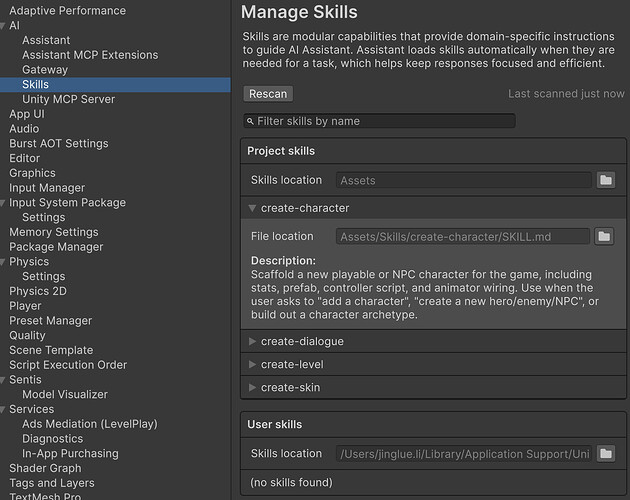
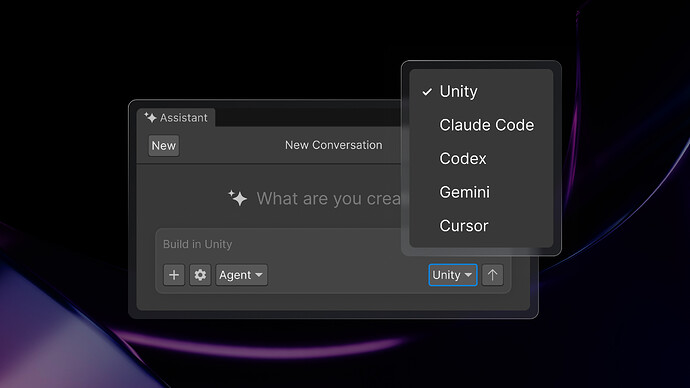
Two pieces matter for power users. Skills are customizable, project-specific modules — you teach the agent your conventions once and it stops reinventing your architecture every prompt. And the AI Gateway lets you bring your own third-party model keys, plus there is a Unity MCP Server so external IDEs and LLMs can drive the Editor. That openness is a real signal: Unity is not trying to lock you into one black-box model.
Why You Should Care
If you build games — solo, indie, or studio — the boring 60% of the job (placeholder art, glue scripts, UI scaffolding, profiler spelunking) is exactly what this targets. That is the right place to aim. Nobody dreams of hand-wiring a settings menu; everybody wants more hours for design and feel. An agent that understands project structure and proposes a plan first is far more useful than yet another text-to-image bolt-on.
It also lands in a loaded moment. Unity’s own developer surveys this year showed a chunk of the community wary of AI features, and a CEO promising you will soon “prompt full casual games into existence” is the kind of line that makes craftspeople flinch. The honest read: the generators are explicitly framed for placeholder assets, and the assistant is positioned as productivity, not replacement. Treat it as a very fast junior who needs supervision, and the Plan Mode + rollback combo is what makes that supervision practical.
Try It / Follow Them
- Requirements: Unity 6 or above — Unity AI is built into the Editor, no separate install.
- Personal Edition: 14-day trial with 1,000 one-time credits, then $10/month for 1,000 monthly credits, with extra bundles available.
- Pro / Enterprise / Industry: included with your seats, 3 concurrent connections via the AI Gateway.
- One gotcha: Personal Edition still needs a paid subscription even if you only use the Gateway to connect your own external model.
Start with a throwaway prototype, not your shipping project. Give it a clear, scoped task (“build a pause menu with resume, settings, quit”), read the plan, then let it run with a checkpoint set. Details and the feature list are on unity.com/features/ai and the open beta announcement.
IK3D Lab Take
This is the most credible “AI in your engine” move we have seen, precisely because it is the least flashy. Plan-before-act and one-click rollback are not demo candy — they are the trust mechanics that decide whether an agent survives contact with a real project. The generators making placeholders is the correct, humble framing; the open Gateway is the part that earns goodwill. The open question is craft: will Unity AI free up time for the design work that makes a game sing, or quietly normalize shipping the placeholder? That is on us, not the tool. For now, the verdict is simple — if you are on Unity 6, this is a must-try this week.