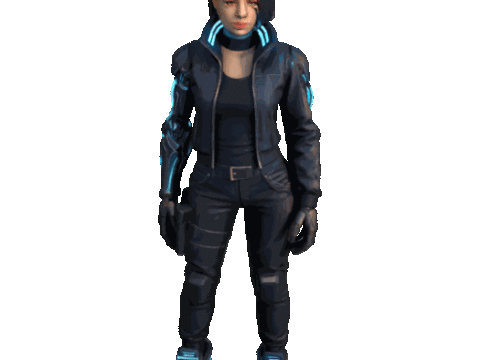
For years, the single hardest problem in AI character art wasn’t making a pretty image — it was making the same character twice. Turn your hero to face left and the nose drifts. Change the outfit and suddenly it’s a different person. That “face drift” tax is exactly what has kept AI out of serious comics, animation and character-modeling pipelines. It just got a lot cheaper to pay.
Alibaba’s open-weight Qwen-Image-Edit-2511, now running as a native workflow inside ComfyUI, is the first freely-downloadable model that holds a character’s identity across edits well enough to build a real turnaround sheet from a single reference. And a turnaround sheet, as any 3D artist knows, is the front door to image-to-3D.
The Story
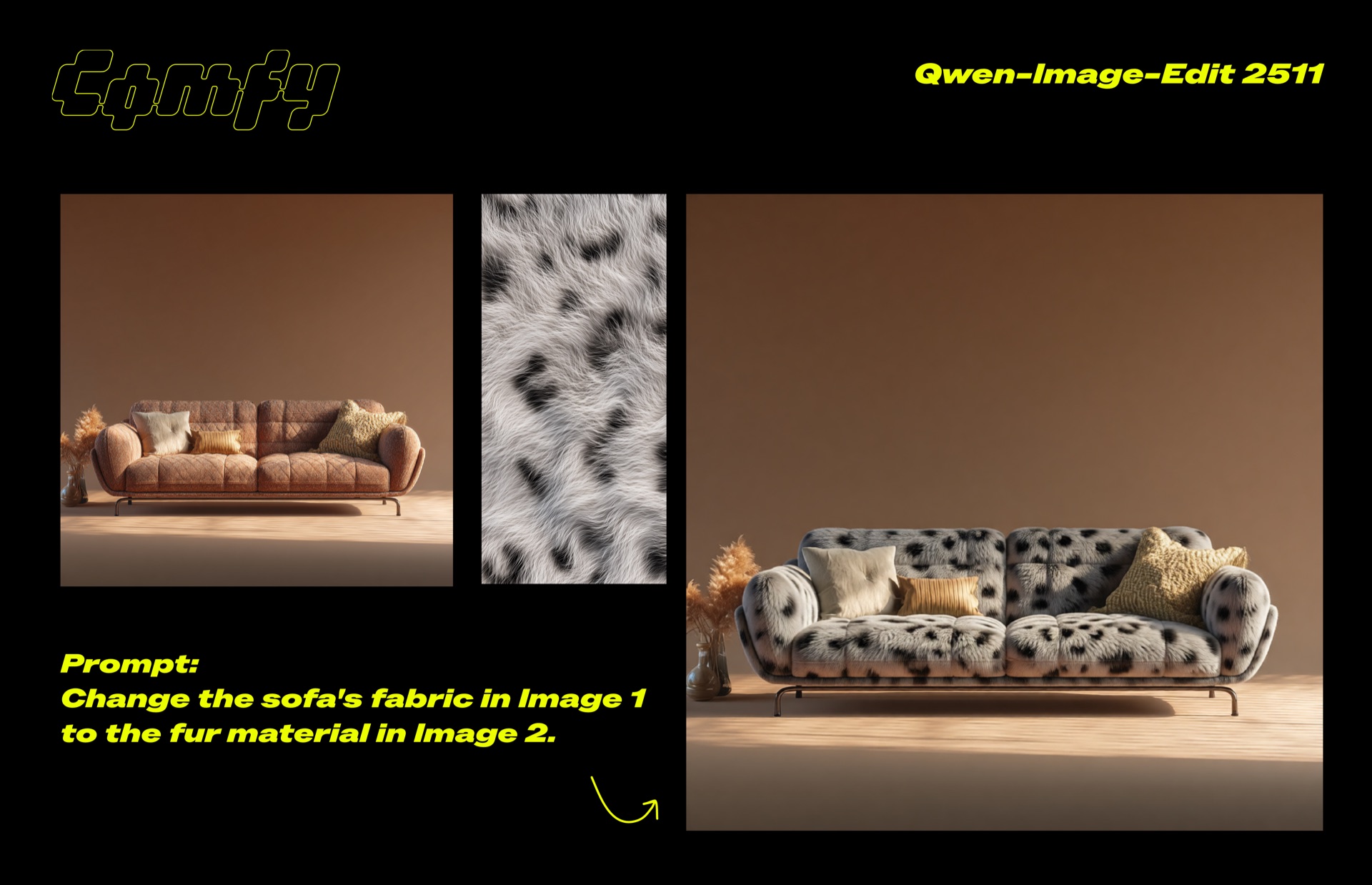
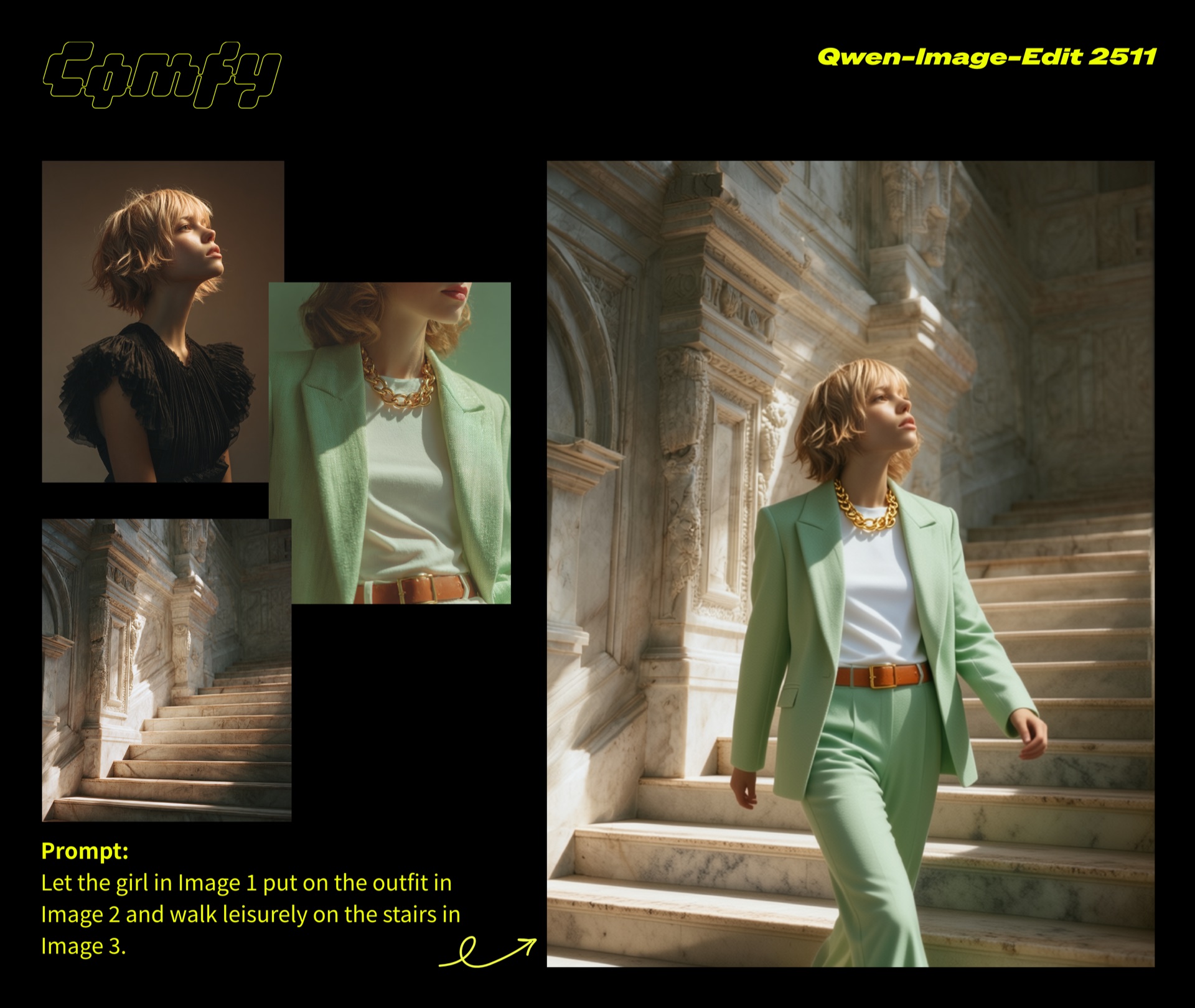
Qwen-Image-Edit-2511 is the latest iteration of Alibaba’s instruction-driven image editor — you hand it an image and tell it, in plain language, what to change. The headline of this release is consistency: the team specifically hardened the model against identity drift, so edits like “same woman, three-quarter view, walking” or “put this character in a leather jacket” keep the face, proportions and wardrobe locked instead of quietly reinventing them.
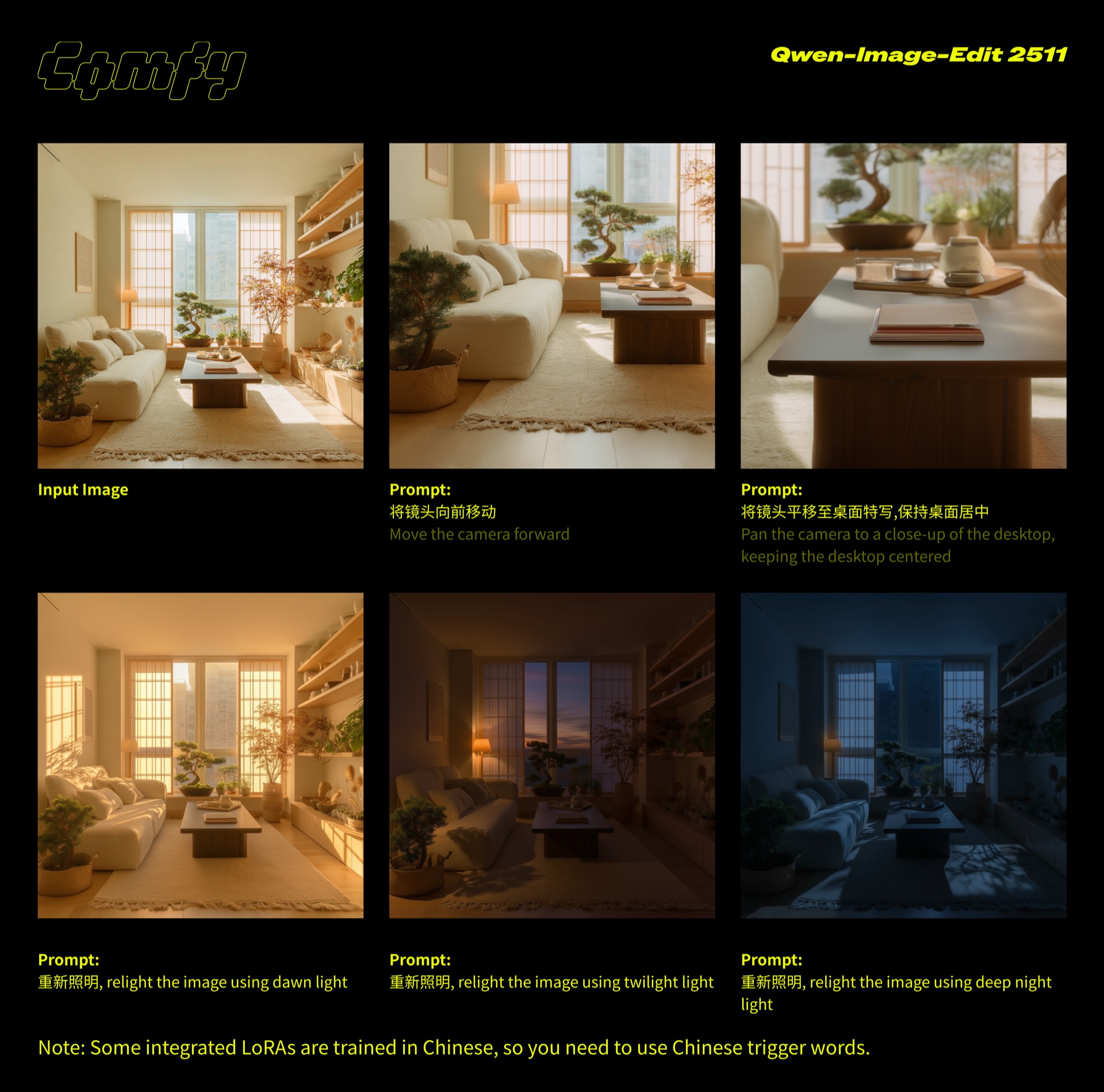
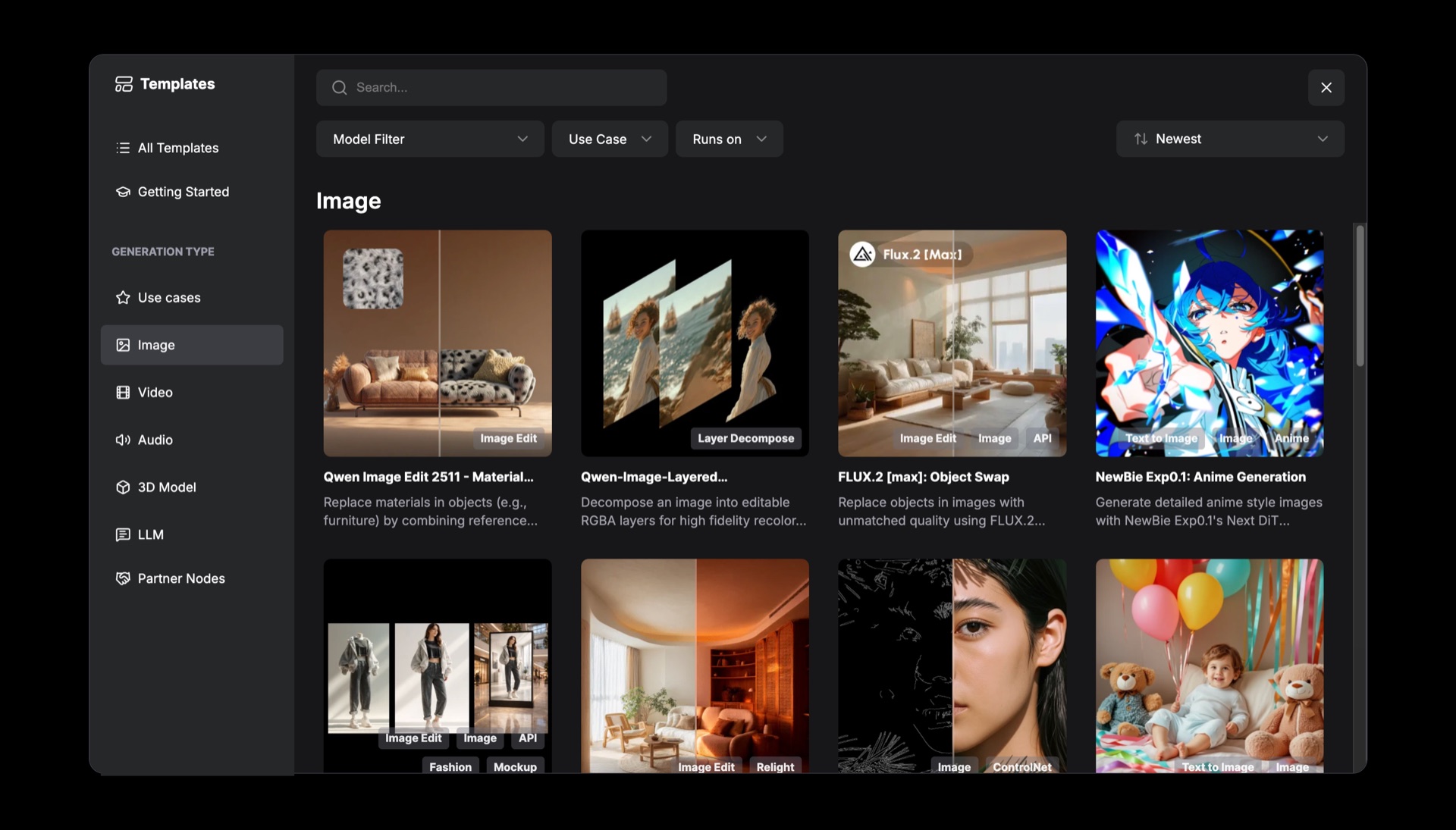
Three things make this release matter for our crowd. First, it’s open weights — the full model is on Hugging Face, with quantized GGUF builds that run on consumer GPUs, so nothing is locked behind a subscription. Second, it ships with a native ComfyUI workflow, which means it drops straight into the node graphs 3D artists already use for everything else. Third, it now has built-in LoRA support — a handful of popular character and style LoRAs are baked in, so you get their effect without extra tuning.
The community moved fast. Workflows like Consistent Character Creator 3.8 wrap the model into a one-click pipeline: feed it a single portrait and it spits out a full character pack — turnarounds, close-ups, multiple outfits, pose variations, even a dataset export — all recognizably the same person. That’s the exact deliverable a character designer used to spend a day drawing by hand.
Why You Should Care
Here’s the part that makes this a 3D story and not just an AI-art story. Modern image-to-3D generators — Rodin, Tripo, Hunyuan3D, Meshy — are only as good as the reference you give them. Feed them a single ambiguous photo and you get a lumpy mesh with a hallucinated back. Feed them a clean, consistent multi-view turnaround and the geometry snaps into place, because the model no longer has to guess what the character looks like from behind.
That’s the pipeline nobody could reliably build until now: one concept image → Qwen-generated consistent turnaround → image-to-3D → rigged, textured character. Each stage already existed; the missing link was a free, repeatable way to manufacture the consistent multi-view sheet in the middle. This is that link.
For comic and BD artists the payoff is just as direct: character consistency across panels is the unsolved problem of AI sequential art, and an instruction editor that keeps your protagonist on-model from panel to panel is worth more than any amount of raw image quality. For animators and game devs, it’s a way to lock a cast before a single polygon is modeled.
Try It / Follow Along
Everything here is free and local:
- Model & weights: Qwen-Image-Edit-2511 on Hugging Face (plus GGUF quantized builds for smaller GPUs)
- ComfyUI workflow: the official Qwen-Image-Edit-2511 native workflow tutorial
- Character pipeline: the community Consistent Character Creator 3.8 workflow
- Bonus — layers: its sibling Qwen-Image-Layered decomposes a render into separate RGBA layers, PSD-style, straight in the graph
IK3D Lab Take
We’ve spent months covering the 3D end of the pipeline — splats, world models, image-to-3D generators that spit out geometry in seconds. This is a reminder that the 2D front-end matters just as much. A perfect image-to-3D model is useless if you can’t hand it a coherent character, and until now “coherent character” meant either a talented illustrator or a paid, closed tool.
Qwen-Image-Edit-2511 isn’t flawless — push it into extreme poses or fine hand detail and drift creeps back in — but it’s the first open model good enough to be the reliable first stage of a character-to-3D pipeline, running on hardware you already own, inside the graph you already use. That combination — free, local, ComfyUI-native, consistency-first — is exactly the kind of quiet infrastructure win that ends up under half the workflows we’ll cover next year. Go build a turnaround, drop it into your favorite image-to-3D tool, and tell us what came out the other side.