Hook
For three years, AI worlds have come in two broken halves: video models that hallucinate gorgeous motion but forget everything the second you turn around, and 3D generators that build solid geometry that can’t actually do anything. Project Eden, revealed on May 31 by VAST AI Research — the lab behind Tripo — is a bet that the future is neither. It’s a persistent, editable, multiplayer world model that puts state before pixels. And the morning after the reveal, the team banked nearly $200 million.
The Story
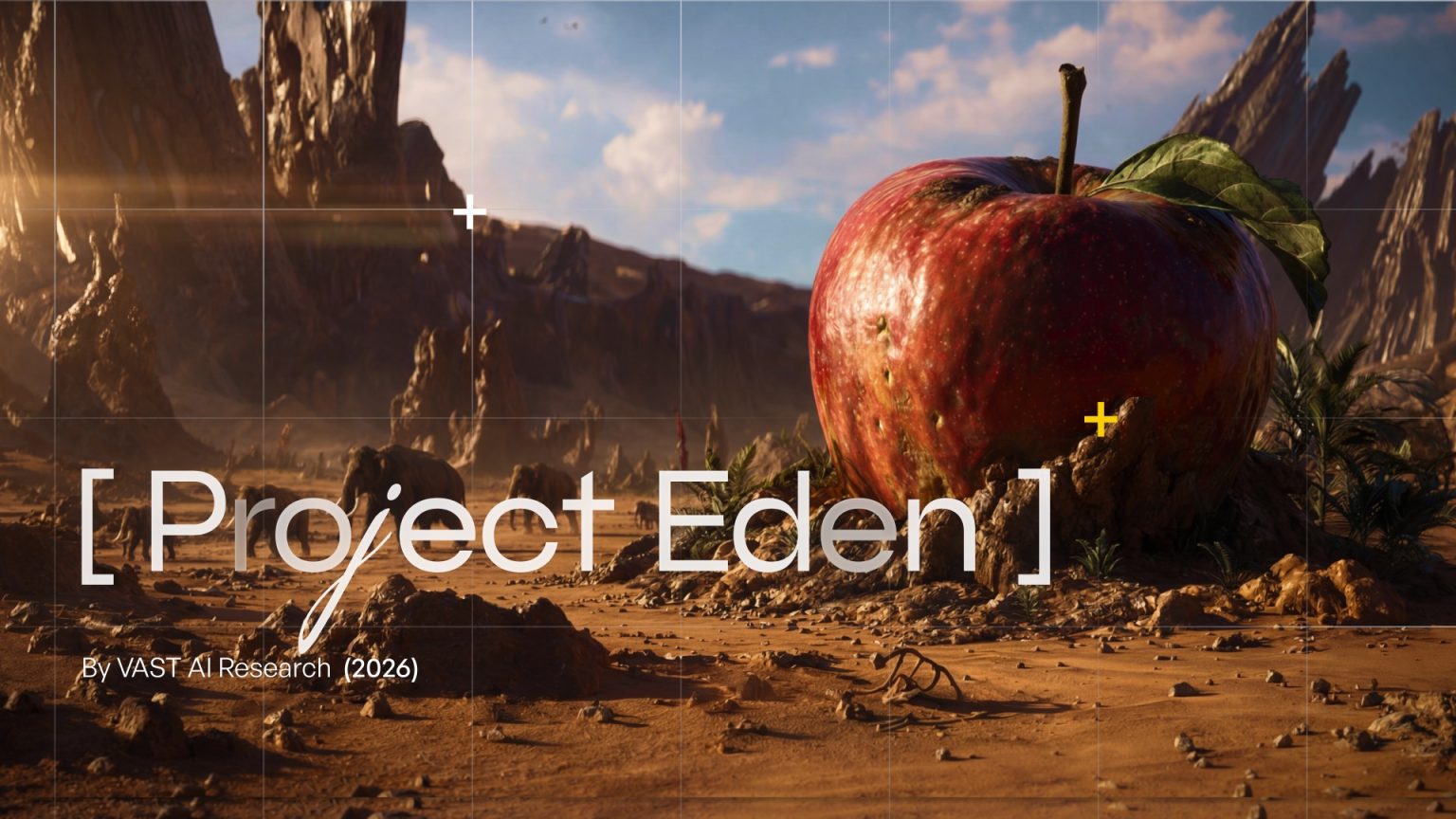
Most “world models” you’ve seen — DeepMind’s Genie, World Labs’ Marble — are jaw-dropping, but under the hood they’re fundamentally video: every frame is conjured from the last, so the world has no memory. Walk past a knocked-over chair, look back, and it might be standing again. Eden’s whole pitch is the opposite philosophy, and the team states it bluntly: state before rendering.
Architecturally, Eden splits the problem into three layers:
- Evolving Structured State — a compact, camera-independent record of geometry, object semantics, and the consequences of every action. The apple you knocked off the table stays on the floor whether or not anyone is looking at it.
- State-to-Observation Interface — turns that state into per-viewpoint constraints, so every camera (or every player) sees a physically consistent version of the same world.
- Generative Neural Rendering — paints the final high-fidelity frame, with lighting, materials and dynamics, from those constraints — without hauling the entire world around in its memory.
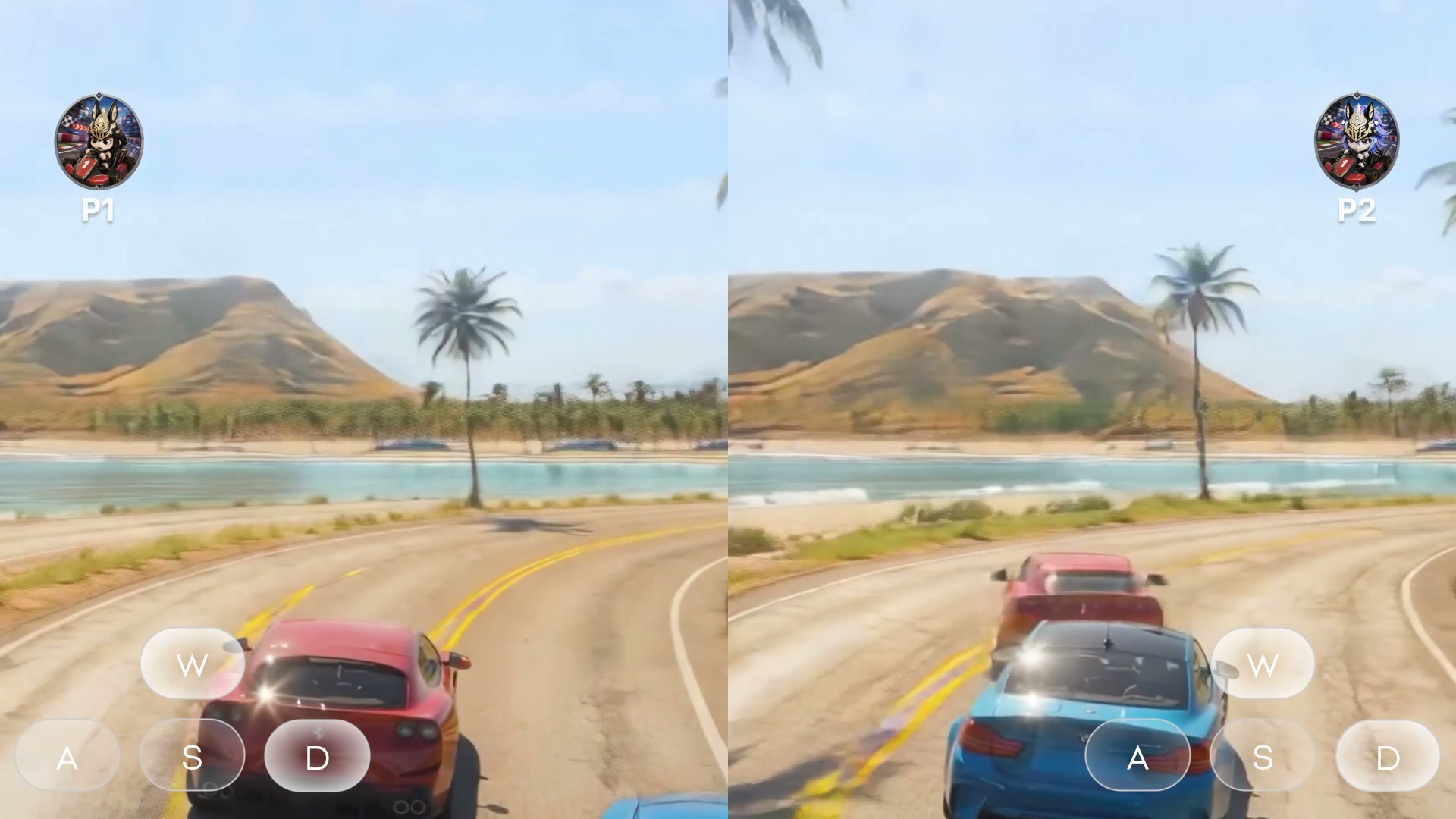
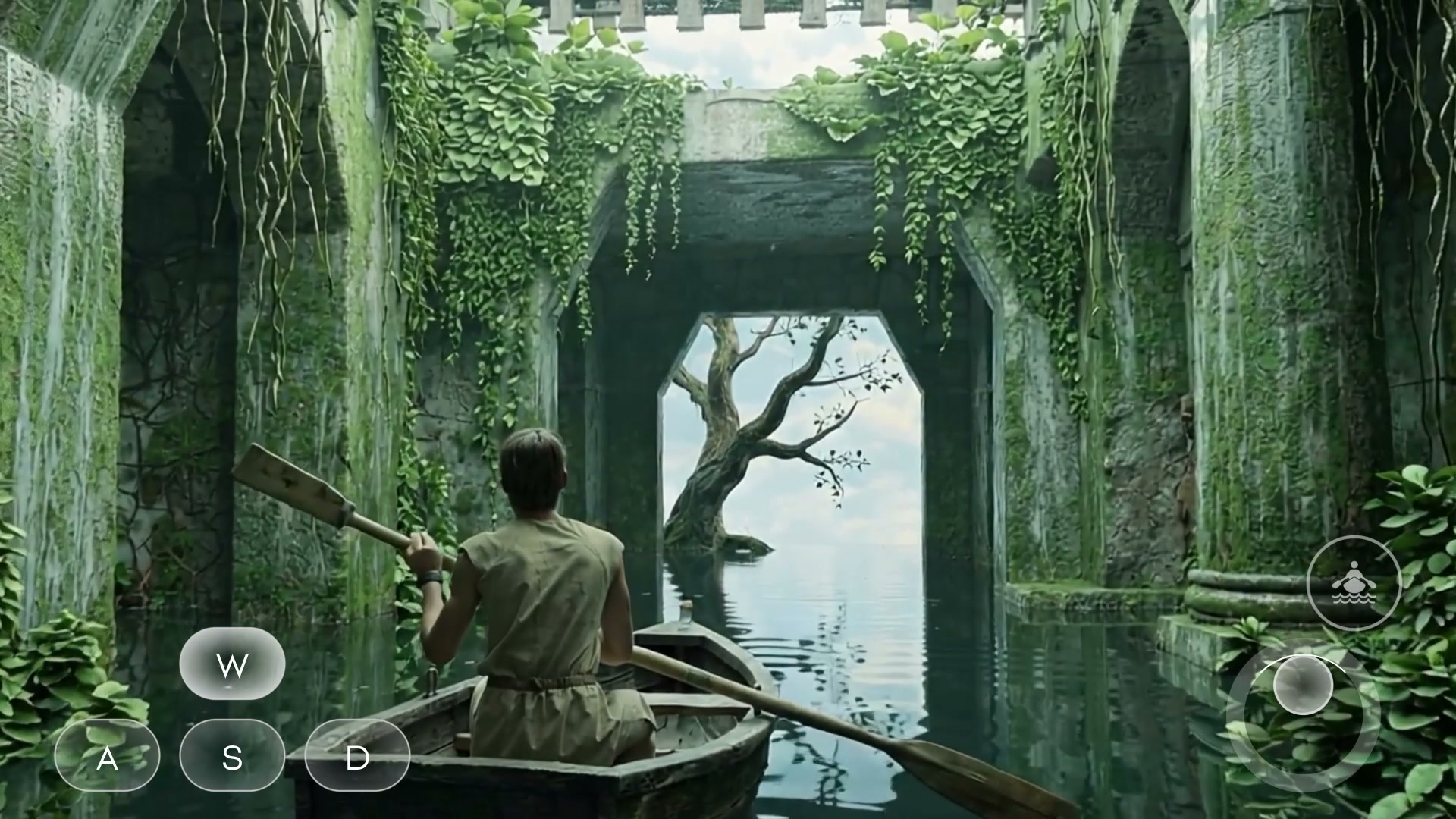
To learn all this, VAST trains on two diets: large-scale “deconstruction” of internet video reverse-engineered back into 3D, plus engine-synthesized simulation data that hands the model precise, ground-truth state annotations. The result, in the preview clips, is a world you can genuinely operate: two players racing in split-screen, each with their own viewport into one shared scene; a rower drifting through a flooded, vine-choked ruin; someone hosing down a kitchen fire with an extinguisher. All of it is neural generation, all of it driven by plain WASD and touch controls.
Then came the money. On June 1, VAST announced it had closed Series A+ and A++ rounds totalling nearly $200 million, vaulting the three-year-old company — founded in 2023 by 29-year-old Simon Song — past a $1 billion valuation. Ince Capital and a China Life-backed fund led, with Genesis Capital, Eminence Ventures and Primavera Venture Partners joining. The stated plan: pour it into the AI-3D and world-model teams, the core algorithms, and the data and infrastructure underneath. A product reveal and a unicorn round in the same 24 hours is not a coincidence — it’s a roadmap.
Why You Should Care
Persistence and multiplayer are exactly the two things that have kept generated worlds stuck in demo-land. A world that forgets itself can’t host a game, a training sim, or a shared creative space. Eden’s “state-first” design is the unglamorous plumbing that makes edits stick and lets multiple humans — or AI agents — inhabit one world at once. That’s the difference between a pretty video and a place.
There’s also a reason this is coming from Tripo specifically and not a pure video lab. VAST already ships some of the best image-and-text-to-3D asset generation in the business. A world model from that lineage is the one most likely to bridge both directions — generated worlds that don’t just stream as pixels but could, plausibly, be pulled back toward real, editable geometry. For game devs, archviz and embodied-AI researchers, “stable physics + long-horizon consistency” isn’t marketing; it’s the spec sheet for a usable simulator.
Try It / Follow Them

- Watch the demos: the full set of interactive clips lives on the Project Eden research page. Eden is a research preview right now, with a broader release targeted for June 2026.
- Follow the lab: keep an eye on VAST AI Research for the next drops.
- Use what’s shipping today: you can already put Tripo’s image/text-to-3D tools to work at tripo3d.ai while the worlds catch up.
- The receipts: funding details via VoxelMatters and GamesBeat.
IK3D Lab Take
Let’s stay honest: this is a research preview. The clips are short, there’s no public sandbox yet, and “state before rendering” is far easier to put on a slide than to make robust at scale. World Labs’ Marble and Odyssey’s multiplayer experiments are circling the same prize, so Eden isn’t alone.
But the bet is the right one. The single most frustrating thing about generative worlds has been their amnesia, and Eden is the first one we’ve seen attack that head-on with an actual architecture instead of a longer context window. Crucially, it comes from the team that already ships production 3D assets — which makes them the likeliest to close the loop between an explorable AI world and something you can drag back into Blender. We’re not packing up the render farm yet. But this is the splat-free world-model story we’ll be watching hardest through the back half of 2026.