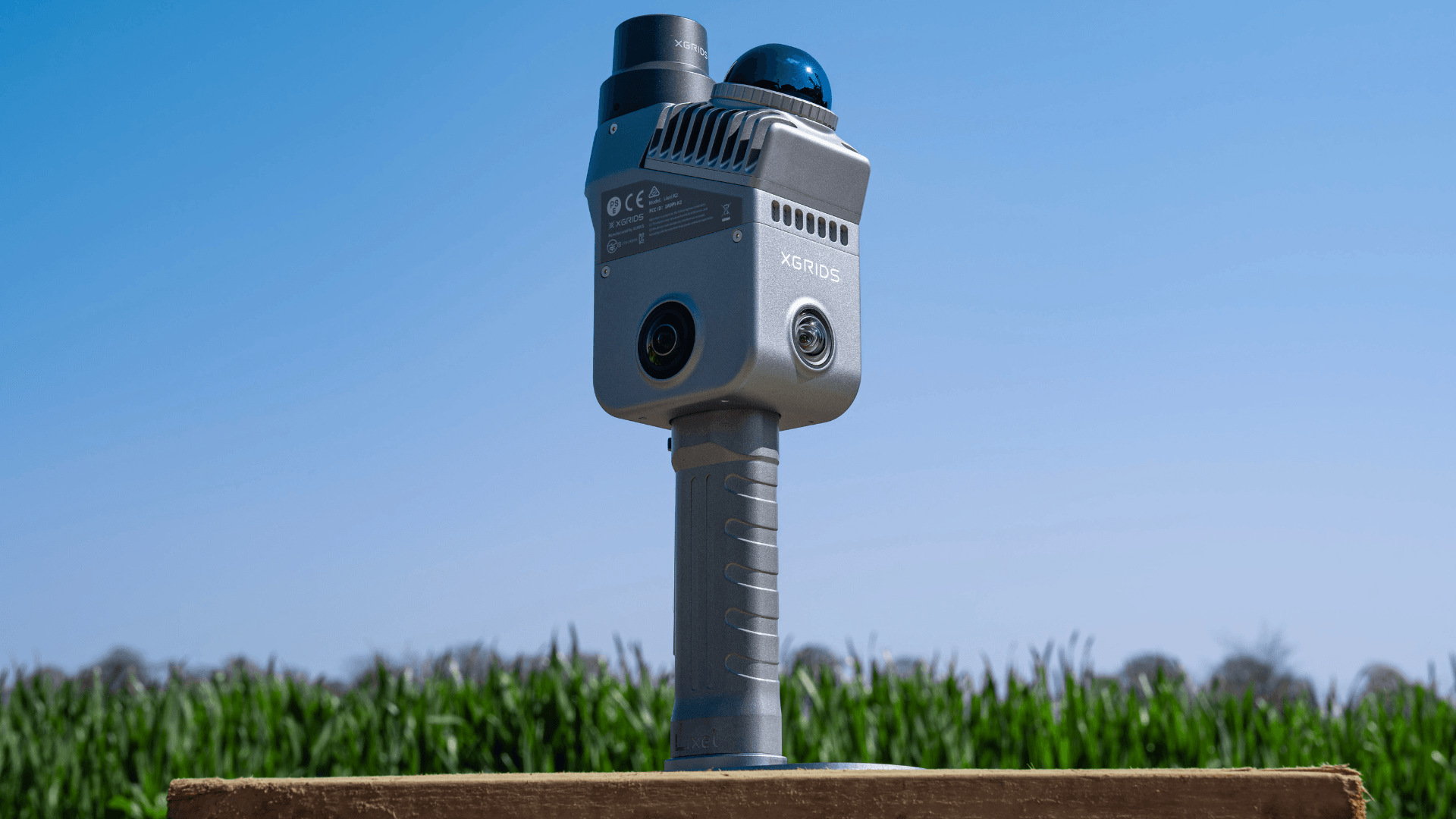
Two days ago in Prague, XGRIDS quietly knocked the floor out of the handheld Gaussian Splatting market. The new Lixel K2 ships at £6,549 — that’s nearly 40% cheaper than its predecessor — and it’s the first portable scanner that treats 3DGS as a first-class citizen, not an afterthought bolted onto a LiDAR pipeline. If you’ve been waiting for solo-creator-grade splat capture, that wait just ended.
The Story
XGRIDS unveiled the K2 at the 3DISE conference in Prague on May 6, 2026, alongside LixelStudio 4.0, the company’s processing software. The K2 succeeds the K1 (£10,918) and slots below the L2 Pro in the lineup, but it doesn’t behave like a budget cut-down — it actually leapfrogs the K1 on most of the metrics that matter for splat capture.
The headline upgrade is the perception system. The K1 had two side fisheyes; the K2 adds a forward-facing camera, giving the multi-SLAM stack proper visual odometry in the direction of travel. That sounds boring until you realise that drift, especially in long indoor corridors or repetitive façades, has been the silent killer of handheld splat reconstructions. Three cameras at 4000 × 3000 plus an integrated RTK module deliver 3 cm RMSE absolute accuracy in elevation and horizontal — without post-processing. Relative accuracy hits 1 cm RMSE, with post-processed point cloud thickness ≤1 cm.
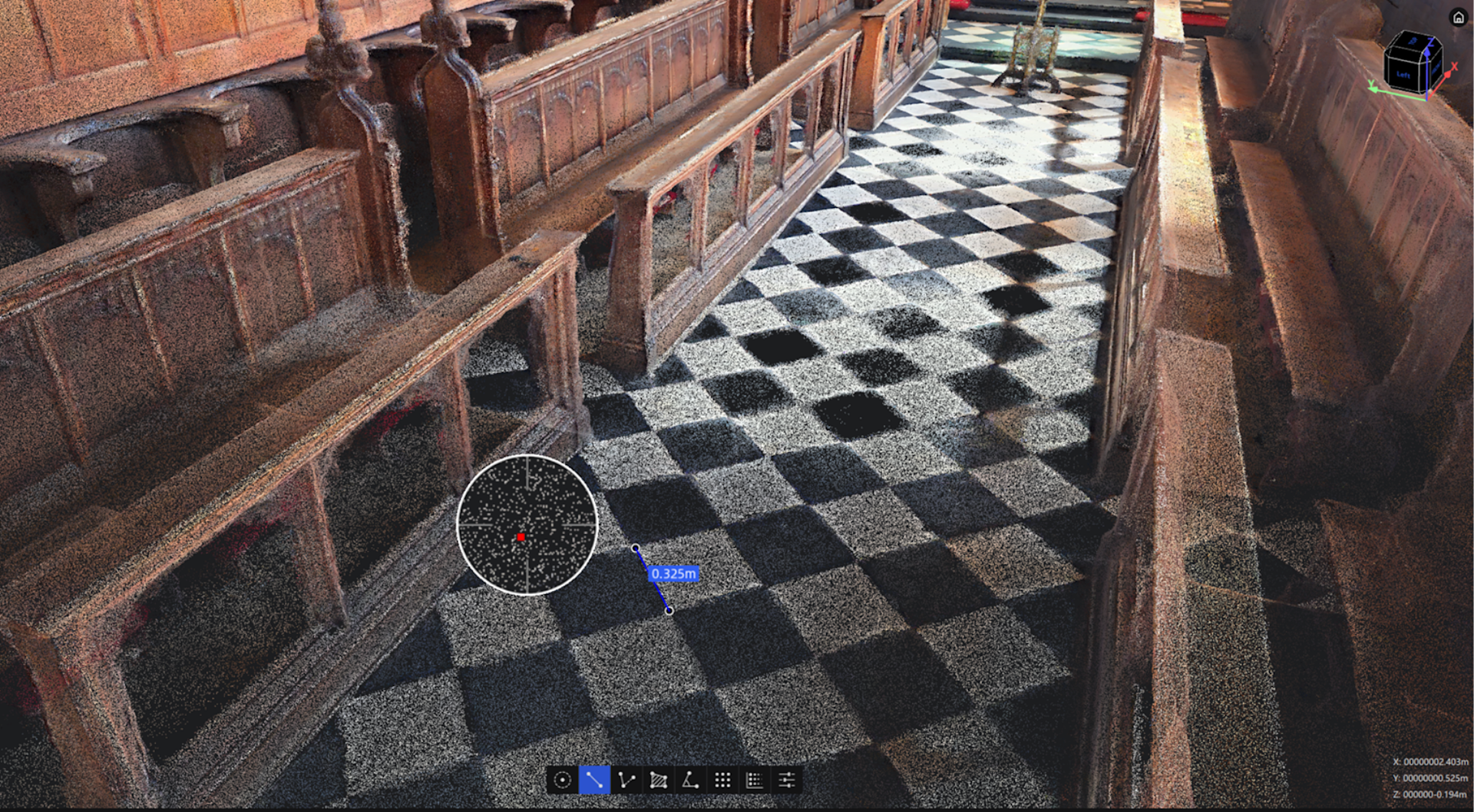
The rest of the spec sheet reads like someone actually used a K1 in the field for 18 months and wrote down the complaints. The body is 1.2 kg in aviation-grade aluminium, IP54, operating from −20 °C to 50 °C. 512 GB of internal storage replaces the K1’s 256 GB microSD card (good — microSD cards in field gear are a war crime). LiDAR range is ≥40 m at 10% reflectivity, 100 m max, with a 360° × −7°/+52° field of view at 200,000 points per second. Battery is 1.5 hours, hot-swappable.
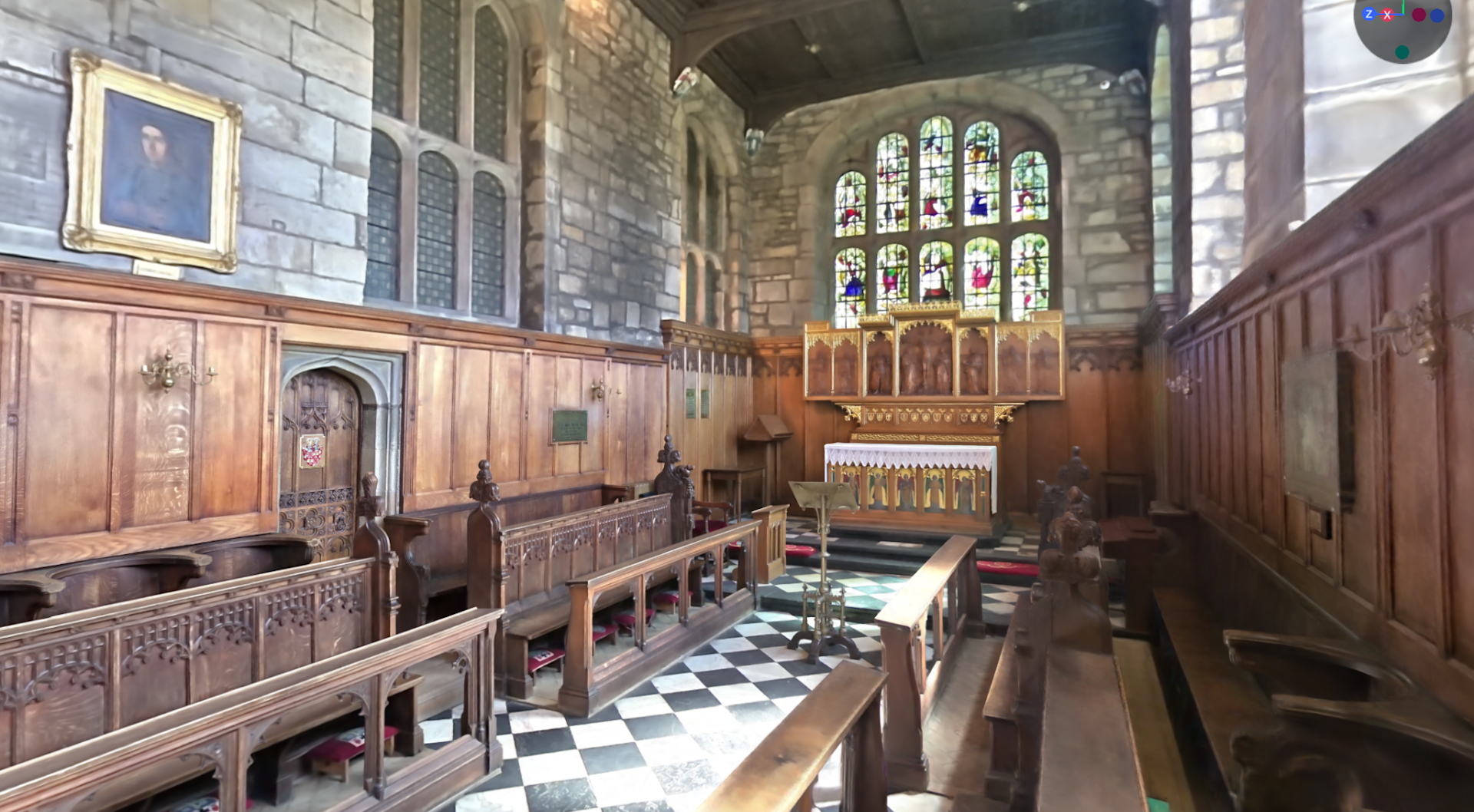
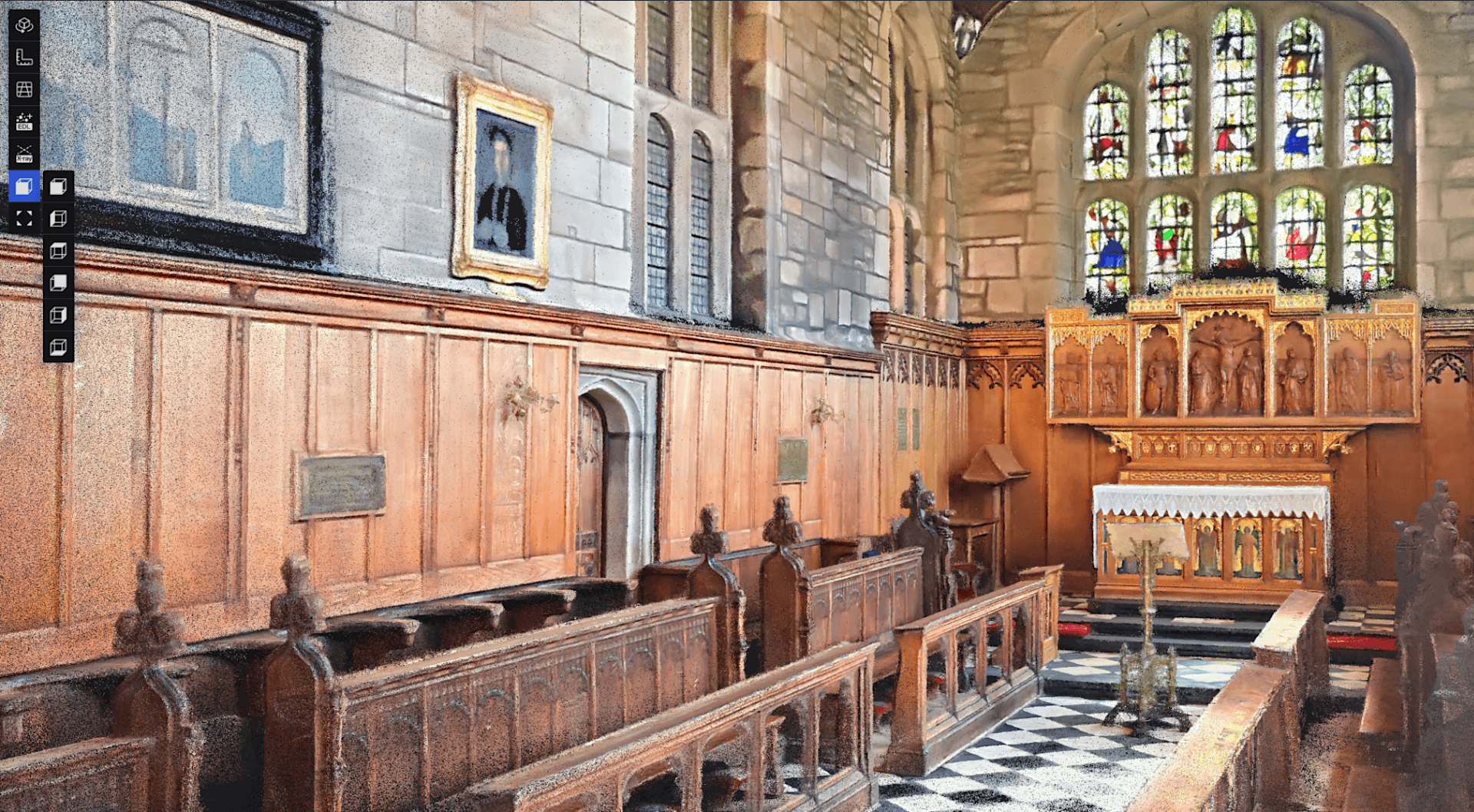
And then there’s LixelStudio 4.0, which is genuinely the more interesting half of this announcement. The new pipeline uses upgraded SLAM and reconstruction algorithms to produce straighter structures with reduced drift, fewer floaters, and consistent colour even under awful mixed lighting. It outputs real-time colourised point clouds, .las files, mesh, and 3DGS via Lixel CyberColor — XGRIDS’ own splat export. Crucially, LixelStudio 4.0 is also backwards-compatible with the K1 and L2 Pro, so existing owners get the algorithmic upgrade for free.
Why You Should Care
For two years, the splat-capture market has split into two camps: phone apps like Scaniverse or KIRI Engine that are wonderful for prototypes but fall apart on anything bigger than a single room, and survey-grade rigs from Leica/Faro/NavVis that start at ~£40,000 and target firms with full-time scan operators. The K2 lands smack in the middle of that gap, and it’s the first device in that price bracket that ships 3DGS as a native output format rather than as a post-process tacked onto a LiDAR mesh pipeline.
Translation: an architectural studio, a heritage documentation freelancer, a film location scout, or a small VFX house can now afford a single device that outputs both engineering-grade point clouds and beautiful Gaussian Splats from the same walk. That’s a workflow story we haven’t been able to tell at this price point.
It also matters because of where the rest of the stack just landed. Niantic Spatial released SPZ V4.0 the day before, dropping the 10-million-point cap and shipping 33–52% faster decode. OpenUSD v26.03 made splats first-class USD prims back in March. Cesium is streaming 110-million-splat scenes to any browser. Photoshop 27.6, of all things, now imports splats. The bottleneck for a year has not been viewers or formats — it’s been capture quality. The K2 is the missing piece.
Try It / Follow Them
- Product page: xgrids.com
- Hands-on launch breakdown: Heliguy’s Lixel K2 launch piece
- Community coverage: Radiance Fields on the K2 announcement
- Buy in the US: B&H Photo Video
- If you can’t justify £6,549: KIRI Engine 4.2 on a phone is still the best free entry point — we covered it last month.
IK3D Lab Take
The K2 is the most honest product XGRIDS has ever shipped. It’s not trying to dethrone a Leica RTC360 — it’s trying to be the first scanner you’d actually use on a Saturday. The spec that matters isn’t the 3 cm RMSE; it’s the 1.2 kg weight and the £6,549 sticker, because those two numbers determine how often the device leaves the case. A scanner you carry is worth ten scanners you don’t.
The honest caveat: at this price you’re still in pro-tool territory, and the 1.5-hour battery will bite you on day-long heritage shoots — bring two. We’d also love to see XGRIDS open up Lixel CyberColor splats to standard .spz or the new glTF KHR_gaussian_splatting extension out of the box, rather than going through their own format. The infrastructure for portable, interoperable, photoreal 3D capture has been crystallising for six months. The K2 is the moment it became something a working creator can carry.