Back in August, Black Forest Labs told everyone it was walking away from image models to build one backbone for video, sound and robots. Two months later it quietly shipped FLUX 3 Image Klein: a 5.6-billion-parameter image model, open weights, that fits on a gaming GPU with 8 GB of VRAM. It is the smallest model in its own benchmark chart, and BFL claims it still beats bigger open models.
The Story
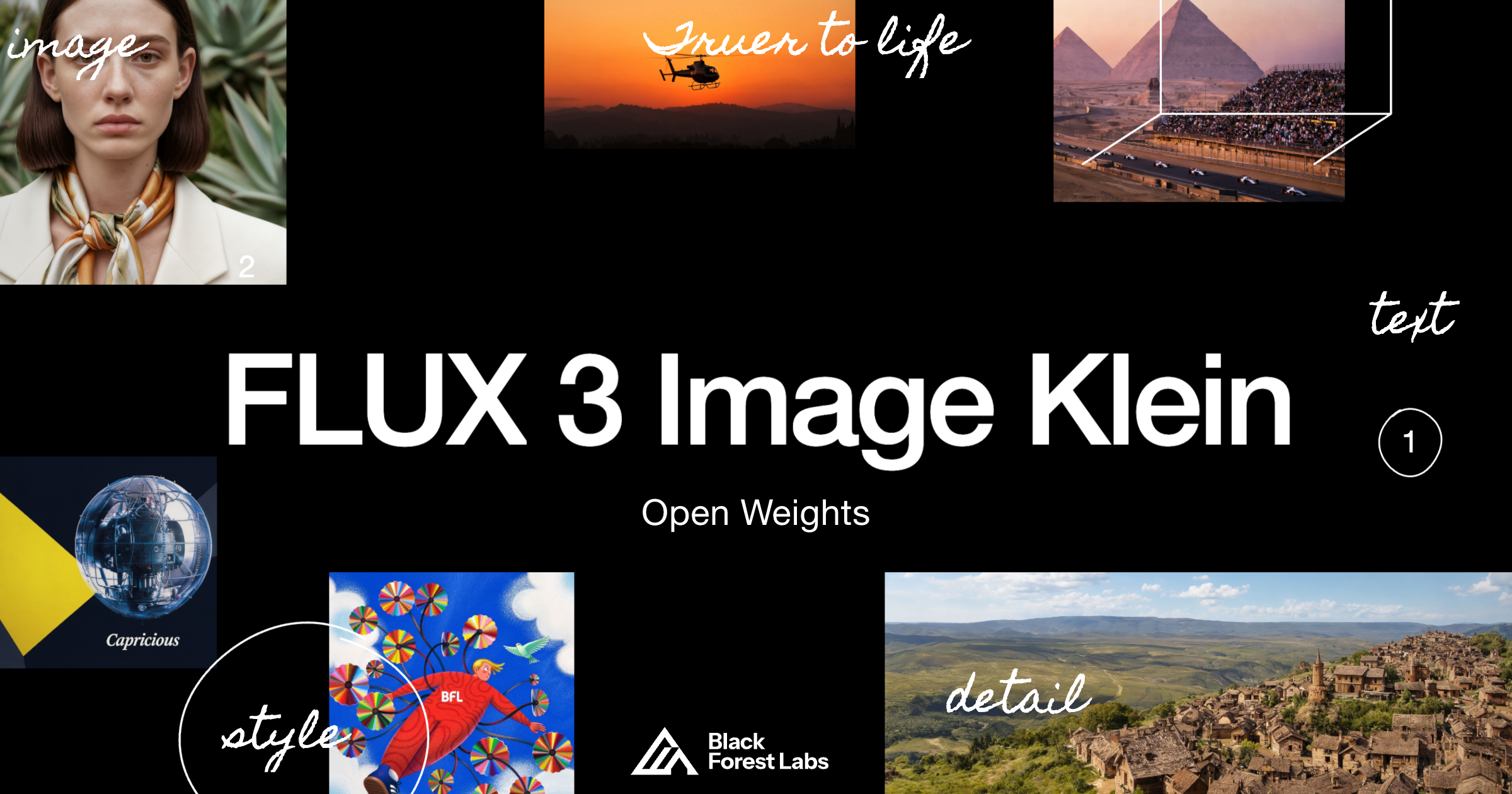
Black Forest Labs released FLUX 3 Image Klein on 15 October 2026. “Klein” is German for small, and that is the whole point. The model does three things: text-to-image, pixel-precise image editing, and multi-reference generation from up to 10 reference images. It generates natively at 4K, and it takes bounding boxes — you can draw a box to place an object or to confine an edit to one region.
It comes in two flavors. A base model you fine-tune and train LoRAs on, and a step-distilled model built for speed. BFL worked with NVIDIA on three quantized builds — FP8, INT8 and NVFP4 — so the same weights can scale from a data-center card down to a desktop. The generator needs 11.2 GB in BF16, 5.6 GB in FP8, and the INT8 build runs on RTX cards with as little as 8 GB of VRAM through ComfyUI or Diffusers.
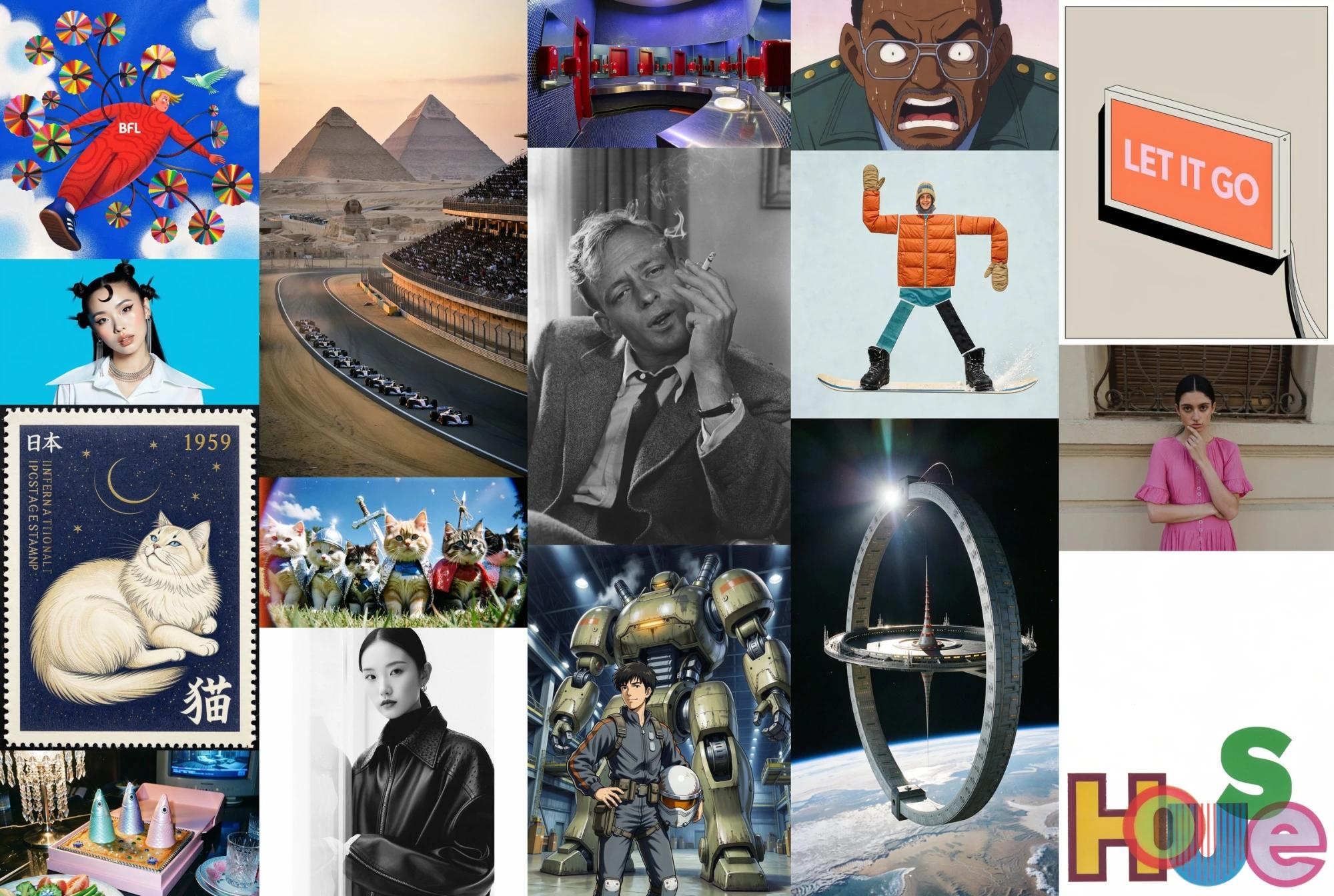
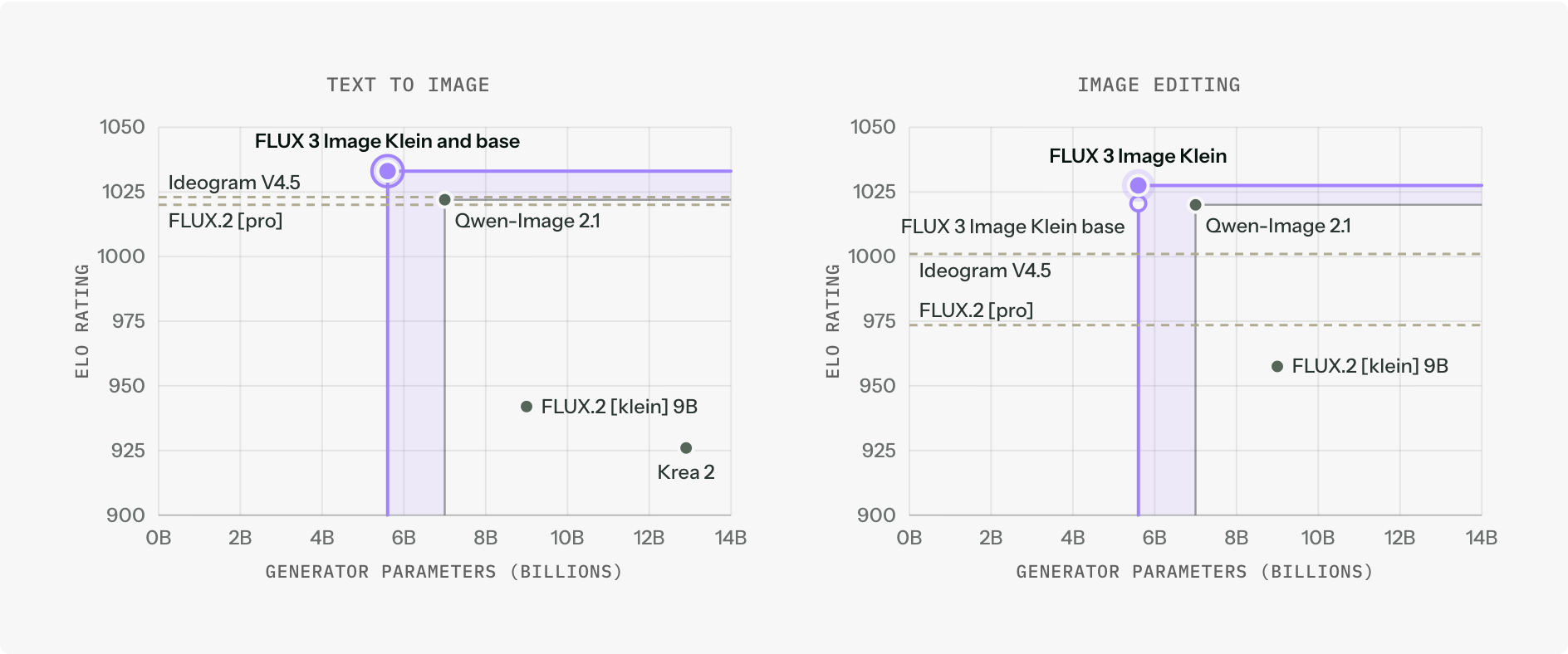
On BFL’s own evaluations, Klein ranks first in text-to-image, multi-reference generation and image editing against larger open-weight rivals, and rates above the closed models Ideogram V4.5 and FLUX.2 [pro]. Against the older FLUX.2 [klein] at 9B, BFL reports a gain of 91 Elo in text-to-image and 70 Elo in editing — with 38% fewer parameters. In the chart below it is the leftmost dot: smaller than Qwen-Image 2.1 (7B) and Krea 2 (12.9B), sitting higher on the quality axis.
Why You Should Care
If you make 3D, an image model is the front door to half your pipeline. Image-to-3D tools like TRELLIS, Rodin and Meshy all start from a clean picture. The better and more controllable that first image, the better the mesh. Two Klein features matter here. Multi-reference keeps a character consistent across angles — that is your reference sheet for a generated character. Bounding-box placement gives you layout control instead of prompt roulette, which is exactly what you want when you are building a concept plate you will later turn into geometry.
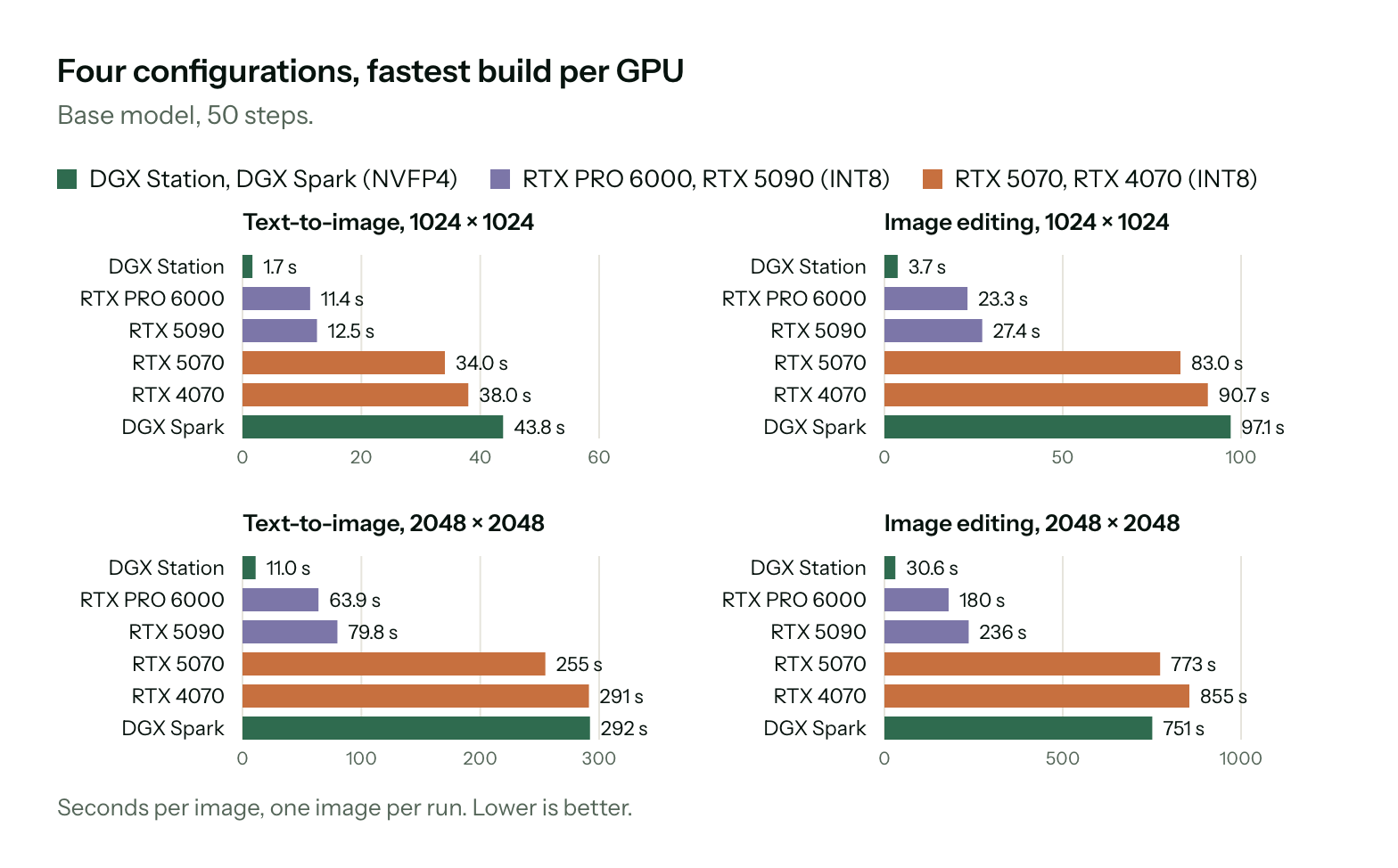
And it is fast on hardware people actually own. BFL reports the distilled INT8 build making a 1 MP image in about 4 seconds on an RTX 5090 and under 9 seconds on an RTX 4070 inside ComfyUI. On an NVFP4 data-center card it drops under 0.6 seconds. That turns an image model from a batch job into something interactive — close enough to real time to iterate a composition before you commit it to a 3D generator.
Try It / Follow Them
- Distilled weights: huggingface.co/black-forest-labs/flux-3-image-klein
- Base weights (for fine-tuning): huggingface.co/black-forest-labs/flux-3-image-klein-base
- Reference code + Gradio demo: github.com/black-forest-labs/flux-3-image-klein
- Announcement: bfl.ai/blog/flux-3-image-klein
Day-one support shipped for ComfyUI, Diffusers, TensorRT-LLM, SGLang Diffusion and vLLM-Omni, and you can train LoRAs with Ostris’s AI Toolkit or NVIDIA NeMo AutoModel. On the license: it ships under the FLUX Kommunity License. Individuals and companies under $5M in annual revenue get free commercial use; bigger organizations need self-hosted licensing or the API, where the distilled model is served from $0.009 per 1,000 images. It is open weights, not an OSI open-source license — read the terms before you ship a product on it.
IK3D Lab Take
This is the open model most 3D artists should have in their ComfyUI graph by default. Not because it is the absolute best — the 12B class still wins on some prompts — but because it is the best quality-per-gigabyte, and in a real pipeline VRAM is the thing you run out of first. A model that leaves room for your 3D generator on the same card is worth more than two extra Elo points.
Two honest caveats. First, every benchmark number here is BFL’s own; we have not seen independent head-to-heads, and “ranks first” from the vendor is a claim, not a result. Second, the 8 GB figure is the INT8 build at modest resolution — push to native 4K or heavy multi-reference and that budget disappears fast, so treat 8 GB as the floor for a first render, not for your final 4K plate. The Lab has not yet run Klein through an image-to-3D pass on our own hardware; when we do, the multi-reference consistency is the first thing we will stress-test, because that is where generated reference sheets usually fall apart. If you only pull one open image model this quarter, pull this one — then tell us where it breaks.
How this article was made: researched and drafted with AI assistance, then fact-checked against the original sources and reviewed by Issa before publication.