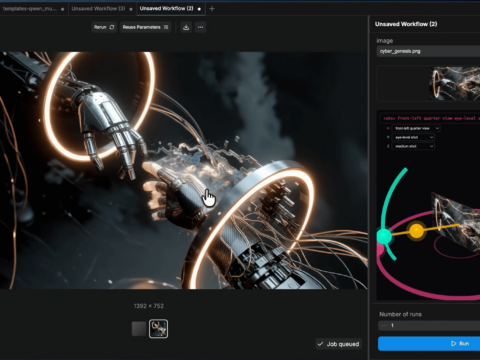
Microsoft just dropped a text-to-image and image-editing model that fits on a single GPU, generates a 1024px image in 0.59 seconds, and beats models five times its size. It’s called Mage-Flow, it’s 4 billion parameters, and — the part that should make you sit up — it shipped under an MIT license with every weight on Hugging Face. This isn’t a demo. It’s already merged into ComfyUI core.

The Story
The image-model race has been an arms race of size. FLUX.2, Qwen-Image, the big Chinese editors — most of the leaders sit between 9B and 20B parameters. They’re gorgeous, but they’re heavy: multiple GPUs, slow inference, painful to fine-tune. On July 22, 2026, Microsoft’s Mage Team took the opposite bet. Instead of scaling up, they redesigned the whole pipeline to do more with less.
Two pieces make it work. First, Mage-VAE — a rebuilt tokenizer that encodes and decodes in a single diffusion step, using roughly 12× fewer operations per pixel to encode and 22× fewer to decode. That’s the part that usually eats your memory. Second, a Native-Resolution Multimodal Diffusion Transformer trained with rectified flow. Translation: it packs image and text tokens together and accepts any resolution from 512 to 2048 pixels, plus wild aspect ratios like 4:1, without the rigid “bucket” sizes every other model forces on you. You give it the shape you want. It just draws it.

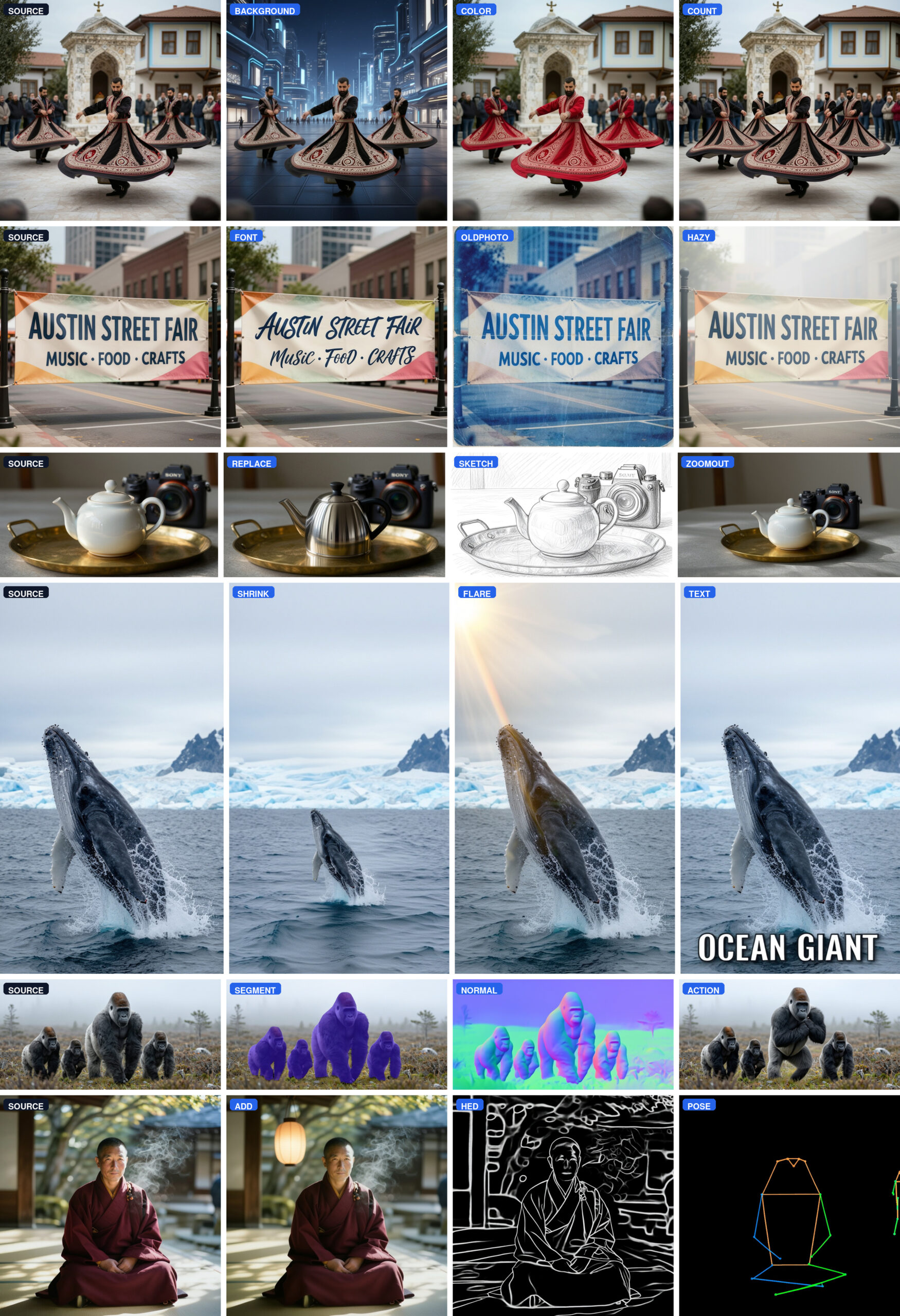
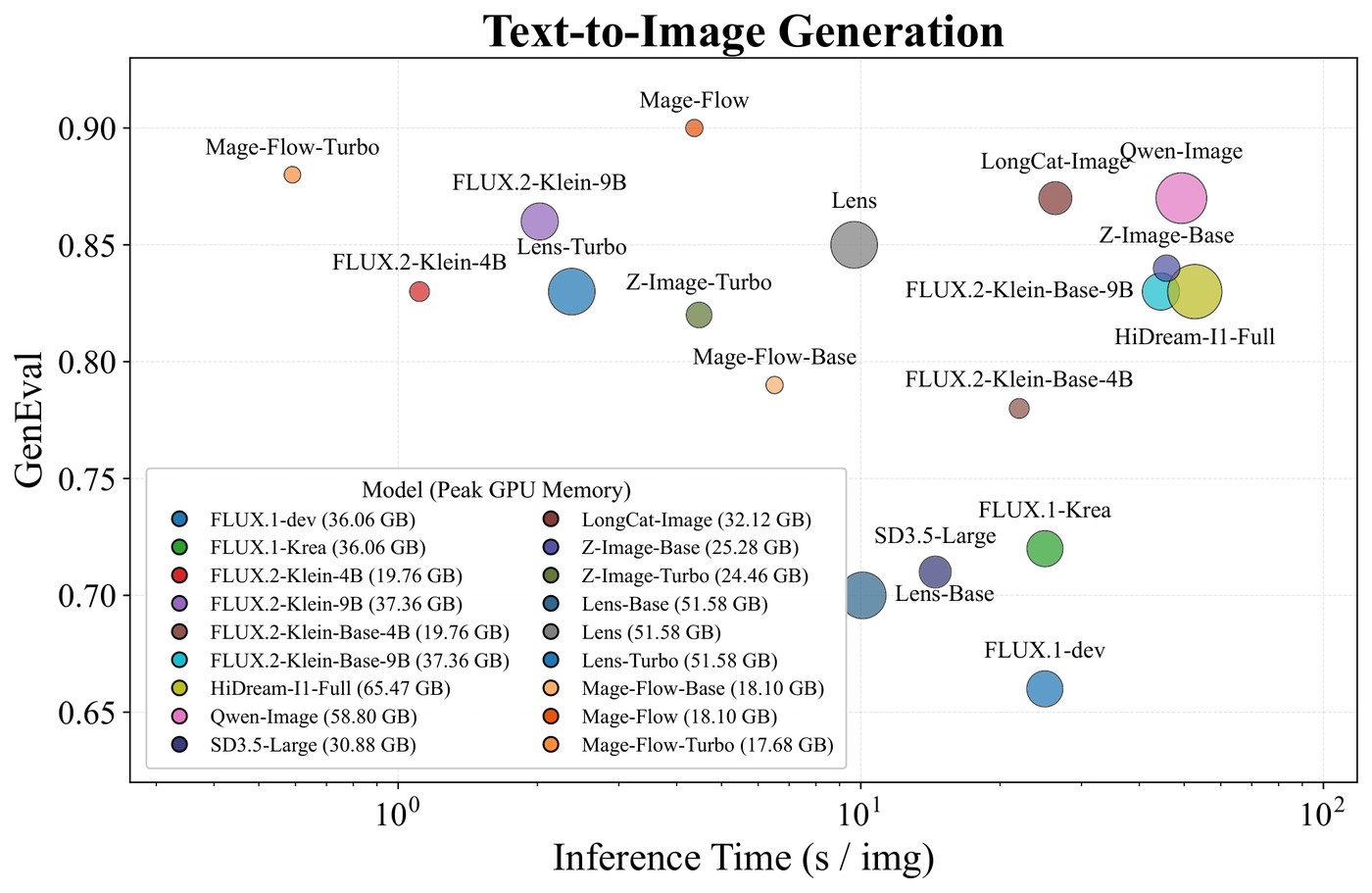
The numbers are the surprise. Mage-Flow-Turbo scores 0.88 on GenEval in just 4 steps. For context: Qwen-Image (20B) sits at 0.87, FLUX.2-Klein (9B) at 0.86, Z-Image-Turbo (6B) at 0.82. A 4B model quietly walked past a 20B one. On instruction editing — the “change the shirt to red, keep everything else” task — it hits 8.271 on GEdit-EN, going toe-to-toe with editors four times its size.
Why You Should Care
If you build creative pipelines, small-and-fast changes everything. A single A100 runs a full instruction edit in 1.02 seconds with peak memory around 18–20 GB. That’s laptop-class ambition for something that used to demand a rack. It means you can loop image generation inside a ComfyUI graph without waiting, batch mixed resolutions in one pass, and — crucially — fine-tune a LoRA on your own art without renting a cluster.
For 3D artists, this matters more than it looks. Every image-to-3D pipeline — TRELLIS, Tripo, Rodin — starts with a clean reference image. A fast, editable, native-resolution generator that you fully control is the missing front end. Generate a character sheet, edit it by instruction until it’s right, then feed it straight into your 3D generator. And the MIT license means no asterisks: research, commercial, product — all fair game.
Try It
- Live demo: huggingface.co/spaces/microsoft/mage-flow
- Weights (Base, RL, Turbo, Edit): Hugging Face collection
- Code: github.com/microsoft/Mage
- Paper: arXiv 2607.19064
- ComfyUI: native support merged into core; quantized int8 builds at Comfy-Org/Mage-Flow install into the standard folders.
IK3D Lab Take
Mage-Flow is the clearest sign yet that the “bigger is better” era of image models is cracking. The authors say it plainly: careful tokenizer–backbone–system co-design can deliver strong high-resolution generation within an efficient 4B family. Read that as — the wins are moving from raw scale to smart engineering. That’s great news for makers, because a 4B MIT-licensed model is something you can actually own, tune, and ship. We’ll be wiring the Edit variant into an image-to-3D test bench next. If the character consistency holds through an edit-then-generate loop, this becomes a default first step. Small, fast, free, and yours. Hard to argue with that.