The Hook
A Gaussian splat is a frozen photograph of a place. It carries the light that was there when you captured it — the sun, the shadows, the reflections — baked in forever. That is the wall every splat artist hits: drop a real-world scan into a new scene and the lighting fights you. KIRI Engine’s free Blender add-on, 3DGS Render 5.1, just shipped the fix most people said was years away: real-time relighting of imported splats, right inside the viewport, plus GPU-accelerated animation. All of it open-source, all of it free.
The Story
KIRI Engine is best known as an AI 3D reconstruction company — the team turns phone photos and video into photogrammetry meshes and Gaussian splats. Their Blender add-on, 3DGS Render, has quietly become the most complete way to work with splats inside a mainstream 3D app. It imports .ply splat files, lets you move, scale and rotate them like any normal object, and renders them in real time — including inside Eevee, Blender’s fast rasterizer.
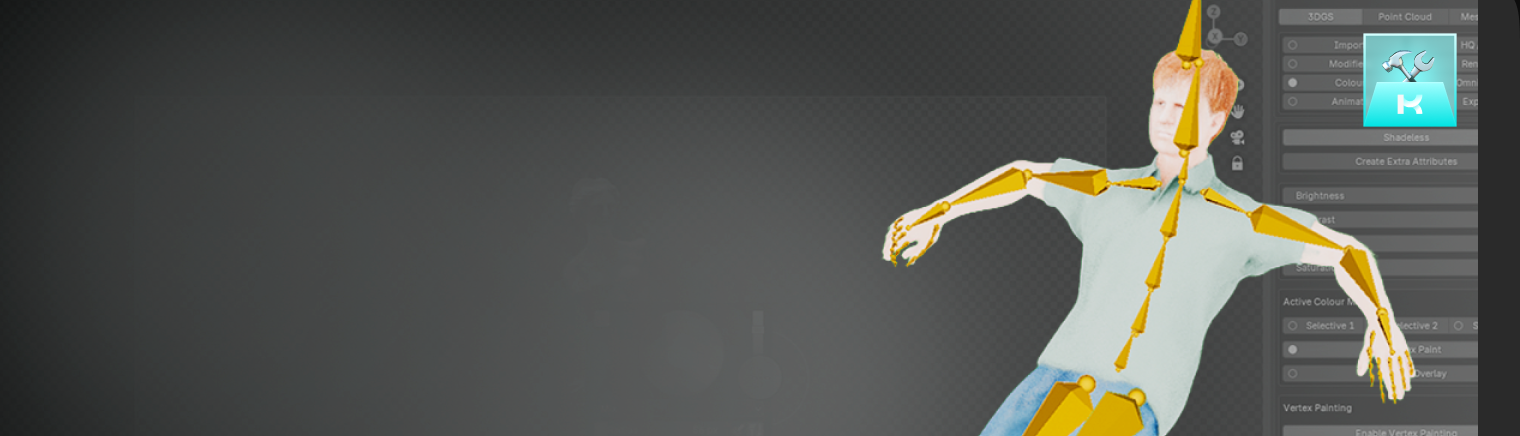
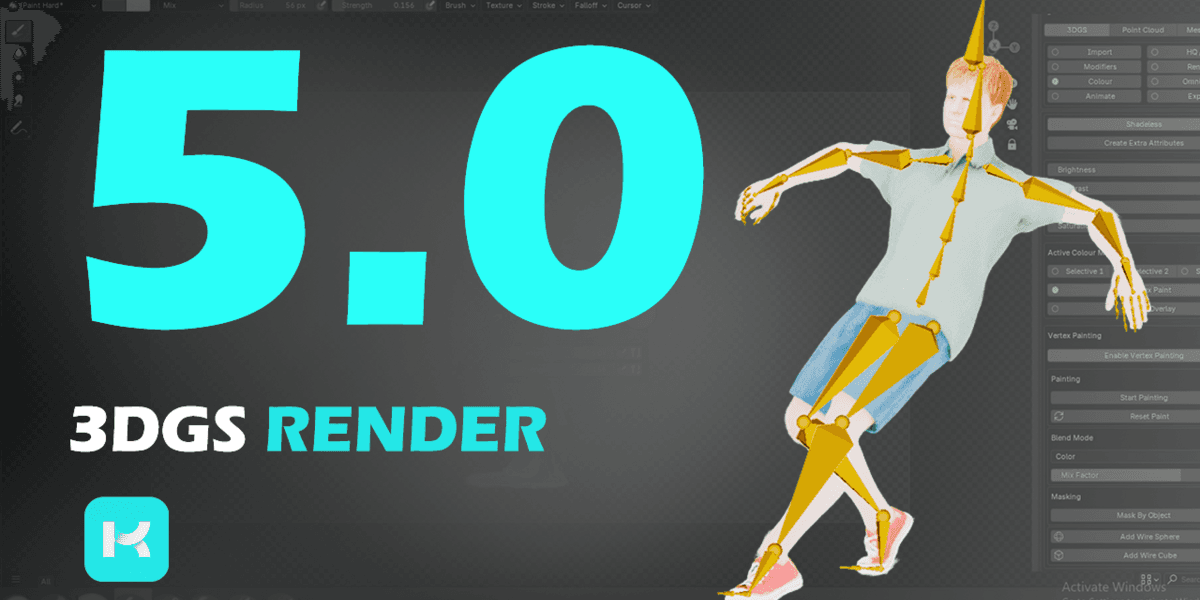
Version 5.0, released in June 2026, was the big leap. It added a proxy-mesh workflow: you wrap a rough mesh around your splat, animate or rig that mesh (Mixamo, mocap, hand-keyframes), and the add-on transfers the motion onto the splat. It also added light baking and 4D splat export as PLY sequences, so a moving splat could be played back in web viewers like SuperSplat. For the first time, Blender became a real place to author animated splats.
Version 5.1 is the polish that makes it production-ready. The headline is real-time relighting: imported splats now react to the scene’s lights, and they can receive shadows from meshes in Eevee. The proxy-rigging system got a speed transplant too — the heavy math that rotates each splat’s directional color (its “spherical harmonics”) during baking now runs on the GPU, with an automatic fall-back to the CPU if needed. Deformations come out cleaner. Along the way it added Blender 5.2 support while keeping 5.1 working, and tightened the error messages when a proxy binding goes wrong.
Why You Should Care
Relighting is the single biggest thing standing between splats and real production work. A splat of a room looks amazing — until you need it under moody night lighting, or next to a CG character lit by a different key. The baked-in light gives it away instantly. Doing that relight in real time, in the viewport, without a paid render engine, changes what a solo artist can attempt.
- Scan-to-scene, fast: capture a real location with your phone, splat it, drop it in Blender, and light it to match your shot.
- Animate the real world: the proxy-mesh trick lets you bend and move a captured object — now with cleaner, GPU-fast deformation.
- No lock-in: it’s free and open-source, exports standard PLY, and plays nicely with the wider splat ecosystem (SuperSplat, web viewers).
- It meets you where you are: this lives inside Blender, next to your existing meshes, cameras and compositor — not in yet another web app.
Blender’s own native splat support is still in early design. Until it lands, KIRI’s add-on is simply the most capable splat toolkit in the app — and it’s the one adding features the fastest.
Try It
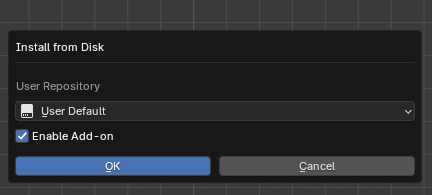
- Grab 3DGS Render 5.1 free from the GitHub repo or Superhive (formerly Blender Market). You need Blender 5.1 or newer.
- Need a splat first? Capture one with the KIRI Engine mobile app or any splat trainer, and export a
.ply. - Import it, add a light, and watch the relighting react live in the Eevee viewport.
- For motion, build a simple proxy mesh, animate it, and let the add-on transfer the movement onto your splat.
IK3D Lab Take
We have covered a lot of splat tech in the Lab, and a pattern keeps repeating: the shape problem is basically solved, and the lighting problem is where the real fight is now. Chaos unbaked splat lighting last summer; KIRI is bringing that same battle into free, open-source Blender. That is the part we love. A phone, a free add-on, and the most-used open 3D app on Earth — that is a full radiance-field pipeline with a zero-dollar entry ticket. The relighting in 5.1 is still an approximation, not physically perfect inverse rendering. But it is fast, it is live, and it is in the hands of every hobbyist tonight. That is exactly how a frontier technique stops being a research demo and starts being a tool.