Every AI 3D pipeline has a dirty little secret. It hands you a gorgeous mesh with no mouth inside, no teeth, no tongue, and zero blendshapes. A beautiful, mute statue. Meta Reality Labs just published the fix: OmniFaceRig turns any static character head — human, humanoid, dog, bear, tiger — into a fully rigged, FACS-driven face in 20 to 30 seconds, and it even grows the teeth and tongue for you.
The Story
We have covered the body problem to death here. AniGen and SkinTokens taught AI to drop a skeleton and skinning weights into a raw mesh, killing the “dead statue” era for full-body rigs. But the face was left behind. Facial rigging is the hardest, most manual job in a studio. An artist places dozens of landmarks by hand, sculpts blendshapes one by one, models a mouth interior from scratch, and prays the teeth do not poke through the lips when the character smiles. It can eat days per character.
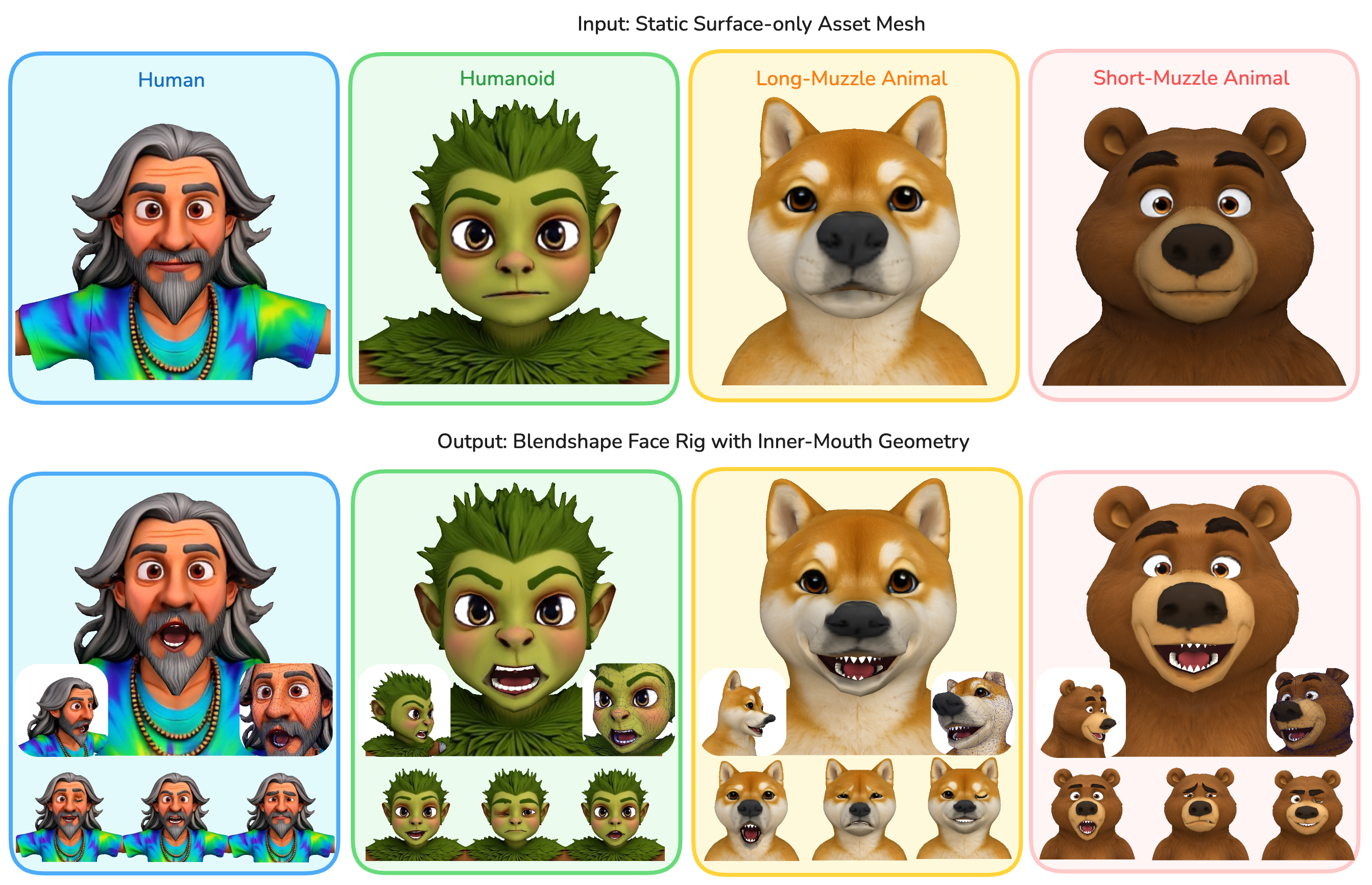
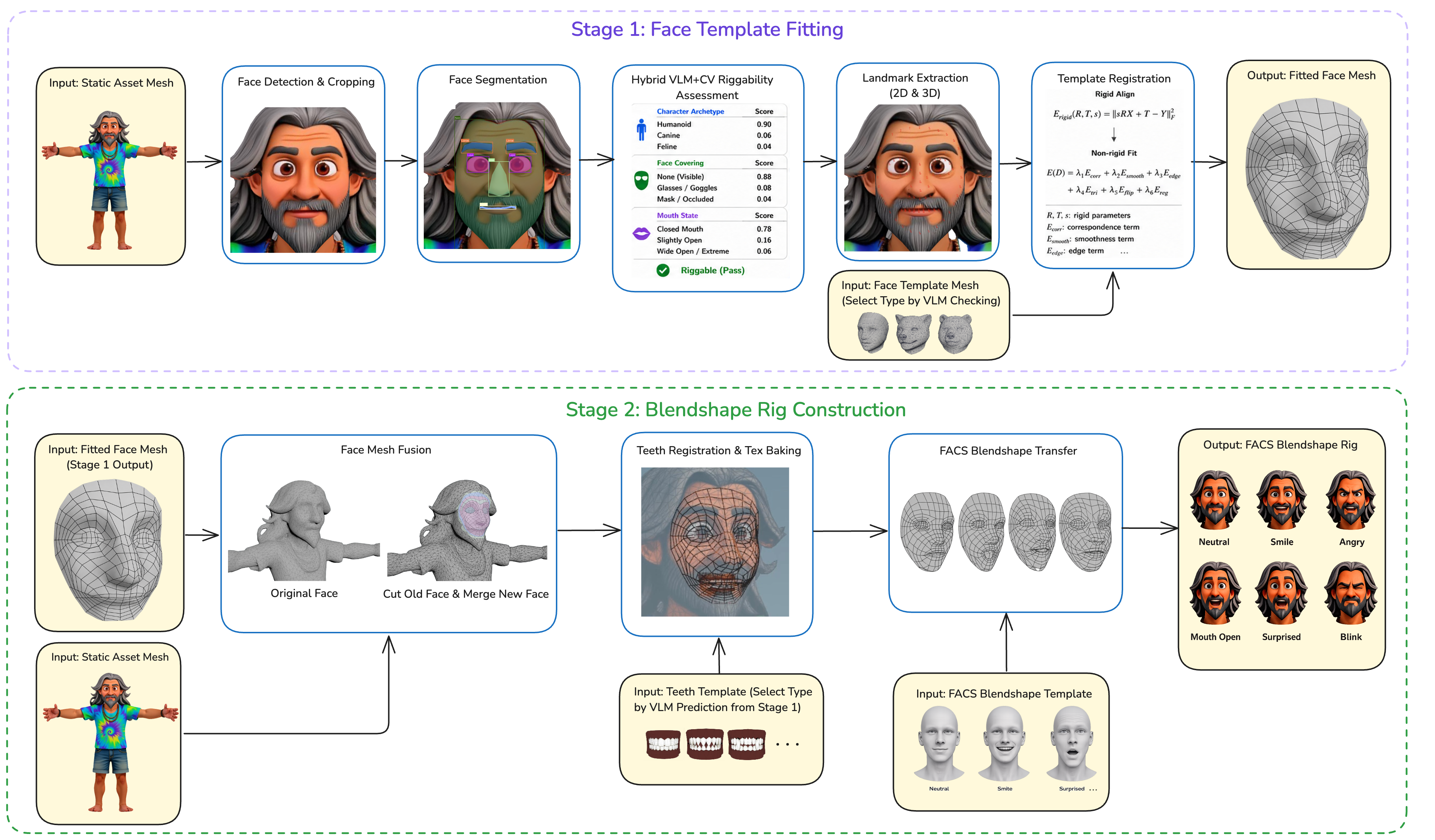
OmniFaceRig eats the whole job in one pass. Feed it a surface-only mesh — no inner mouth, no annotations, no template — and it returns up to 155 blendshapes based on FACS, the Facial Action Coding System that animators and MetaHuman rigs already speak. It procedurally fits teeth, gums and a tongue, re-packs the UVs, and bakes the textures. The output drops straight into an animation pipeline.
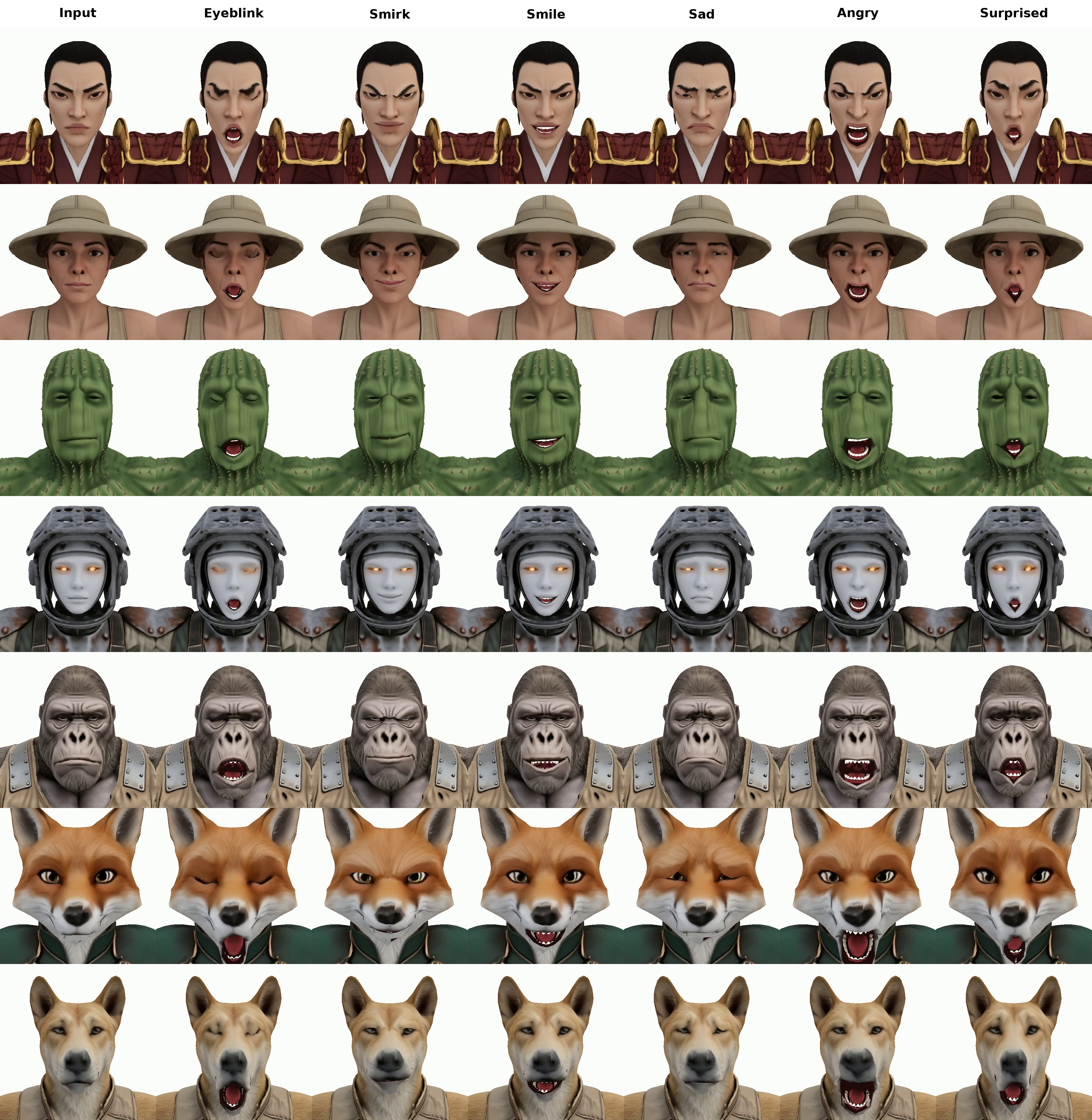
The clever part is that it does not assume you handed it a human. A vision-language model first checks whether the mesh is even riggable, then picks a topology-specific template — one family for humans and humanoids, others for long-muzzled animals like wolves and foxes, and short-muzzled ones like cats, bears and rabbits. A dog and a person walk through the same front door and both come out talking.
Why You Should Care
Image-to-3D got fast and cheap this year. Tripo, Rodin, TRELLIS 2 and friends spit out clean textured meshes in seconds. But a mesh that cannot emote is a prop, not a character. The missing link between “I generated a head” and “my head can act” was always the rig. OmniFaceRig is that link.
The numbers back the hype. Meta reports a 99% rigging success rate on human and humanoid characters, a mean vertex error of 0.85 mm, and — the detail that matters most in practice — inner-mouth penetration cut to 0.05%, a 3.4x improvement. That last one is the difference between a clean smile and teeth stabbing through a cheek. All of it runs in 20 to 30 seconds on a single A100.
Because the output is FACS, it plugs into what you already use. Any performance-capture stream, audio-to-face model, or hand-keyed animation that speaks FACS can now drive a character that was a lifeless AI-generated bust a minute ago. Game studios get NPC crowds that lip-sync. Indie animators get talking creatures without a rigging TD. Digital-human pipelines get their missing face stage.
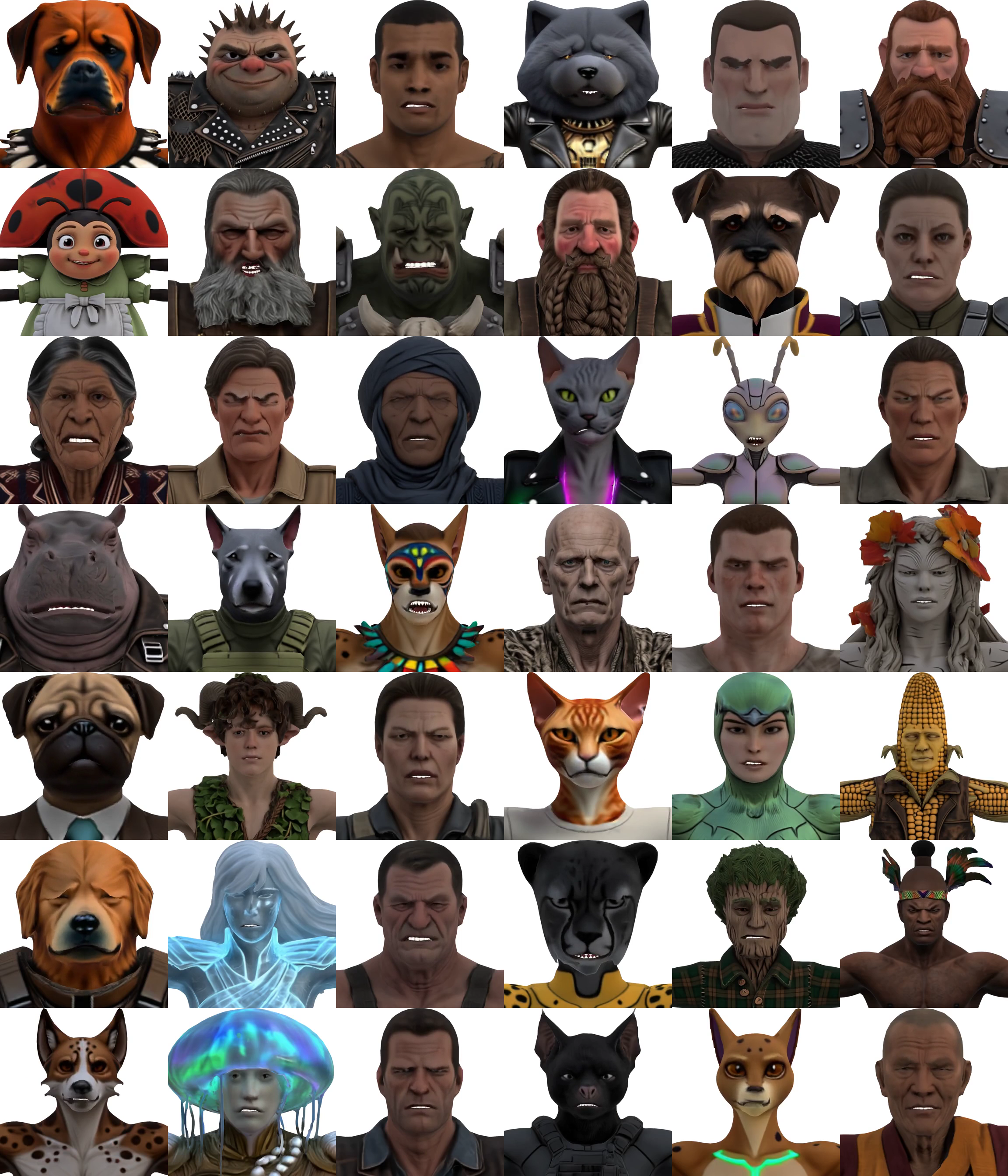
And Meta is not keeping the homework. Alongside the paper they announced Omni-Bench, a public dataset of 1,000 rigged biped characters — 500 humans and humanoids, plus cats, dogs, bears, tigers, foxes, wolves, rabbits and deer — each with full FACS blendshapes and inner-mouth geometry. They claim it is the first large-scale dataset to combine FACS blendshapes with teeth, gums and tongue for both humans and animals, and it ships with the text prompts and reference images used to generate each asset. That is rocket fuel for the next round of text-to-riggable-character research.
Try It / Follow Them
- Project page & video results: omnifacerig.github.io
- Paper: arXiv 2606.08043 (SIGGRAPH Asia / TOG 2026)
- Omni-Bench dataset: marked “coming soon” on the project page — worth watching if you build 3D or animation datasets
- Team: Chao Wang, Doug Roble and colleagues at Meta Reality Labs
One honest caveat: this is a research release, not a downloadable tool yet. No code button on the page today, and the dataset is still pending. But the pipeline is described in full, and the benchmark alone will pull the whole field forward.
IK3D Lab Take
For two years the AI 3D story was about geometry — sharper meshes, cleaner topology, faster generation. OmniFaceRig is a sign the frontier has moved. The interesting fight now is not making a shape, it is making a shape that can perform. Body rigging fell first. The face was always going to be the harder wall, because a bad facial rig reads as instantly wrong to any human eye. Meta just put a serious dent in that wall, and threw in the animals for free.
We would love to see this fused with the image-to-3D generators we keep covering: one prompt in, a fully rigged, expression-ready character out, teeth and all. On the evidence here, that pipeline is not a someday — it is a this-year. Keep an eye on that Omni-Bench download link.