An architect in Algeria, working on a laptop he says can’t even run a GPU, just shipped the plugin that drops Gaussian splats into Rhino as editable objects you can grab with the Gumball. MIT licensed. Free. Thirty-six downloads. Meanwhile Chaos, SideFX and Epic are shipping the same capability with press releases and release-note fanfare.
His name is Seghier, and he’s been quietly building the AI-to-CAD bridge nobody asked him to build.
The Story
Seghier posted Rhino Gaussian Splatting to the McNeel forum on July 8, 2026. It hit Food4Rhino by the 10th. His GitHub bio reads, in full: “Architect and designer.” Location: Algeria. Thirty public repos, most of them MIT, most of them plumbing that working architects actually need — IFC importers, Clipper2 for Grasshopper, a dotbim exchange plugin, an ArcGIS terrain fetcher.
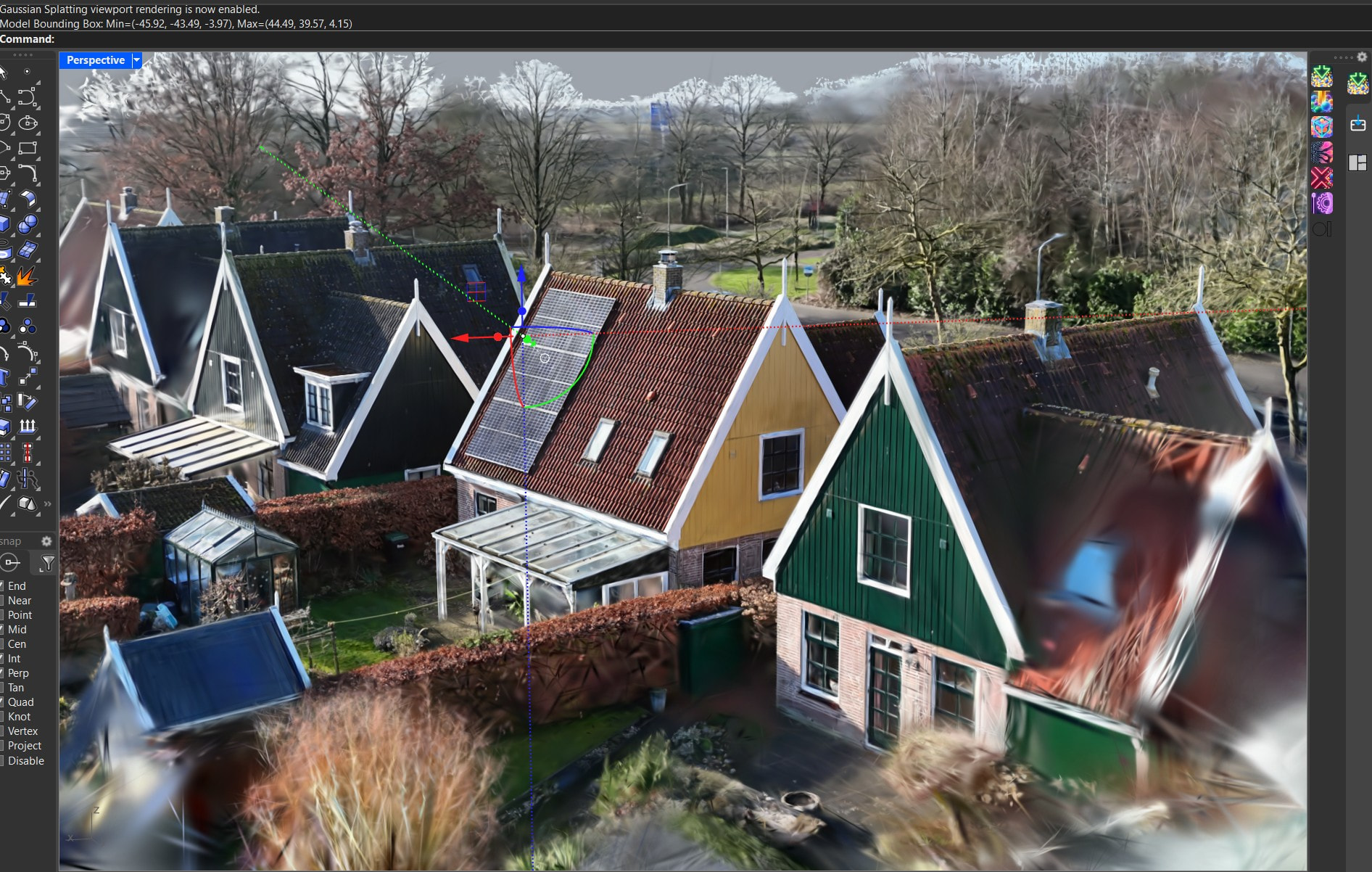
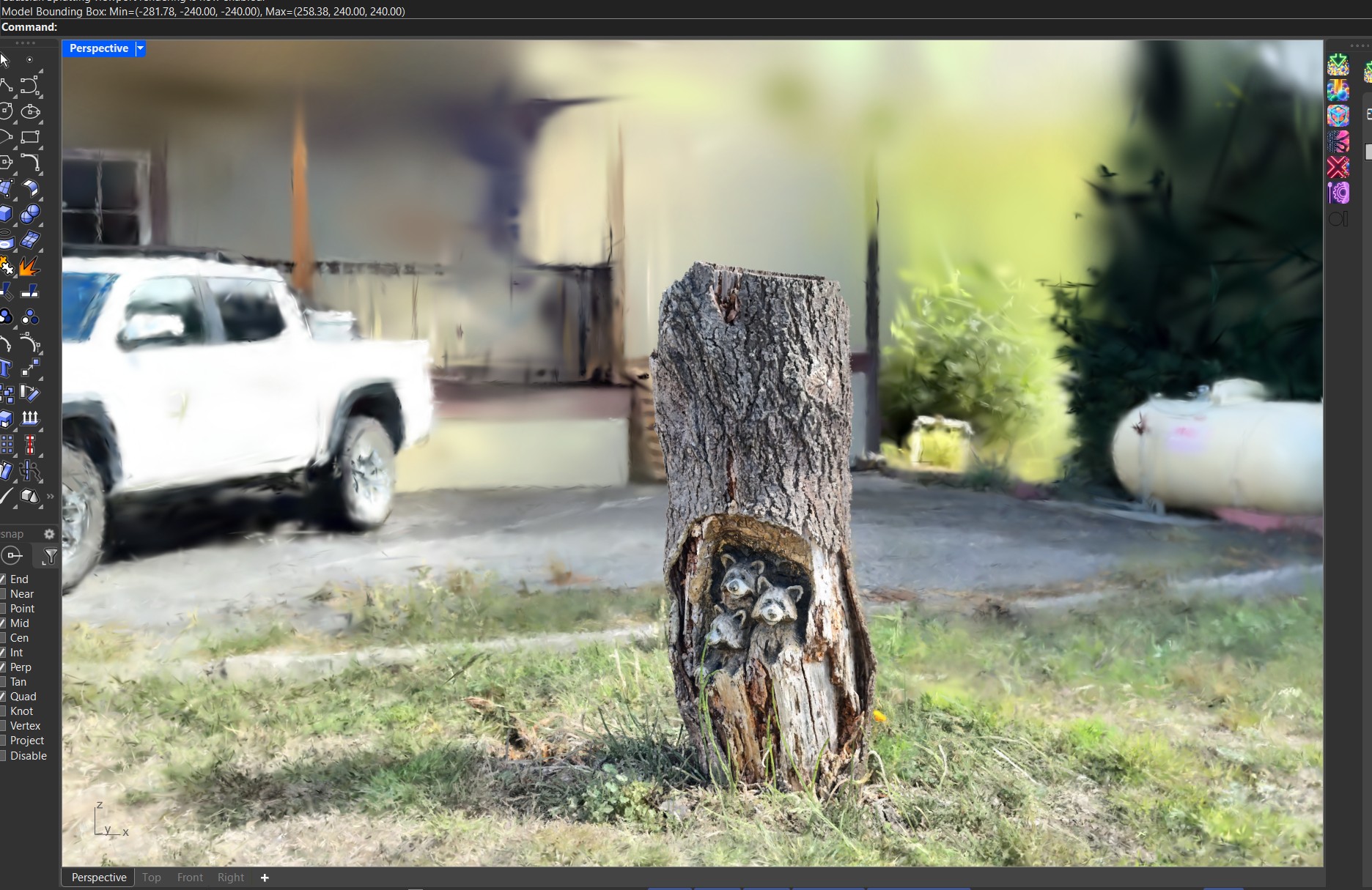
Here’s the part that makes this more than another splat viewer. Most integrations treat splats as viewport wallpaper: pretty, locked, untouchable. Seghier’s plugin renders millions of splats through a custom SplatDisplayConduit, but then does something clever — it plants a lightweight proxy point cloud in the actual Rhino document. That proxy is a coordinate handle. Which means the splat cloud moves, rotates and scales with the Gumball and every standard Rhino transform you already know. No new mental model. No modal viewer. It’s just an object.
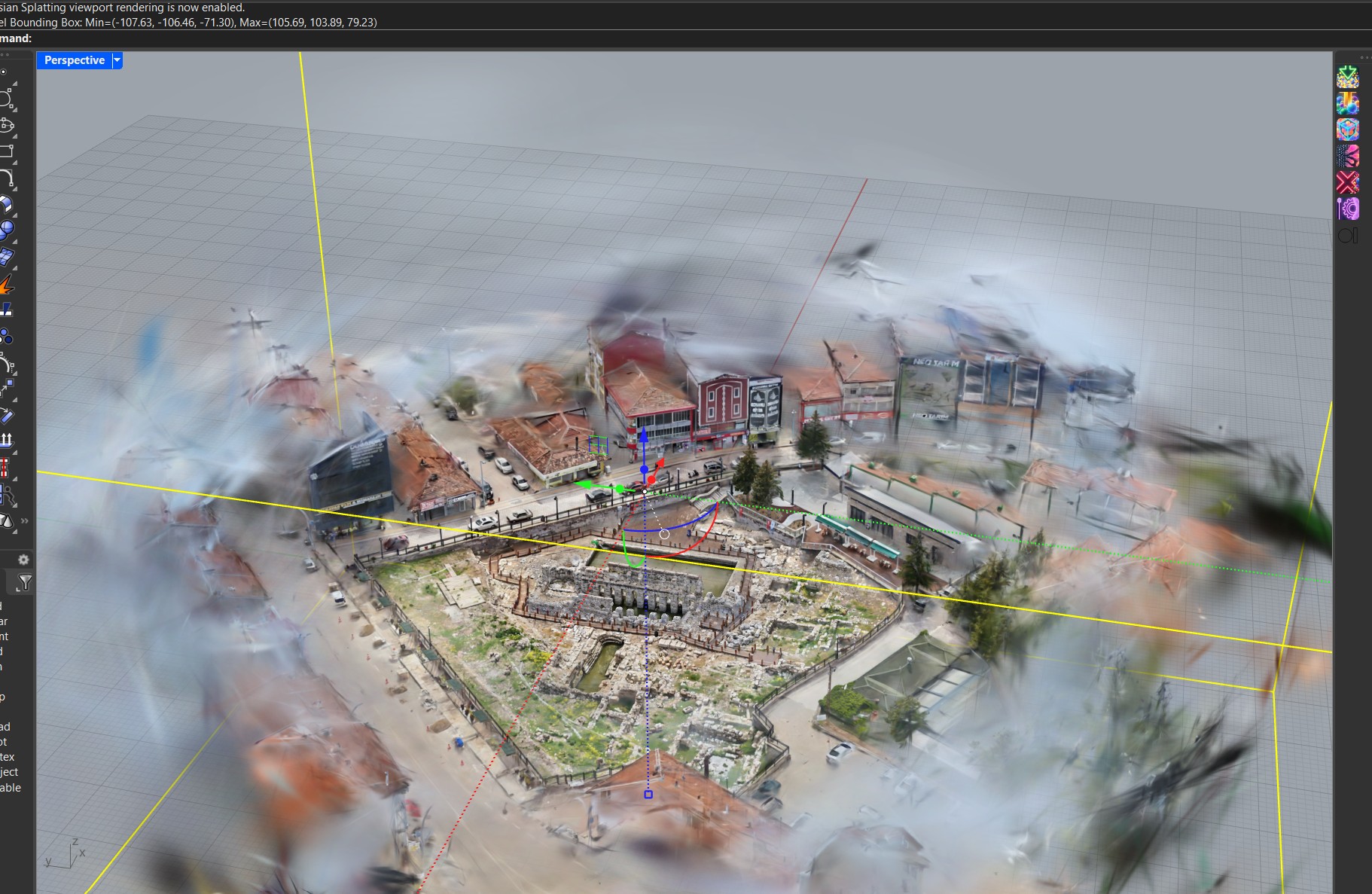
The format support is frankly absurd for a solo project. Import: .ply, LiDAR .las, .splat, .ksplat, .sog, streamed .ssog, and Niantic/Scaniverse .spz — parsing both the legacy v2 first-three and modern v3 smallest-three quaternion packing out of Gzip streams. For .ssog he walks the octree manifest and lets you pick your LOD, 0 through 3, so you can trade fidelity against VRAM instead of just crashing. Export goes back out to .ply, .splat, .ksplat.
The details underneath show someone who has actually been burned by real data. On import it detects coordinates parked far from origin and translates them, killing the floating-point viewport jitter that wrecks survey-derived scans. Point clouds with no scale property get an adaptive nearest-neighbor density pass so the particles are sized for gap-free rendering instead of confetti.
Then there’s the mesh extraction, which is where the CAD half earns its keep. He implemented Surface Nets over voxelized density and color volumes built from real 3D covariance evaluations, with Otsu thresholding auto-picking the iso-value and Taubin smoothing knocking down voxel artifacts without shrinking the volume. Vertex color comes from trilinear color-weighting mapped back onto the extracted mesh. That is a genuine research-grade pipeline, shipped free, by one person, in a plugin with 36 downloads.
And it runs backwards too. Synthetic splat baking builds camera arrays around your Rhino geometry — orbital domes outside, spherical rigs inside — repositions the viewport, grabs native depth and color buffers, and reprojects the pixels into 3D as flat-facing splats. You can turn your CAD model into a splat cloud. Nobody asked for that. It’s great.
Why You Should Care
Rhino is where a huge slice of architecture actually happens, and until now it was conspicuously missing from the splat conversation. We’ve covered splats landing in Blender, Houdini, TouchDesigner and Unreal. Those are DCC and real-time tools. Rhino is a precision tool — the place where a capture stops being a pretty picture and starts being a measured site condition you design against.
That solar panel screenshot up top is the entire argument. Fly a drone over a building, train a splat, drop it in Rhino, crop it to the roof with a closed curve, extract a mesh, and site your panel against real geometry — pitch, obstructions, chimney shadows and all. No proxy box. No “we’ll model it later.” The reality capture and the design surface live in one file, in the same units.
Which brings us to the other half of Seghier’s toolkit, and the reason this is a Lab story and not just a plugin note.
The Other Half: ComfyUI Inside Grasshopper
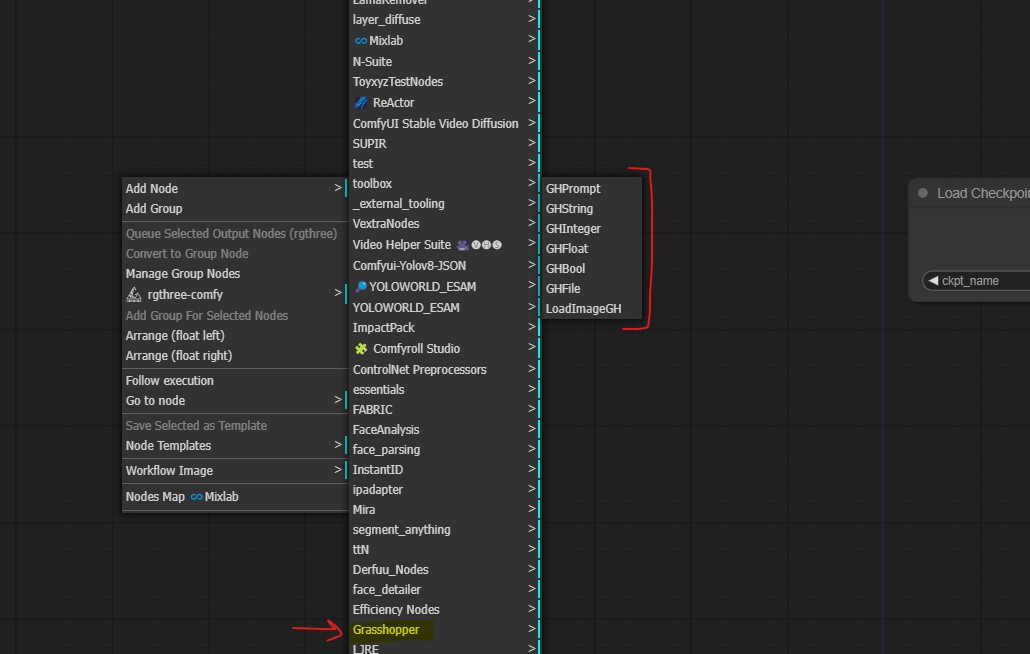
Two years before the splat plugin, Seghier built Grasshopper-ComfyUI-Nodes — a bridge that drops a Grasshopper category straight into the ComfyUI node menu. GHSampler, GHPrompt, GHInteger, LoadImageGH. You build the workflow in ComfyUI, save the API JSON, then drive seed, CFG, denoise, steps, dimensions and prompts from Grasshopper sliders. Parametric definition on one side, diffusion model on the other, one live loop between them.
And then there’s this line, sitting in the README with zero self-pity:
I have an old laptop that doesn’t support GPU, so I can’t provide any help for ComfyUI workflows.
Seghier, Grasshopper-ComfyUI-Nodes README
Read that again. He wrote the ComfyUI-to-Grasshopper bridge on hardware that cannot run the models. He built the road without being able to drive on it. Twenty stars.
Try It / Follow Them
- Rhino Gaussian Splatting — Food4Rhino. MIT, free, Rhino 8. Windows only — macOS is out because of the OpenGL situation. Commands to start with:
ExtractMeshFromSplat,EraseSplatWithBrush,FitPlaneToSplat. - Grasshopper-ComfyUI-Nodes — GitHub, MIT. Drop
gh_nodes.pyintoComfyUI/custom_nodes. Give your nodes the required nicknames (seed,cfg,denoise,steps…) or nothing wires up. - The rest of it — github.com/seghier. Thirty repos of CAD plumbing.
- The forum thread — McNeel Discourse, where he’s answering questions himself.
- He has a Buy Me a Coffee. Given the GPU thing, this is the rare one worth clicking.
IK3D Lab Take
Let’s be honest about the shape of this thing. Thirty-six downloads. Windows only. No public GitHub repo for the splat plugin, so the MIT license is a Food4Rhino field rather than a LICENSE file you can fork today — and a bus-factor of one is a real risk, not a charming detail. If your studio depends on this, budget for the day it stops.
But we keep writing the same article on this blog — NVIDIA ships splats, Adobe ships splats, Epic ships splats, Chaos ships splats — and the through-line is always a company with a GPU cluster and a marketing team. Then an architect in Algeria implements Surface Nets with Otsu thresholding and Taubin smoothing on a laptop without a GPU, wires it into the Gumball, prices it at zero, and posts it to a forum where 36 people have downloaded it.
The splat era got handed to us by a research lab and then got industrialized fast. What decides whether it’s genuinely ours is whether it reaches the specific, unglamorous tools real practitioners already live in — and whether someone bothers when there’s no market case. Rhino wasn’t a priority for anyone with a budget. Seghier did it anyway, and did it better than “priority” usually looks.
Go download it. Make it 37.