Every AI video model so far has been living a small lie. You ask for a 20-second shot, and under the hood the tool quietly generates a 5-second chunk, then another, then another, and stitches them together — praying the character keeps the same face and the lighting doesn’t jump at the seams. ByteDance just said: no more stitching. Seedance 2.5 claims to generate a continuous, unbroken 30-second clip in a single pass. If it holds up, it moves the goalposts for everyone.
The Story
ByteDance unveiled Seedance 2.5 at its Volcano Engine FORCE conference on June 23, 2026, and the public launch window opened on July 3. The headline is three claimed industry-firsts, all landing at once:
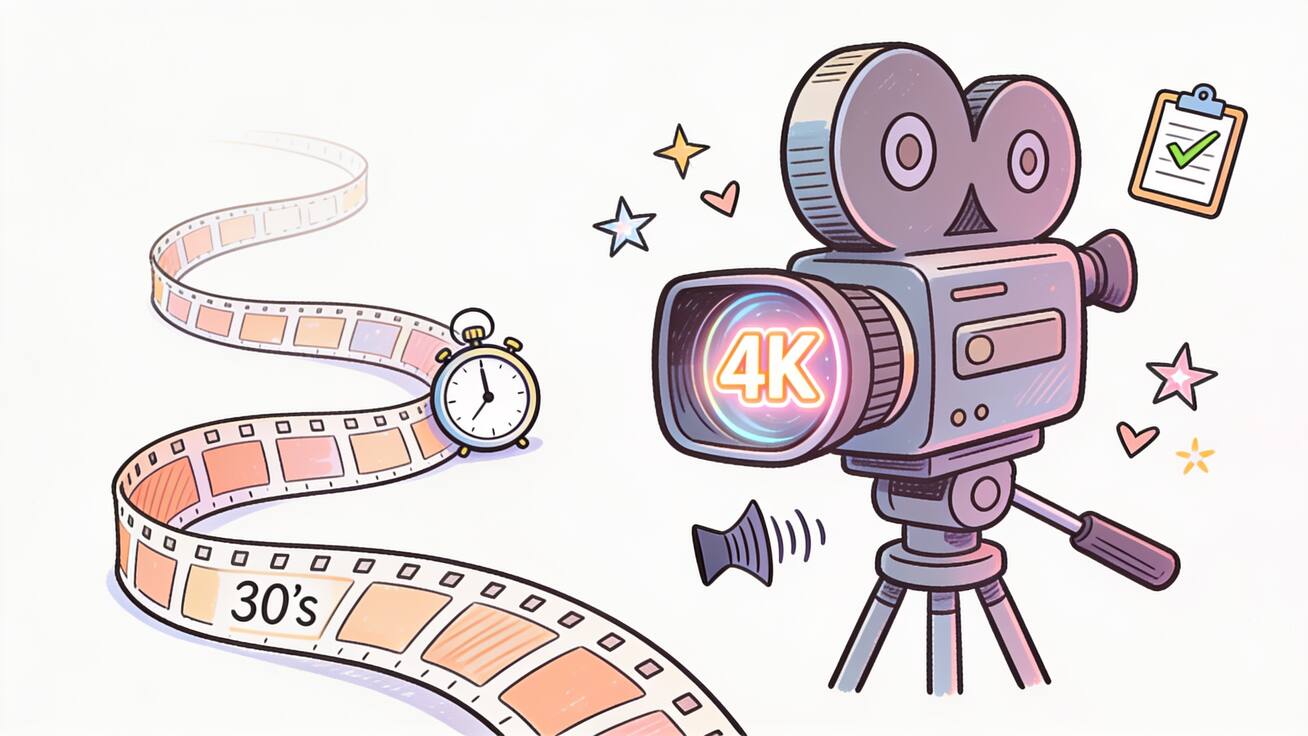
- Native 30-second generation. One continuous clip — no scene-cut splicing, no segment stitching, no visible seams. Every prior model tops out at a handful of seconds and fakes the rest.
- Joint input of up to 50 reference materials. Feed it a pile of characters, products, style boards and location plates at once, and it holds them consistent across the whole shot.
- Consistency-preserving local editing. Change one region of the frame — a character’s position, a product angle, a background element — without regenerating the entire 30 seconds. The rest of the shot is preserved.
That last one is the quiet killer. Anyone who has iterated on an AI shot knows the pain: you love 28 seconds of it, one prop is wrong, and fixing it means rolling the dice on a fresh generation that changes everything. Region-level editing isolates the change. It turns AI video from a slot machine into something closer to a timeline you can actually art-direct.

Why You Should Care
Duration has been the invisible ceiling on AI filmmaking. Under ~10 seconds, you’re making moments — a loop, a reveal, a B-roll beat. Past that, temporal consistency collapses: the identity drifts, the physics wobble, the background reinvents itself. A genuine 30-second coherent shot is roughly the length of an entire commercial, a full establishing sequence, or a complete dialogue beat. It’s the difference between generating clips and generating scenes.
For the creative-tech crowd, the 50-reference joint input is just as important. It’s the practical bridge between the image-consistency work we’ve been tracking (character sheets, style refs, product locks) and motion. You’re no longer prompting in the dark — you’re compositing known assets into a moving shot. Combine that with local editing and you have something that behaves less like a generator and more like a directable set.
The Honest Caveats
Enthusiasm, but with eyes open. As of the July launch window, Seedance 2.5 is still in closed enterprise beta, with public access rolling out through ByteDance’s Dreamina and Jimeng platforms. Crucially, no independent benchmarks exist yet — every number and “industry-first” here is ByteDance’s own claim, unverified by third parties. The predecessor Seedance 2.0 topped video leaderboards but had its developer API held back for months over copyright disputes, and the same “copyright cloud” is already trailing 2.5. Treat the 30-second promise as a headline to test, not a settled fact.

Try It / Follow It
- Watch for the public rollout on Dreamina and Jimeng — that’s where access lands first outside enterprise beta.
- Read the hands-on write-ups gathering at Seedance.tv and the Tosea guide while you wait for the API.
- When you get in, stress-test the two claims that matter: does the 30-second shot actually hold identity end-to-end, and does local editing leave the rest of the frame untouched?
IK3D Lab Take
We’ve watched the AI video race sprint from 4 seconds to 60 in barely a year — Kling, LTX-2, Wan, Gemini Omni, and now this. But raw duration was always the easy metric to hype and the hard one to deliver coherently. What makes Seedance 2.5 interesting isn’t the 30-second number by itself — it’s the pairing of long shots with 50-reference control and surgical local editing. That trio is what turns “generate a clip and hope” into an actual production workflow. If the independent tests confirm even half of it, this is the moment single-pass AI video stops being a demo toy and starts threatening the storyboard-to-shot pipeline for real. We’re skeptical of the unverified benchmarks, hungry to break it ourselves, and watching Dreamina like hawks. Consider this our note-to-self to circle back the day the API opens.