Hook
Six years ago, two grad students decided a 3D scene didn’t need geometry at all — just a neural network and a clever way to render it. This month, the ACM handed Ben Mildenhall and Pratul Srinivasan the Grace Murray Hopper Award — computing’s top prize for early-career researchers — for that exact idea: NeRF. If you’ve touched a Gaussian splat, a text-to-3D model, or an AI world generator this year, you’ve been standing on their shoulders the whole time.
The Story
On June 3, the Association for Computing Machinery named Mildenhall and Srinivasan the 2025 recipients of the Grace Murray Hopper Award — “for contributions to radiance field representations, 3D scene capture and rendering, and pioneering neural implicit representations and 3D generative AI.” It’s the same pair, the same season, that SIGGRAPH 2025 honored with its Significant New Researcher Award. Back-to-back recognition for work the industry now quietly treats as plumbing.
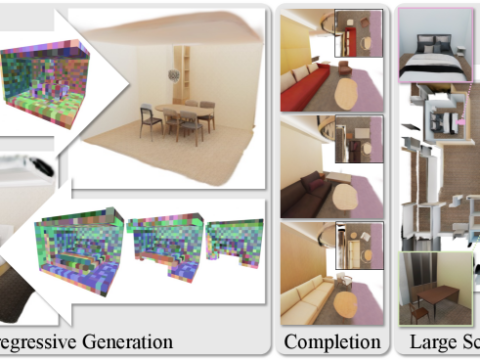
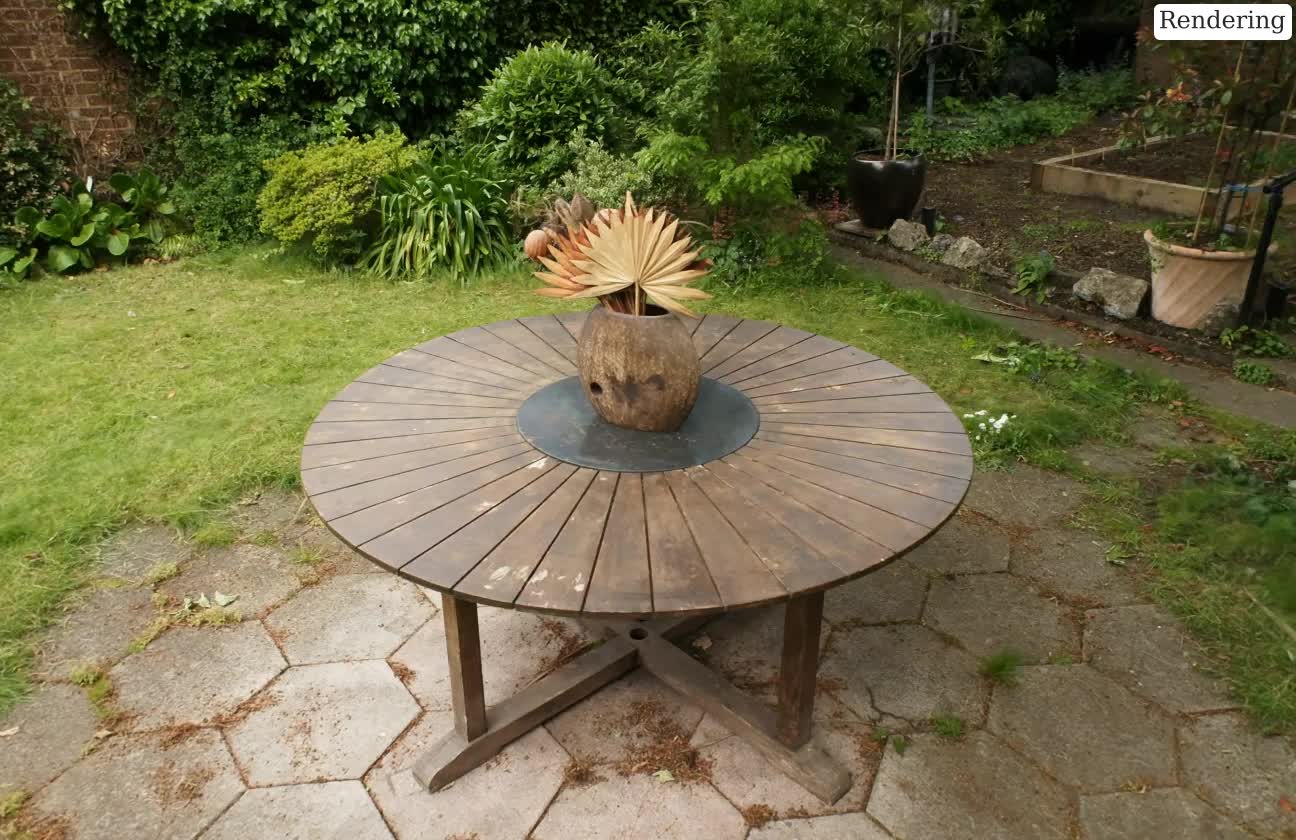
The work is NeRF — Neural Radiance Fields — published in 2020. The premise was almost heretical: instead of storing a scene as a mesh or a point cloud, encode the whole thing in the weights of a small neural network. Ask that network “what color and density is this point in space, seen from this direction?”, march rays through it with classic volume rendering, and out come photorealistic novel views from nothing but a handful of input photos. No explicit geometry. Fully differentiable. It worked unreasonably well — and it detonated an entire research field overnight.
What followed was a tear of follow-ups from the same circle: Mip-NeRF and Mip-NeRF 360 killed the aliasing and cracked open unbounded, 360° scenes; Block-NeRF scaled it to entire city blocks; Zip-NeRF pushed fidelity higher still. Then they turned the idea generative. Per the ACM citation, the pair “spearheaded the area of generative AI for 3D” — DreamFusion showed you could distill a 2D diffusion model into a 3D object from a text prompt, and CAT3D used multi-view diffusion to conjure a whole scene from a few images, or even one.
Why You Should Care
Here’s the part that matters for anyone who reads the Lab: almost everything we cover is downstream of this. The 3D Gaussian Splatting explosion — every capture app, every splat viewer, the OpenUSD and glTF splat standards, the splats landing in Blender, Houdini, Photoshop and Octane — is the explicit, real-time cousin of the radiance-field idea NeRF defined. The text-to-3D and image-to-3D wave (Tripo, Rodin, TRELLIS, Meshy) descends directly from DreamFusion’s “lift 2D priors into 3D” trick. The world-model gold rush — Genie, Marble, HunyuanWorld, Lyra — is radiance fields with a generative engine bolted on.
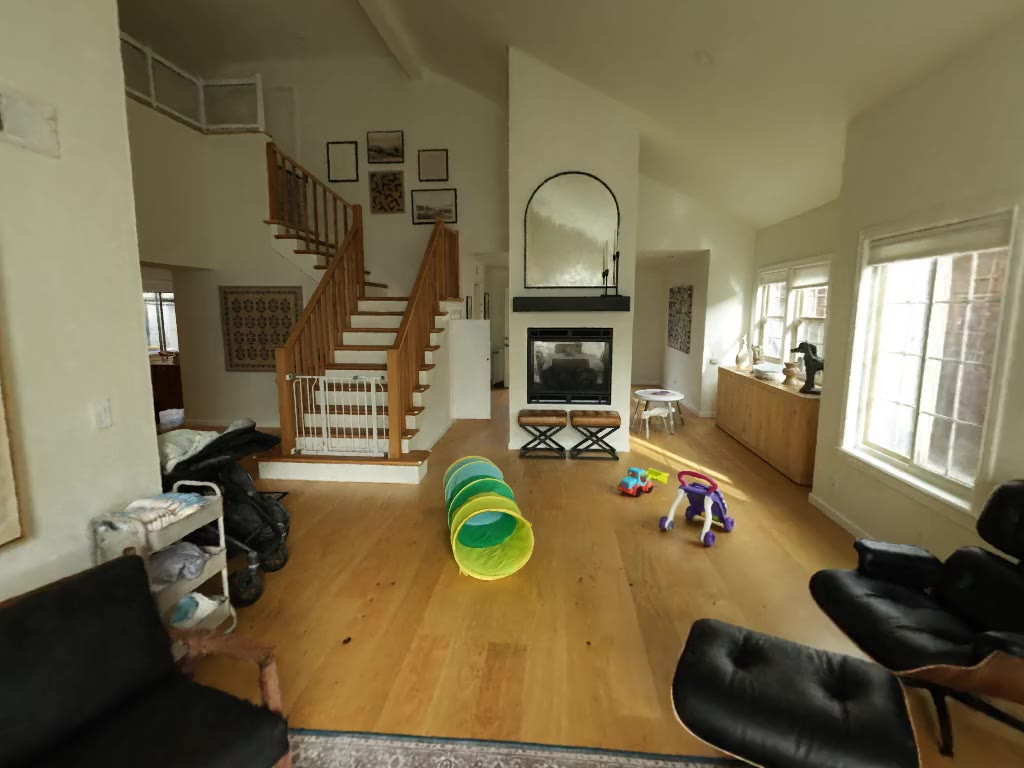
Be honest about one thing: NeRF itself has largely been overtaken by 3D Gaussian Splatting for real-time work — splats train faster and render at 60+ FPS where NeRF crawled. But that’s exactly what a foundational idea is supposed to do. NeRF didn’t win by staying the best renderer; it won by proving a 3D scene could be a differentiable, learnable function. Everything after — splats included — is a remix of that one thesis.
And these aren’t historians collecting a lifetime-achievement plaque. Mildenhall co-founded World Labs, Fei-Fei Li’s spatial-intelligence startup building explorable AI worlds — the same Marble / World Labs work we keep covering. Srinivasan is a research scientist at Google DeepMind. The people who lit the fuse are still building the rockets.
Try It / Follow Them
- Read the originals. The NeRF paper is still one of the most readable breakthroughs in graphics. Then skim Mip-NeRF 360, Zip-NeRF, DreamFusion and CAT3D to watch the idea evolve in real time.
- Follow the people. Mildenhall and Srinivasan publish openly; their Google Scholar pages read like a roadmap for where 3D AI is heading next.
- Try the descendants today. Capture a Gaussian splat in any phone app, generate an asset with Tripo or Rodin, or walk into an AI world with World Labs’ Marble — and notice you’re using their idea every single time.
IK3D Lab Take
We’ve published something like thirty articles about splats, world models and text-to-3D this year. This is the session where we name the source. NeRF wasn’t a product — it was a reframing: a scene is a neural function you can optimize. That single sentence rewired an entire industry. The Grace Hopper Award going to Mildenhall and Srinivasan isn’t nostalgia; it’s the field finally admitting that the unassuming 2020 paper was the big bang. If you make anything in 3D in 2026, take five minutes this week to read where it all started — you’ll see the next decade a lot more clearly.