Hook
Most text-to-3D tools hand you a frozen mesh and wish you luck. VARCO 3D hands you a rigged, animated, game-ready character — in your browser, in minutes, for roughly 35 cents. And the studio behind it isn’t a startup chasing hype: it’s NC AI, the AI arm of NCSOFT, the Korean game giant behind Lineage and Throne and Liberty.
The Story
NC AI quietly launched VARCO 3D on December 1, 2025, and it’s the rare AI 3D tool built by a company that actually ships games for a living. That heritage shows. Where Meshy, Tripo, Rodin and Hunyuan 3D mostly compete on mesh quality, NC AI optimized for the thing studios secretly hate most: the pipeline. The handoffs. The remeshing. The rigging. The week-long slog between “cool concept” and “asset that moves in-engine.”
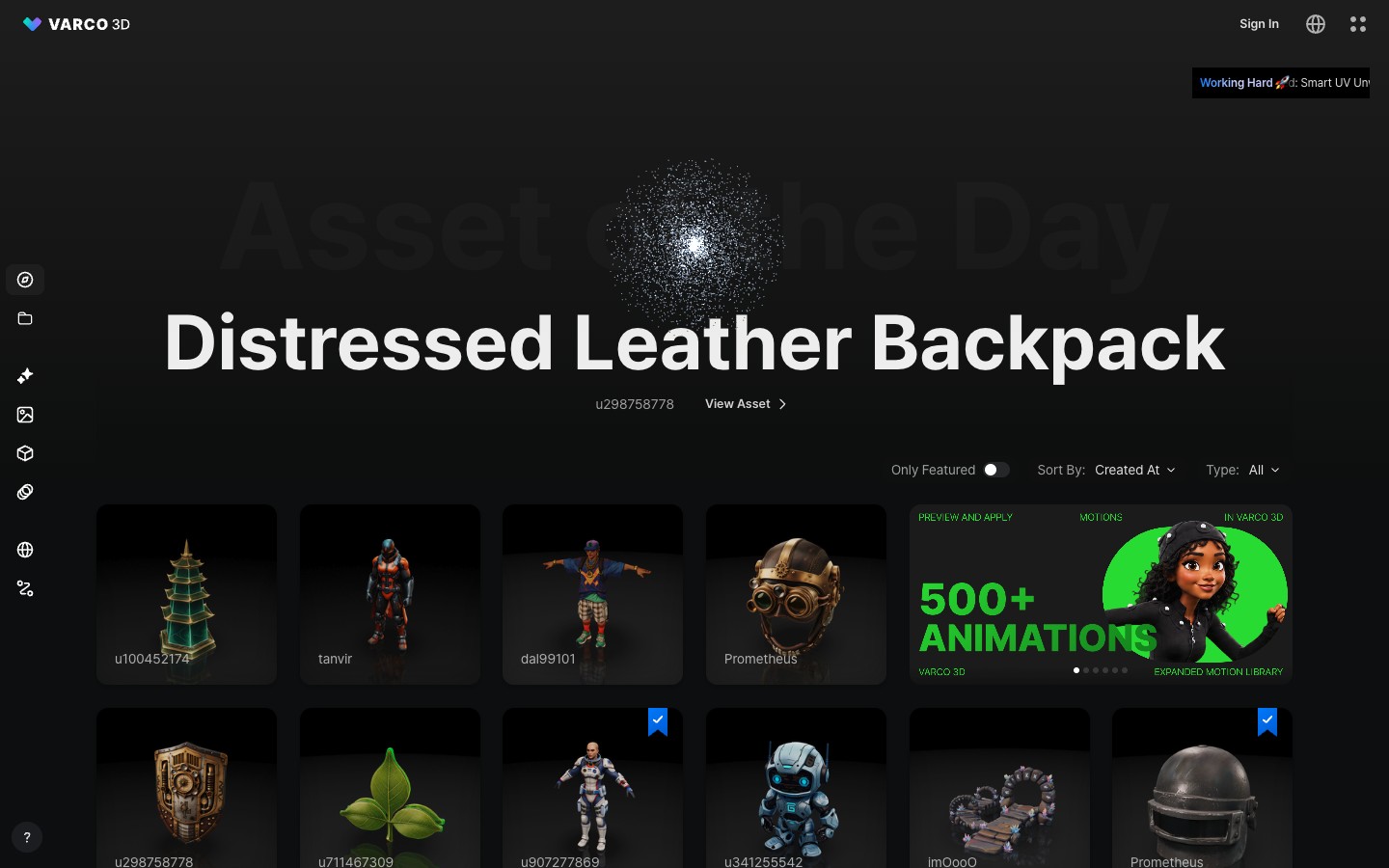
So VARCO 3D collapses the whole chain into one browser tab. You type a prompt (or drop an image), and it first shows you a 2D sketch to lock the concept. Approve it, and the platform generates the mesh, remeshes it to clean topology, paints textures, rigs the model, and lets you apply animations from a library the team advertises at 500+ motions — then play it back, right there. Concept ideation to a moving character, without ever leaving the page or touching a DCC app.
The numbers NC AI puts on it are the headline: a process that traditionally took over four weeks now runs in as little as three minutes, at a cost of around 500 KRW (~$0.35) per asset. Bold claims are cheap in this space — but NC AI backed it with a real test. At a game-development contest, the winning team built 82% of its total 3D assets in VARCO 3D, and 38% of those shipped into the game with zero post-processing. That second figure is the one that matters: it means a meaningful slice of AI output cleared the production bar untouched.
Why You Should Care
The AI 3D race has been stuck at the “beautiful static mesh” finish line for two years. That’s lovely for a turntable render, but a static mesh is maybe 20% of what a game or animation actually needs. The expensive part — retopo, UVs, rigging, skinning, animation — is exactly what VARCO 3D is trying to automate end to end.
- Indies and small studios get a populated scene without a dedicated character pipeline or an outsourcing budget.
- Pre-viz and prototyping stops being a bottleneck — block out a level with moving placeholders in an afternoon.
- The remesh + rig step is the real differentiator. Clean-ish topology and an auto-rig out of the box is what separates a demo from a tool you’d actually use.
The honest caveats: auto-rigs still struggle with non-humanoid or exotic anatomy, AI topology rarely beats a careful human retopo for deforming hero assets, and “38% with no post-processing” politely implies 62% still needed a pass. This won’t replace your character artist. But for crowds, props, background NPCs and rapid iteration, it changes the math.
Try It / Follow Them
- Tool: 3d.varco.ai — sign in, type a prompt, and watch the sketch → model → rig → animate flow.
- Browse first: the Explore gallery is the fastest way to gauge real output quality across characters, props and environments.
- Company: NC AI — the NCSOFT subsidiary, also behind the VARCO LLM and image models.
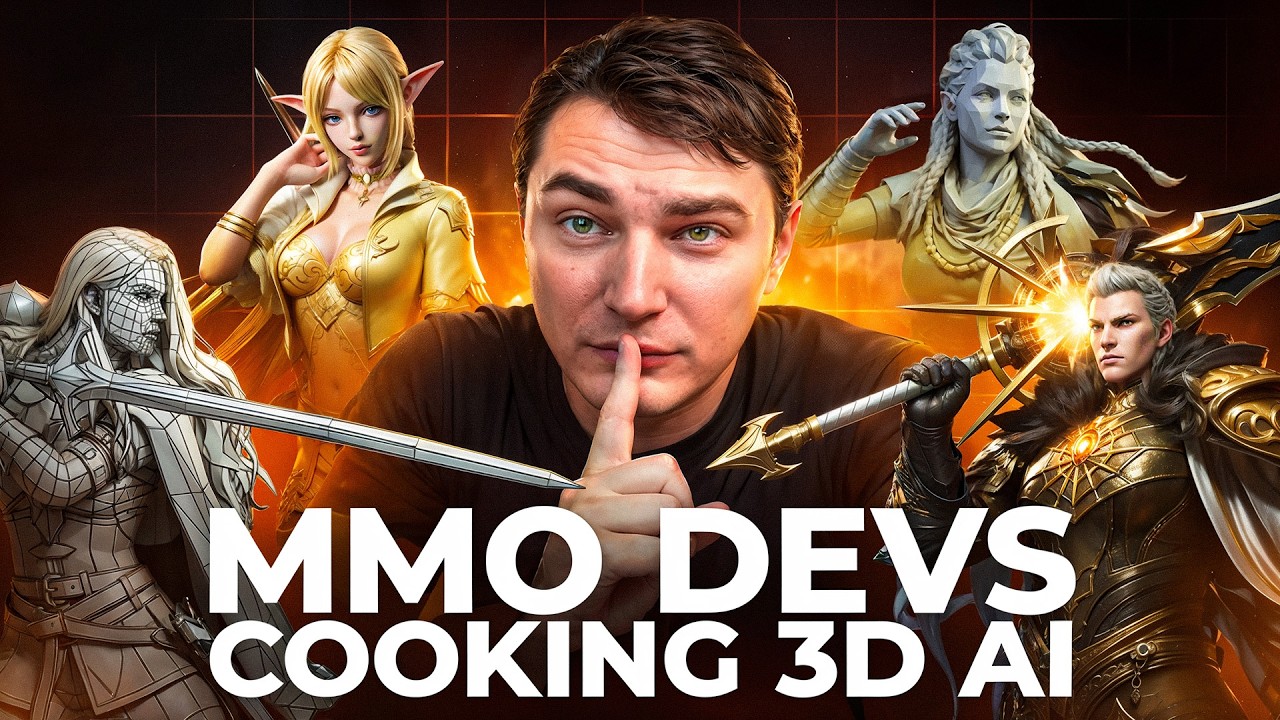
- Watch: the launch walkthrough for the full pipeline in motion.
IK3D Lab Take
VARCO 3D is the most interesting tell in AI 3D right now — not because the meshes beat Rodin or Hitem3D’s ultra-high-res output, but because a real game studio looked at the whole problem and decided the win was the pipeline, not the polygon. Everyone else is racing to generate a prettier statue. NC AI is racing to generate something that walks. For a Lab whose audience lives in Blender, Unreal and Unity, that’s the more useful direction by a mile. Try it on a throwaway prop, then push it on a humanoid and see where the rig breaks — that boundary is exactly where the next year of this field gets decided.