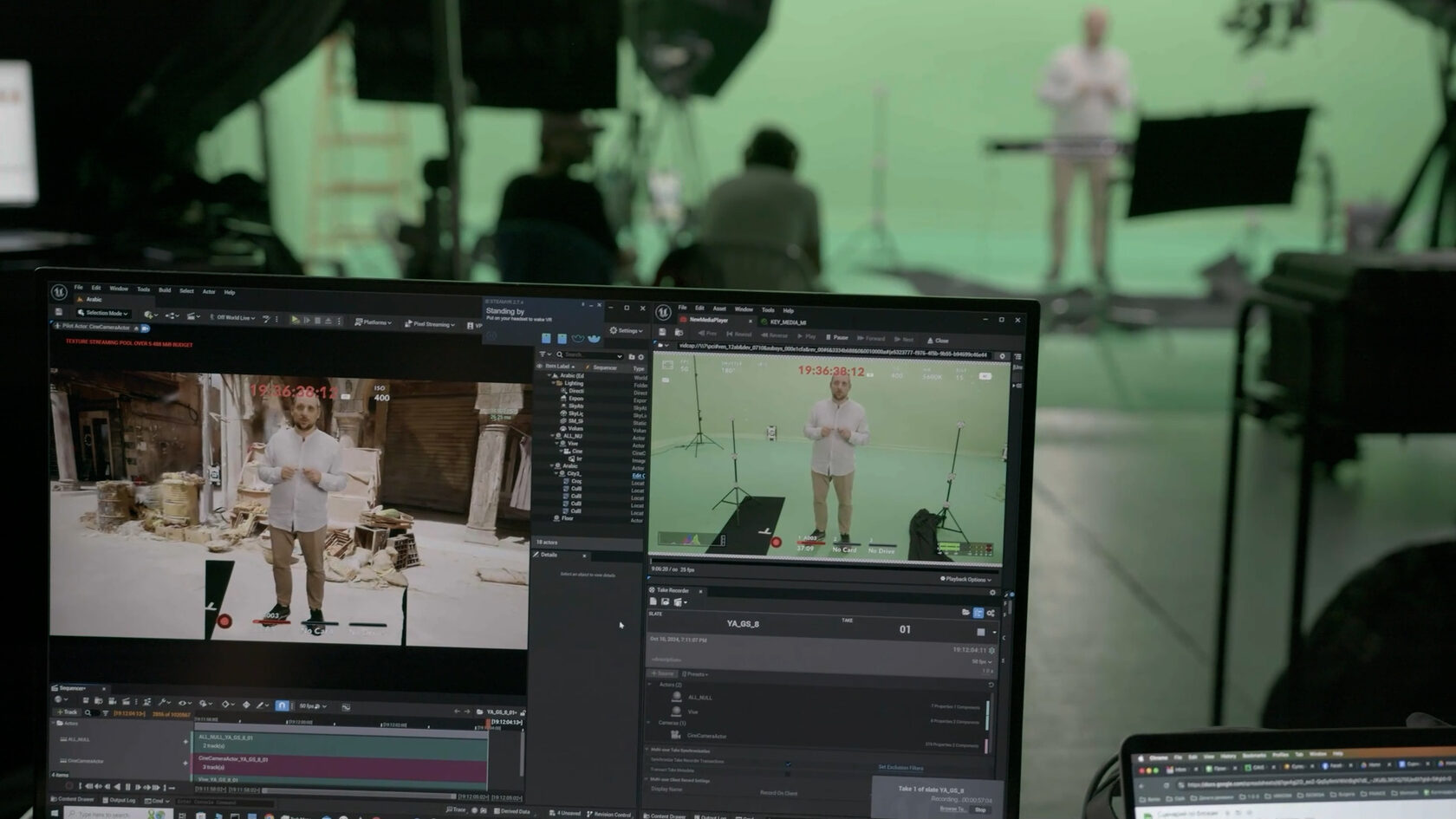
Here is the sentence nobody had on their 2026 bingo card: Yandex just open-sourced a production-grade Gaussian splatting plugin for Unreal Engine — and it solves the one problem every other UE splat plugin has been faking for two years. It is called YaGS (“Yet another Gaussian Splatting”), it is Apache 2.0, and it makes splats and polygons occlude each other correctly. That single feature changes what you can actually build with a captured or AI-generated splat.
The Story
If you have ever dropped a Gaussian splat into Unreal, you know the dirty secret. Most existing plugins render the splat as a kind of billboard sprayed over the scene — a beautiful flat image floating in front of your geometry. Walk a character behind a splatted pillar and the character stays visible, ghosting through solid stone. The splat never wrote itself into the engine’s depth buffer, so Unreal has no idea where it lives in 3D space. No real occlusion, and your post-processing stack — depth of field, motion blur, TAA/TSR — quietly breaks because none of it knows how far away the splat is.
YaGS takes the boring, correct road. As Radiance Fields put it, “YaGS instead writes splat depth into the scene so mutual occlusion and the engine’s existing post process stack simply function.” Splats and meshes occlude by actual position, not as a flat composite. Enable the depth pass and depth of field, motion blur and temporal anti-aliasing behave exactly as they would with normal geometry. Your captured coffee shop and your polygonal robot finally live in the same room.
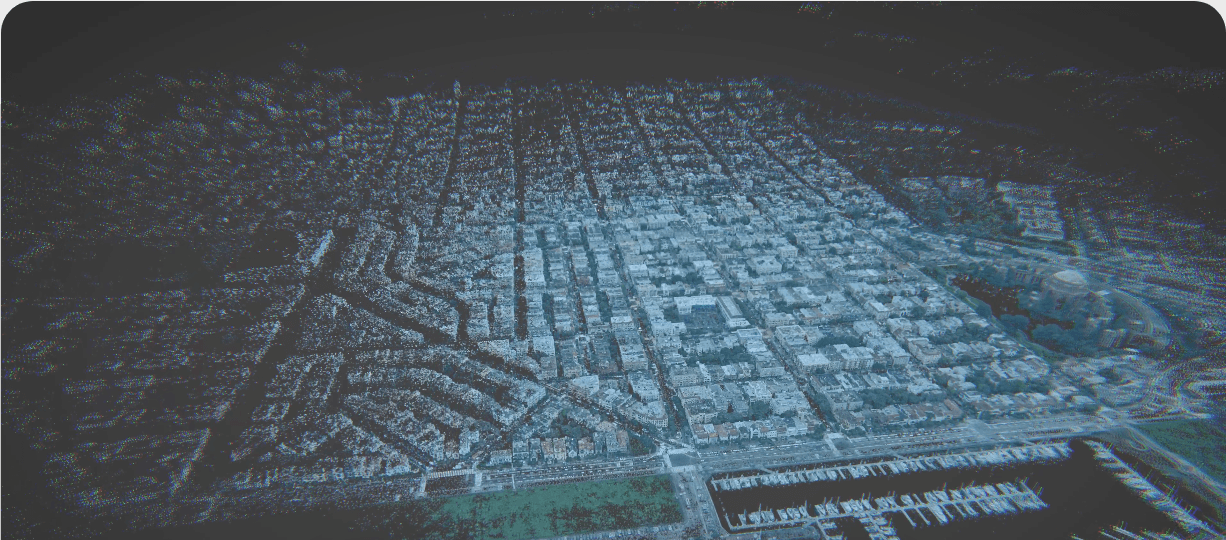
The feature list reads like someone shipped a real product and then walked away. There are two rendering backends: a Mesh Shader path (the default, recommended for NVIDIA Turing-and-newer or AMD RDNA2-and-newer) that lightens the input-assembler load, and a Vertex Shader path for older hardware. It imports .ply and .sog (the compact PlayCanvas format) and exports back to .ply. You get non-destructive editing right in the editor — Boolean and Appearance volumes to crop, cull, and color-correct splats (hue, saturation, brightness, tint, gamma) per actor or per instance, with no baking. And there is smart instancing: up to ~60 unique objects with unlimited instances that share the same data in VRAM, so a street lined with the same splatted lamppost costs you memory once.
The honest caveat, straight from the source: YaGS is described as “a finished, forkable code drop rather than an actively maintained product.” No roadmap, no promises. It targets Unreal 5.5 through 5.7 (5.7.3 on the main branch), and it wants a reasonably modern GPU — an RTX 3070 / RX 6700 XT or better with 8GB+ of VRAM is the comfortable floor. This is a gift dropped on the table, not a subscription.
Why You Should Care
Here is the AI thread the Lab cares about. Splats are no longer just something you capture with a phone. In the last few months we have covered a wave of models that generate Gaussian splats outright — TripoSplat turning one image into a splat, World Labs’ Marble speaking whole places into existence, 404—GEN’s miner swarm building splats from a text prompt. All of that output has to land somewhere you can actually make a game, a film shot, or an architectural walkthrough. For a huge slice of the industry, that somewhere is Unreal Engine.
Up to now the last mile has been leaky. You could generate a gorgeous AI splat and drop it into UE, but it sat on top of your world like a sticker. YaGS closes that gap. The moment splats respect depth, an AI-generated environment stops being a backdrop and becomes a playable, walk-behind-it, cast-shadows-into-it space. Text-to-splat plus correct-occlusion-in-Unreal is a genuine content pipeline, not a tech demo.

And there is the who. Yandex is a search-and-maps giant with a serious autonomous-driving and mapping arm — teams that live and breathe real-world 3D reconstruction. That they chose to release this as clean, Apache-2.0, forkable code instead of a walled product is the kind of thing that quietly accelerates a whole ecosystem. Anyone can fork it, wire it to their own AI-splat generator, and ship.
Try It
Setup is refreshingly boring, which is the highest compliment for a UE plugin. Drop the YaGS folder into <YourProject>/Plugins/, open the project (Unreal rebuilds the plugin for you), then enable it under Edit → Plugins → search “YaGS.” Import a .ply or .sog, turn on the depth pass, and drag a mesh behind your splat to watch the occlusion actually work.
- Code: github.com/yandex/yags (Apache 2.0)
- Engine support: Unreal Engine 5.5–5.7 (main branch on 5.7.3)
- Formats: import
.ply/.sog, export.ply - Coverage & details: Radiance Fields write-up
IK3D Lab Take
We have spent months tracking the models that make splats. YaGS is a reminder that the plumbing matters just as much as the magic. Correct depth compositing sounds unglamorous next to “type a sentence, get a world” — but it is exactly the unglamorous thing that decides whether an AI-generated splat is a screenshot or a place you can play in. The fact that it arrived as an Apache-2.0 code drop from Yandex, with no strings, is the open-source spirit doing what it does best: handing everyone the missing piece and getting out of the way. Fork it, point your favorite text-to-splat model at it, and see how far the last mile has just moved.