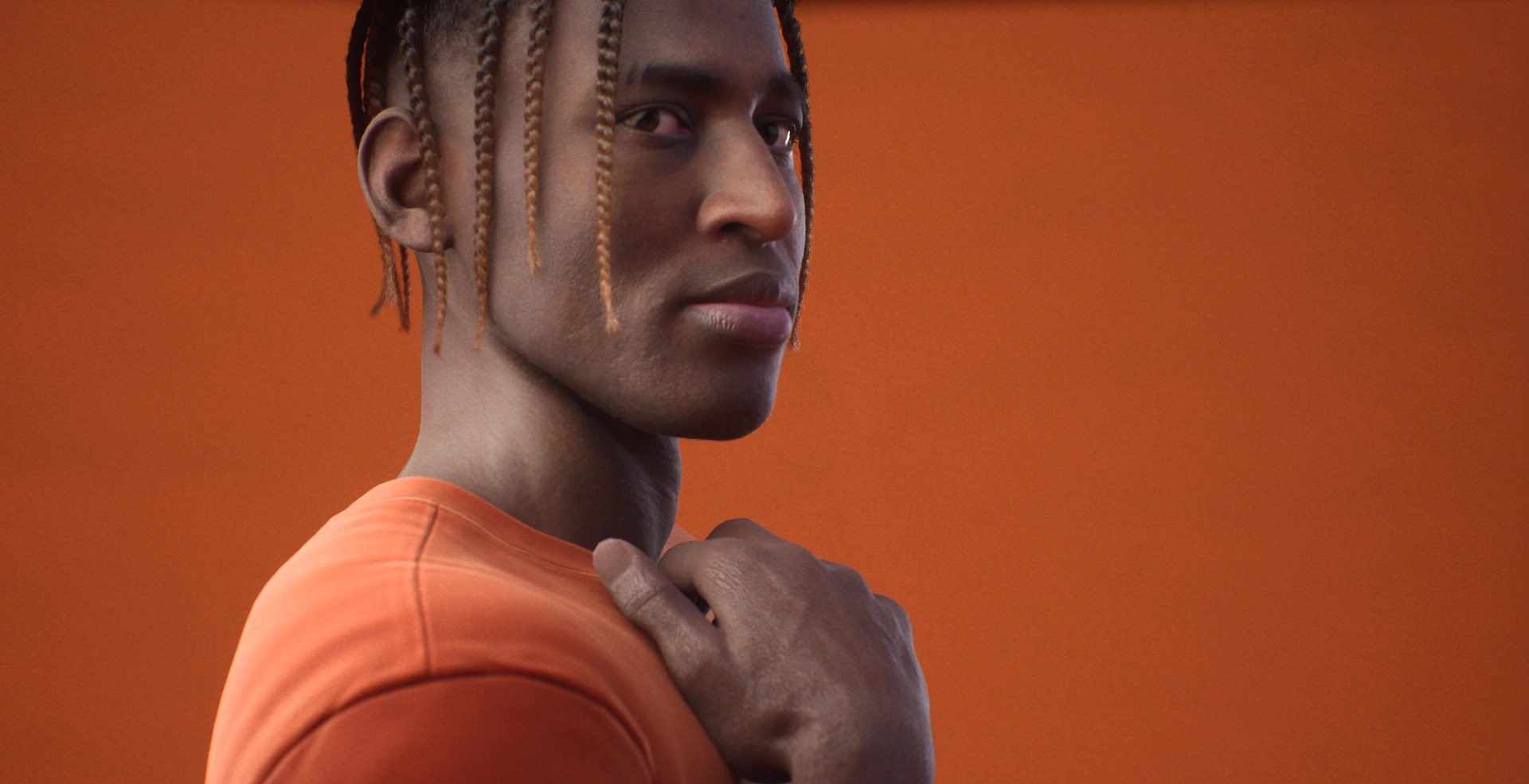
For years, MetaHuman was the most impressive digital human tool you couldn’t fully use — not if you worked in Blender, ZBrush, or anything outside Epic’s approved pipeline. That just changed with MetaHuman 5.7, and the implications for indie creators and 3D artists are massive.
The Story
Epic released MetaHuman 5.7 alongside Unreal Engine 5.7, but the real story isn’t the version number — it’s what they fixed. The complaints were loud and consistent: you’d create a stunning MetaHuman character, but the moment you tried to export it to Blender or ZBrush for custom sculpting, the whole workflow fell apart. The body conforming relied on vertex ID ordering, which is destroyed the second you export via FBX from Unreal. Round-tripping was officially impossible unless you were using Maya or Houdini with Epic’s proprietary plugins.
On top of that, your character HAD to be in a strict A-pose for conforming to work. Not close to an A-pose — exactly an A-pose. And character heights? Locked within the MetaHuman database range. Want a very short character or a troll? Good luck.
MetaHuman 5.7 kills all three of these friction points in a single release.
What’s Actually New
- FBX Round-Trip — finally real. The team switched from vertex ID ordering to UV mapping for vertex correspondence. This means you can now export your character, sculpt freely in Blender, ZBrush, or any DCC you prefer, and reimport it back into MetaHuman Creator without losing rig data. This is huge.
- Arbitrary Pose Support. The A-pose requirement is gone. The conforming process now supports any pose in a viable range (between A-pose and T-pose). You’ll still get best results near A-pose, but the rigid constraint that was breaking so many workflows is lifted.
- Extreme Proportions / Non-Human Characters. A new “Estimate Joints from Mesh” option fits joints volumetrically, enabling you to rig characters that are far outside the MetaHuman database — trolls, giants, stylized creatures.
- Extended Height Range. Characters can now exceed the previous min/max height limits of the MetaHuman database.
- Python & Blueprint Automation. You can now batch process and automate nearly all editing and assembly operations — sculpting, conforming, wardrobe, rigging, textures. Build it into your pipeline. Run it on a compute farm.
- Linux & macOS Support. The MetaHuman Creator plugin for Unreal Engine now runs on all three major platforms.
Hair That Actually Moves Right
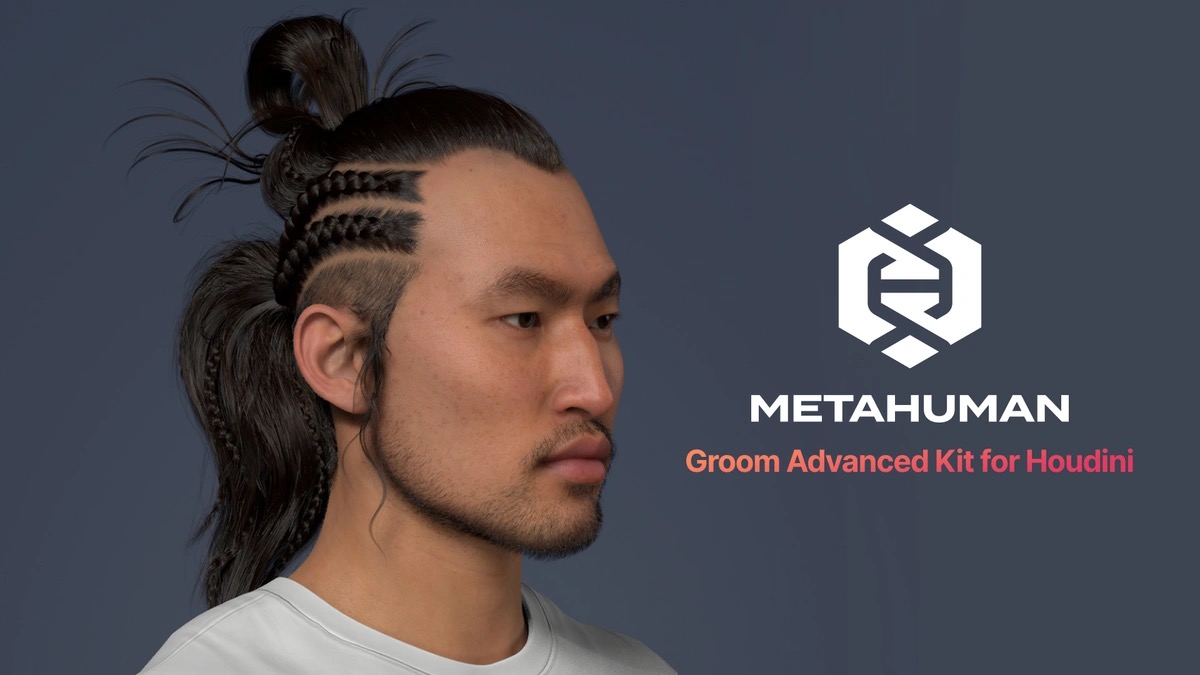
Beyond the conforming fixes, 5.7 brings serious grooming upgrades. The new Groom plugin introduces a joint-based hair animation workflow, meaning you can now art-direct hair movement using skeletal mesh animation — think hero poses like a ponytail draped over a shoulder — and blend between keyframed and physics-based simulation. The MetaHuman for Houdini plugin gets a guide-driven workflow with preset hairstyles as starting points, and a follicle generator for precise hairline control. This is the kind of hair tooling that used to be exclusive to high-budget film VFX pipelines.
Why You Should Care
If you’re building games, making films, or creating digital humans for any real-time project, MetaHuman was always the fastest path to a high-quality result. The problem was the exit doors — once you needed custom sculpting work outside the Epic tools, you were stuck. Now you’re not.
This matters especially if you’re a solo creator or a small studio that runs Blender as your primary DCC. The new FBX round-trip workflow means you can design and sculpt in Blender, bring your character into Unreal, conform it to the MetaHuman rig, and get all the benefits — full facial animation system, MetaHuman Animator facial capture, the whole shebang — without touching Maya or Houdini. That’s a massive workflow unlock.
The automation via Python and Blueprints is also quietly transformative. Studios working at scale — generating large numbers of NPCs or background characters — can now build pipeline scripts that handle the entire MetaHuman assembly process without manual intervention per character. Less time clicking, more time making.
Try It
MetaHuman and all its tools are free for commercial use if you earn under $1M/year. That’s an incredible deal for what you’re getting — a full high-fidelity digital human pipeline that would have cost a major studio tens of thousands of dollars a decade ago.
- Get MetaHuman: metahuman.com
- Release Notes (full details): MetaHuman 5.7 Release
- Body Conforming Deep Dive: Official Blog Post
- Epic Developer Community: Forum Thread
IK3D Lab Take
MetaHuman has always been technically unmatched, but it had a walled garden problem — the best features assumed you were deep in the Unreal/Maya/Houdini ecosystem. The 5.7 update is Epic acknowledging reality: most independent creators live in Blender. The FBX round-trip fix alone is the kind of change that unlocks years of blocked projects. We’ve personally seen Blender-native creators avoid MetaHuman entirely because of this limitation — that calculus just changed.
Watch this space. As Python automation + Blender workflows mature, we expect to see a surge of indie digital human content — games, shorts, virtual productions — that would have previously required a full studio pipeline. The door is open. What gets made through it is going to be interesting.