Autodesk — the company behind Maya, 3ds Max, and practically every professional 3D pipeline on the planet — just launched Wonder 3D, a generative AI model baked right into Flow Studio. Text-to-3D and image-to-3D, from the biggest name in the business. This isn’t a startup demo. This is the industry standard-bearer saying: AI 3D generation is ready for real workflows.
What Is Wonder 3D?
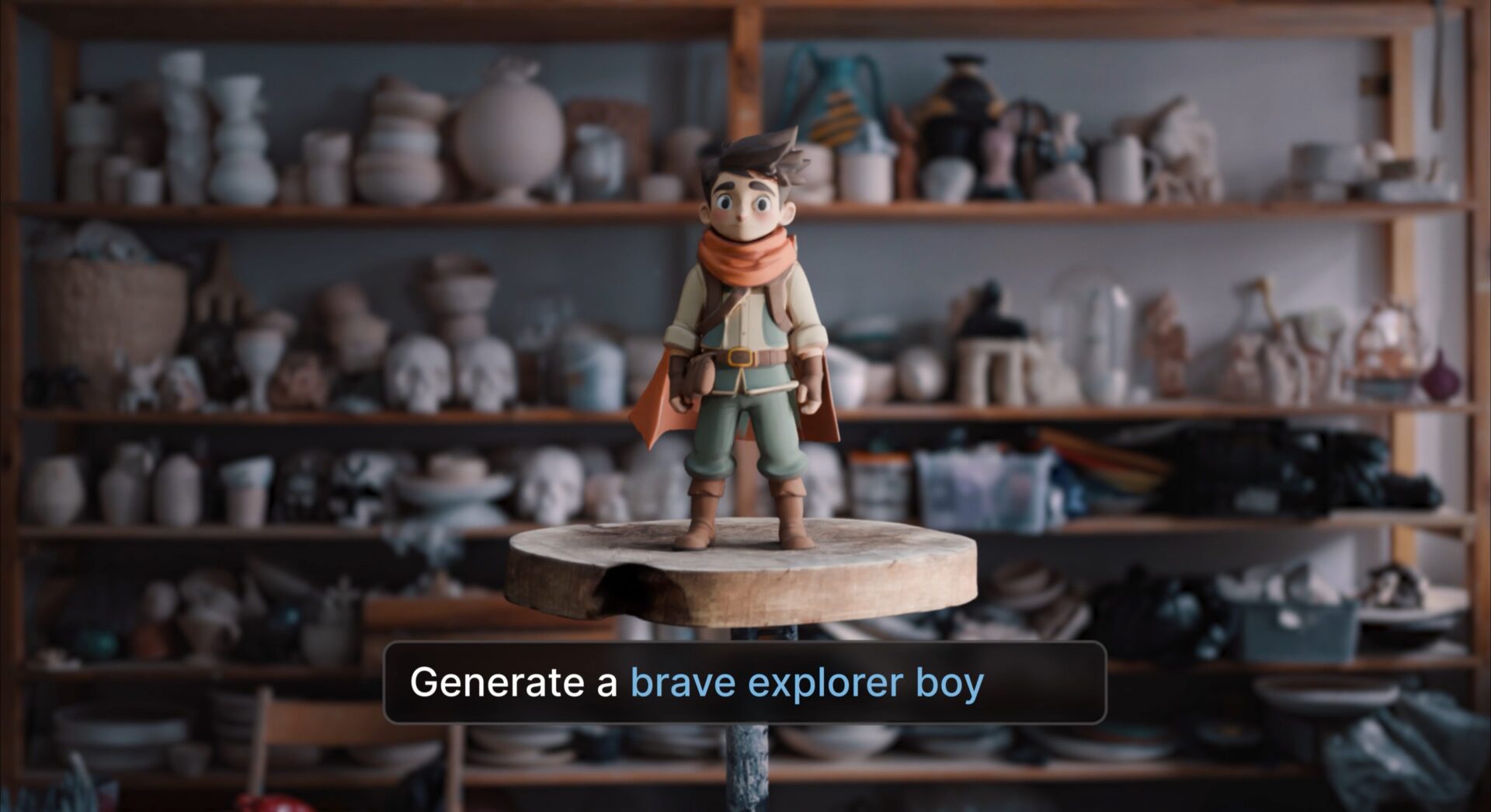
Announced on March 4, 2026, Wonder 3D is a generative AI model integrated directly into Autodesk Flow Studio (formerly Wonder Studio’s platform, acquired by Autodesk). It lets you generate fully textured, editable 3D assets from simple inputs — no sculpting, no retopology, no UV unwrapping required to get started.
Three core workflows are available:
- Text-to-3D — Describe a character, creature, or prop in plain language. Wonder 3D generates the geometry and textures.
- Image-to-3D — Feed it a sketch, concept art, or reference photo. It converts flat visuals into real 3D geometry with materials.
- Text-to-Image — Generate concept visuals first, then push them into 3D — a two-step creative pipeline within the same tool.
Each generation costs 20 credits. Free-tier users get roughly 15 generations per month. Available across all Flow Studio tiers, from Free to Enterprise.

Examples & Visuals
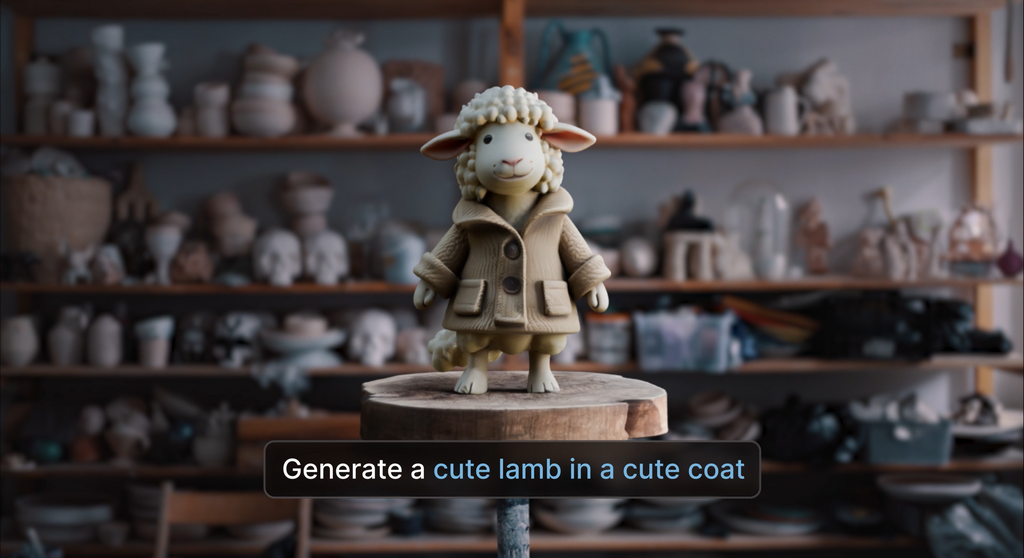
Autodesk showcased several examples including detailed character models, stylized creatures, and props — all generated from short text prompts. Here are some official examples of what Wonder 3D can produce:

Check out more official resources and demos:
- Official announcement: Autodesk Blog — Introducing Wonder 3D
- Flow Studio Asset Creator: flow.autodesk.com
- Community thread with user results: Autodesk Forums
How Good Is It, Really?
Let’s be honest about where things stand. Early reviews describe Wonder 3D’s output as low-to-mid level of detail — think rapid prototyping, not final production assets. Autodesk themselves frame it as “built for iteration, not perfection.”
The generated models export as .OBJ or .STL, which means they’re immediately usable in Blender, Maya, Cinema 4D, or your 3D printer slicer. But questions remain about clean quad topology and UV quality for rigging and animation — early demos haven’t fully addressed this.
In the current AI 3D landscape, Wonder 3D competes with:
- Rodin Gen-2 (Deemos/Hyper3D) — 10B parameter model, arguably higher geometric quality, outputs quad meshes
- Tripo AI — Fast generation, strong on organic shapes
- Meshy AI — Game-ready output with PBR textures
- World Labs Marble — Different approach: generates entire explorable 3D worlds, not individual assets
Wonder 3D isn’t the best at raw output quality. But that’s not the point.
Why You Should Care
The significance here isn’t the polygon count. It’s who is doing it and where it lives.
Autodesk owns the professional 3D pipeline. Maya, 3ds Max, Revit, Fusion — these are the tools that studios, architects, and engineers actually use in production. When Autodesk builds AI generation directly into their ecosystem, it means this technology is being fast-tracked into real production pipelines, not just Twitter demos.
This also signals a massive shift in how Autodesk sees the future of content creation. Flow Studio (born from the Wonder Dynamics acquisition) is becoming Autodesk’s AI-first creative platform. Today it’s text-to-3D. Tomorrow it could be AI rigging, AI animation, AI scene layout — all integrated into the tools professionals already depend on.
For indie developers and small studios, the free tier with ~15 monthly generations is a legitimate rapid prototyping tool. For larger studios, the Enterprise tier positions this as part of a production pipeline where AI handles the first draft and artists refine.
Try It Now
- Flow Studio (free tier available): flow.autodesk.com
- Official blog post: Introducing Wonder 3D
- CG Channel review: Autodesk adds generative AI to Flow Studio
- 3D Printing Industry coverage: Wonder 3D launch details
- 3DVF in-depth review: Possibilities and legal challenges
IK3D Lab Take
Autodesk entering AI 3D generation is the clearest sign yet that this technology is crossing from experiment to infrastructure. The output quality isn’t mind-blowing today — Rodin Gen-2 and Meshy still produce cleaner assets — but Autodesk’s integration advantage is unmatched. When AI generation lives inside the same ecosystem as Maya, Revit, and Fusion, the iteration loop from “idea” to “production-ready asset” gets dramatically shorter. The catch? The .OBJ-only export and unclear topology quality mean you’ll still need manual cleanup for anything beyond early concepting. But give this 6 months. Autodesk doesn’t do half-measures.