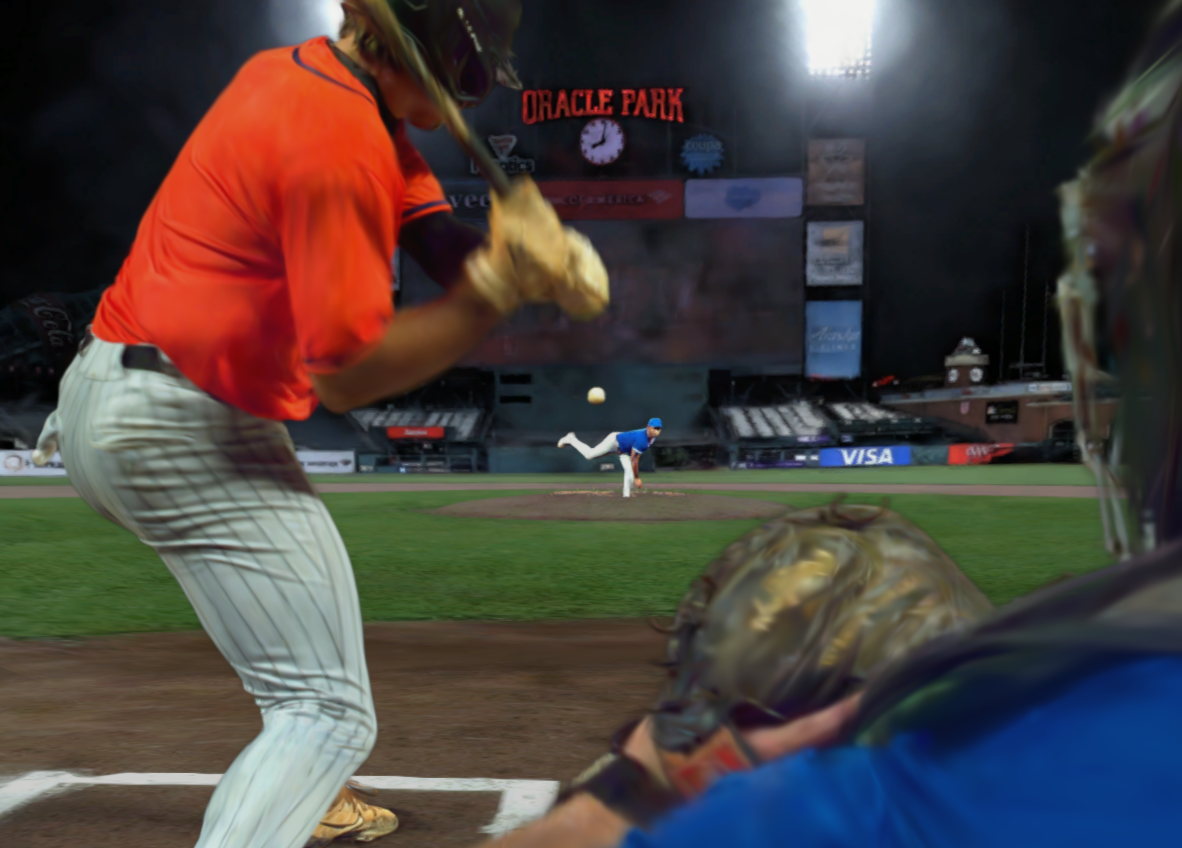
Sports broadcast has had one camera problem for decades: you can only be where the cameras are. Arcturus Studios just eliminated that constraint. Their 4D Gaussian Splatting platform reconstructs live sports events as fully navigable 3D worlds — athlete POV, impossible angles, any moment, any direction.
The Story
Arcturus Studios Holdings is a San Francisco startup born from an unusual merger: the Microsoft Mixed Reality Capture Studios business (founded by Steve Sullivan, now CEO) fused with the existing Arcturus volumetric video team. Ten people. Four Academy Awards for Technology. Backgrounds spanning ILM/Lucasfilm, Unity, Pixar, and NVIDIA. This isn’t a side project — it’s a team that’s spent a decade making volumetric capture work in the real world.
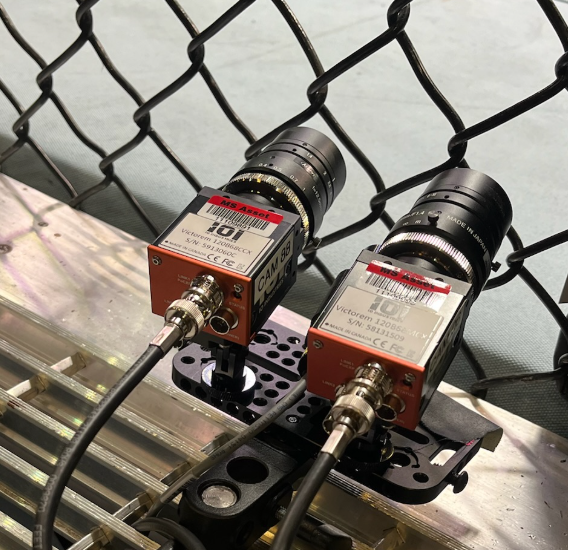
Their technology starts with a distributed array of small, synchronized sensors placed around a sports venue — think multiple camera positions covering the action from every angle simultaneously. Each sensor captures color imagery of the exact same moment in time. That’s where conventional capture ends.
What happens next is the interesting part: 4D Gaussian Splatting. For each captured moment, Arcturus estimates the flow of light through the entire captured volume and encodes it as a radiance field stored as splats. Not just space — space over time. The “4D” isn’t a marketing word; it’s the literal extension of 3D Gaussian Splatting into the temporal dimension, reconstructing how the scene looks from any point in space at any moment in the sequence.
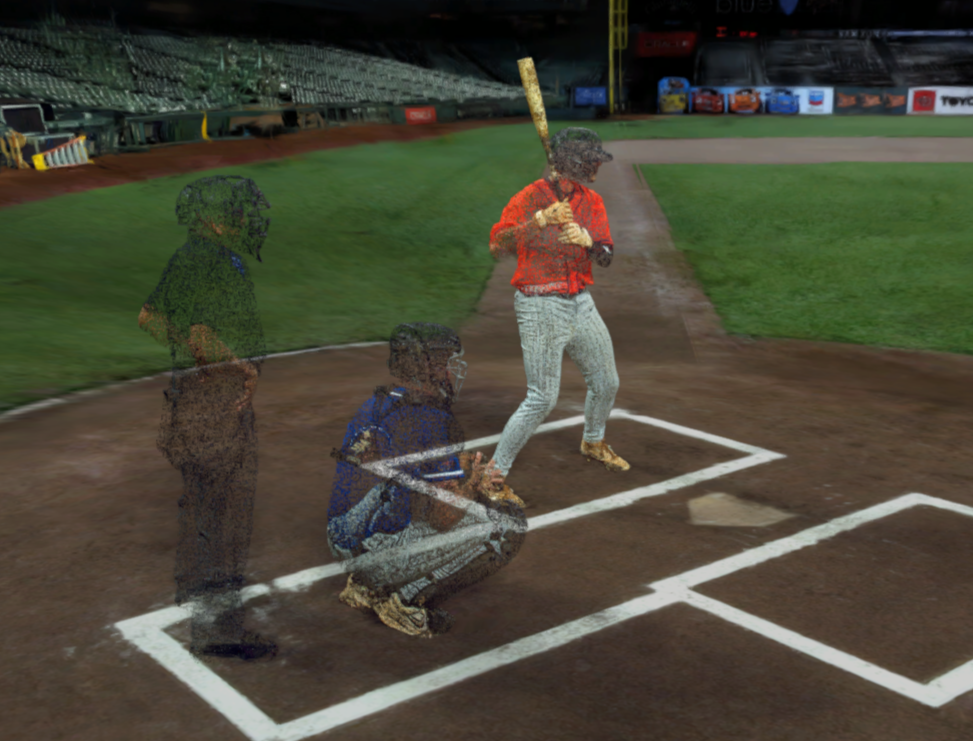
From that flowing radiance field, you can synthesize any new image, from any camera position, looking in any direction. Including positions no physical camera has ever been — including the athlete’s own point of view. They call it “the ultimate SpiderCam.”
Their first major commercial partner: Power Slap, a combat sports league. CEO Frank Lamicella summed it up directly: “Arcturus brings our fans onto the stage and into the match, right alongside the fighters and crew, even showing us their view of the action.”
In December 2025, LDV Capital led a $2.3M seed round (joined by Myelin VC, Vanderbilt University, and Harvard Business School Alumni Angels). In April 2025, they locked in a broadcast integration partnership with Ross Video’s Rocket Surgery division — putting the technology inside professional broadcast production workflows.
Why You Should Care
Here’s what makes this remarkable for anyone in the 3DGS space: Gaussian Splatting is extraordinarily sensitive to real-world conditions. Changing light, moving subjects, partial occlusions, imperfect camera calibration — any of these degrade reconstruction quality fast. Arcturus is doing this at venue scale, with crowds, dynamic arena lighting, broadcast rigs moving overhead, and dozens of sensors being jostled in real time.
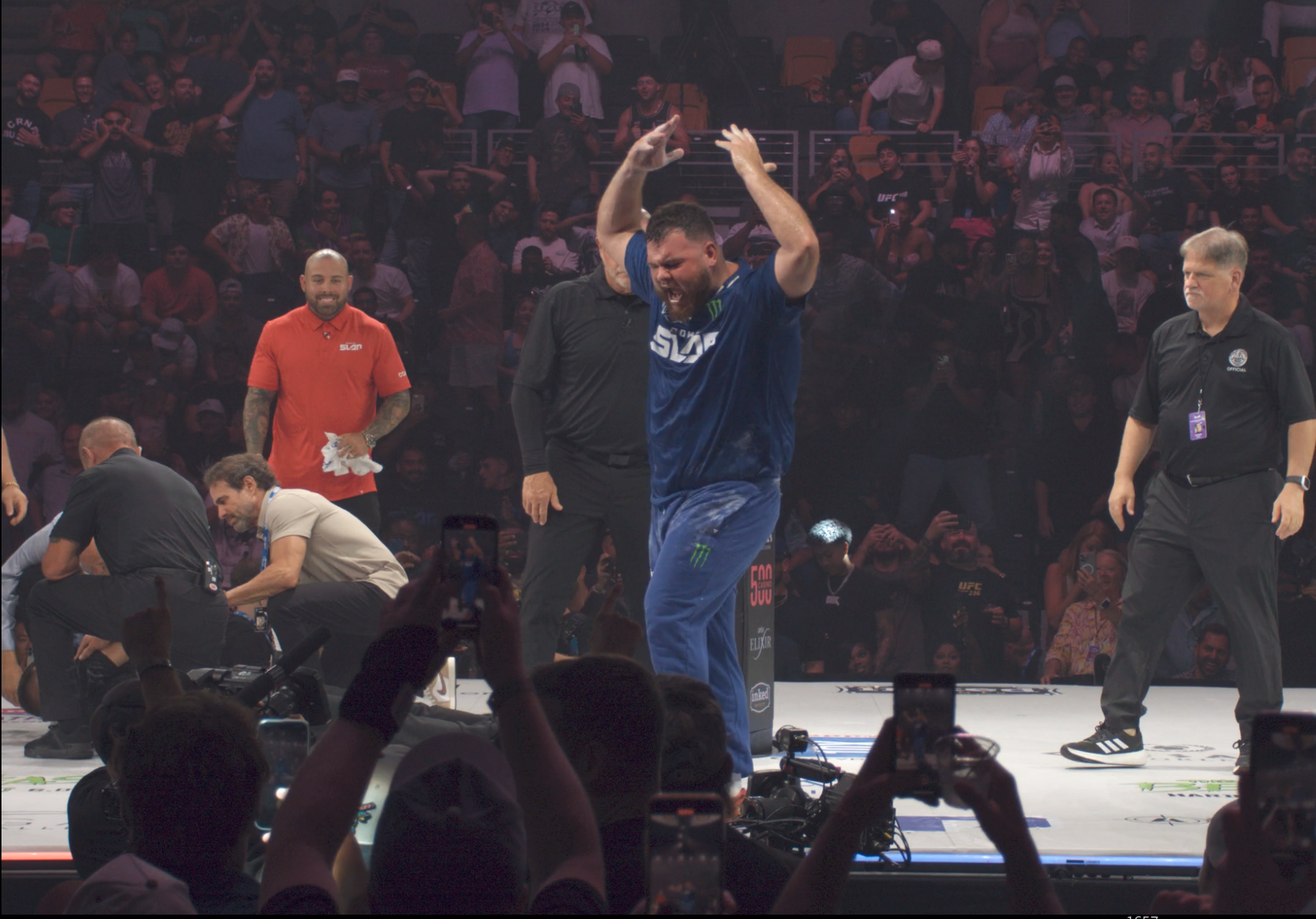
Their stated differentiator is blunt: “the only provider that can deliver broadcast quality in real-world venues where rigging is moving, lighting is changing, crowds are swarming, sensors are being jostled and occluded — with far fewer cameras than other 4D approaches.”
The output isn’t locked to VR headsets either. The platform delivers to:
- 2D broadcast — conventional TV and streaming
- Social media — sharable highlight moments with “impossible” angles
- Interactive mobile/tablet/console — navigable 3D replay on any screen
- VR/AR — full immersive presence in the scene
One capture session. Every format. That’s the business model — and it’s compelling.
Try It / Follow Them
- Website: arcturus.studio
- Technology breakdown: arcturus.studio/technology
- LDV Capital investment thesis: ldv.co/blog
- Ross Video partnership: APB+ News coverage
IK3D Lab Take
The 3D world isn’t just being generated — it’s being captured. In real-time. From real events. And delivered to any screen in any format. The gap between “we captured a 3DGS scene” and “we’re delivering it live from a sports venue to broadcast television” is enormous, and Arcturus is the first company credibly claiming to have crossed it.
This is what Gaussian Splatting looks like when it leaves the research lab and hits production scale. The team has the credentials to pull it off — and the early commercial traction to suggest they already are. Watch this one closely: the next phase is real-time live delivery during the event, not just replay. When that lands, sports broadcasting changes forever.