The Hook
A billion Gaussian splats. Streaming. In a browser tab. On your phone. With no install, no app, no plugin. On May 25, 2026, Manycore Tech open-sourced Aholo Viewer — and quietly handed the splat community the missing piece it has been hacking around for two years: a way to actually deliver the giant scenes everyone keeps capturing.
The Story
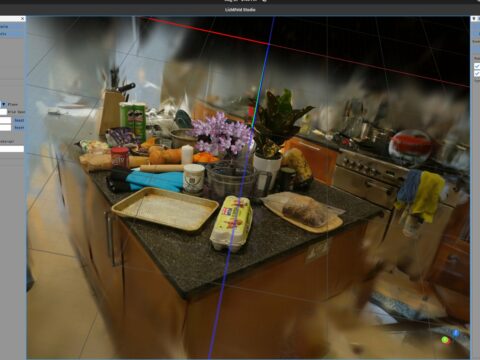
We have spent the last year on this blog watching the capture side of Gaussian splatting explode — XGRIDS scanners, Postshot, KIRI, NVIDIA’s splat stack, Photoshop smuggling splats into every designer’s toolbox. The dirty secret the whole time? Delivery. Once you reconstruct a real neighbourhood as a few hundred million splats, getting someone else to actually open it — on the device they have, without a 4 GB download — has been a nightmare of custom viewers and quality compromises.
Manycore Tech is the Hangzhou company behind Coohom and Kujiale, the interior-design platforms millions of designers use, plus the SpatialLM and SpatialGen spatial-AI models. They have a very practical reason to care about delivery: their whole business is putting 3D rooms in front of clients who are on a phone. So they built Aholo Viewer to scratch their own itch, then released it under the MIT license on GitHub.
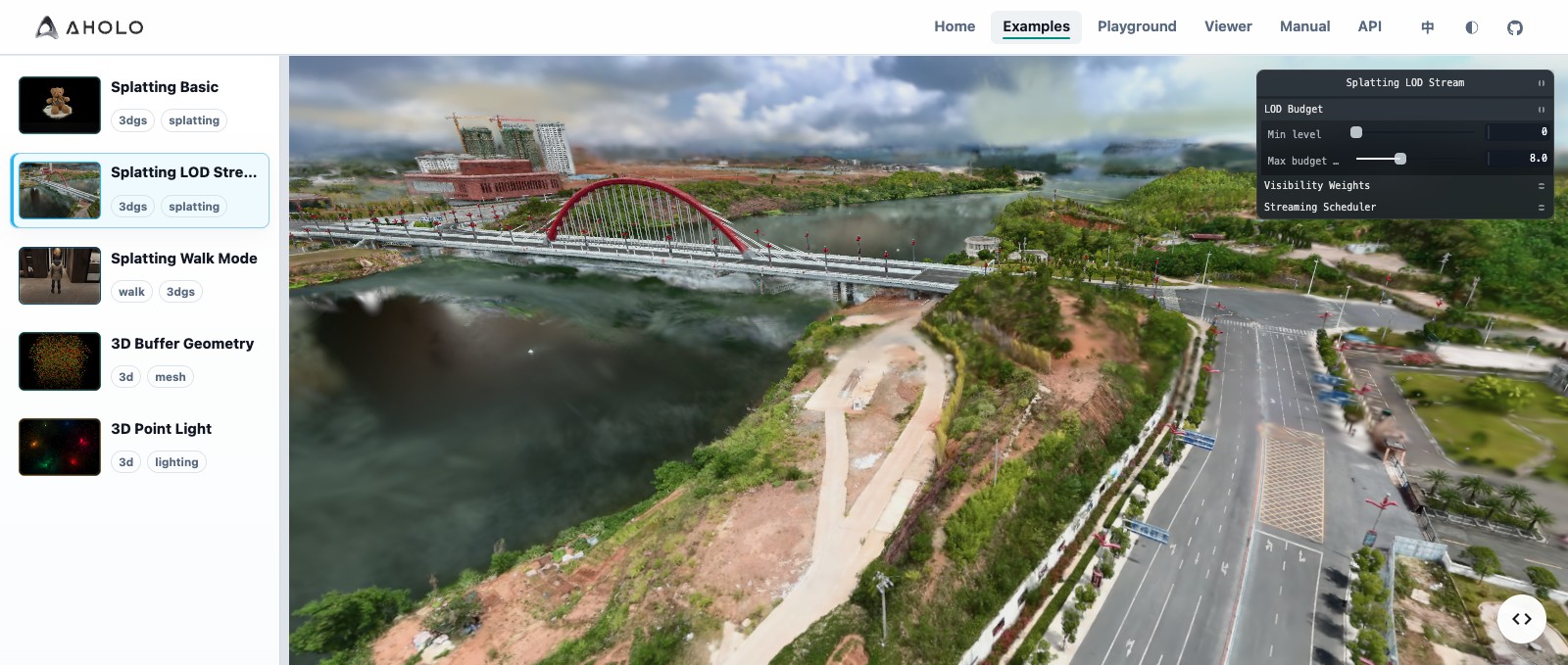
The headline number: Aholo streams scenes of up to one billion Gaussian splats — roughly 10× what comparable web viewers handle (Spark 2.0 tops out around 100 million). The trick is a chunk-level Level-of-Detail (LOD) streaming architecture, prioritised by what your camera frustum can actually see. Instead of loading the whole city, it pulls the chunks in front of you first and progressively refines them — so a city-scale scene shows a usable first frame in about 10 seconds, then sharpens as you move.
It eats the formats people actually use — PLY, SPZ, SOG, SPLAT, KSPLAT and LCC (yes, including XGRIDS’ format) — and ships three render presets: quality-first, performance-first, and extreme-performance, so the same scene degrades gracefully from a workstation down to a mid-range phone.
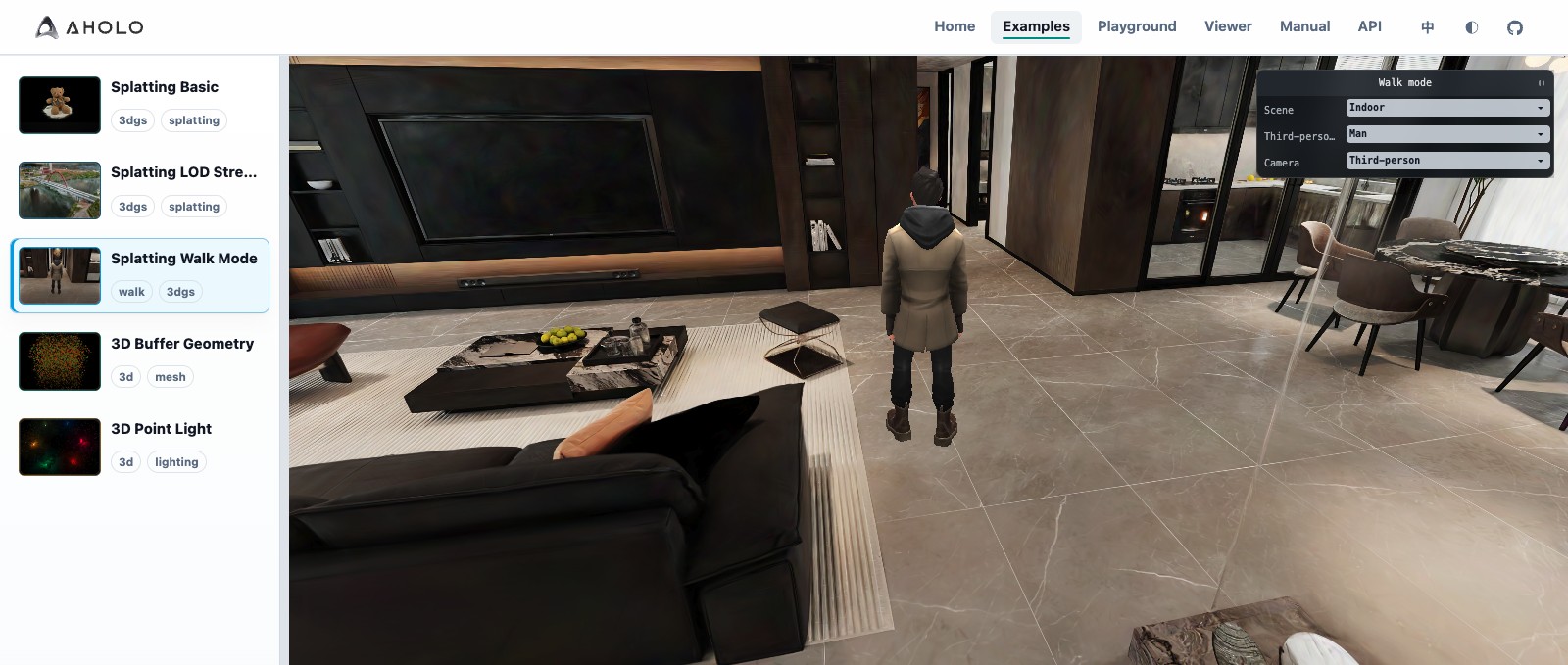
And here’s the part that made us sit up: built-in physics. Aholo converts a splat scene into a queryable voxel collider and exposes real-time ray, capsule, ground and wall queries. That means walk mode, third-person camera avoidance and area limits work out of the box — the splat stops being a pretty fog you fly through and becomes a space you can stand in. A cloud-rendering mode that composites 3DGS with high-fidelity OpenUSD meshes in the same frame is listed as coming soon.
Why You Should Care
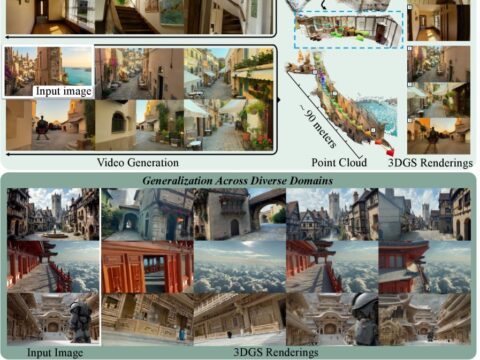
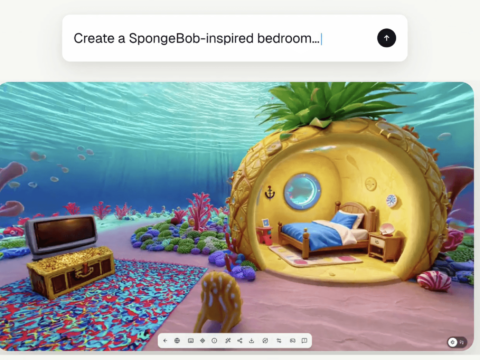
Here’s the honest framing, because we don’t do hype here: Aholo Viewer is not a generative-AI model. It doesn’t make splats — it delivers them. But that’s exactly why it matters to the AI side of this Lab. Every text-to-world and image-to-3D system we’ve covered — HunyuanWorld, Lyra, Marble, Manycore’s own SpatialGen — has the same blind spot: a model can now generate a walkable world, but how does the next person open it? Aholo is the distribution rail. It’s the <video> tag the 3D internet never had.
Manycore is explicit about the loop: accessible 3D content distribution feeds embodied-AI and robotics training data. Generate worlds with AI, deliver them with Aholo, and every walkthrough becomes interaction data for the next model. For creative technologists, that’s the whole flywheel sitting in one MIT-licensed repo — and it’s free.
Try It / Follow Them
You don’t need to clone anything to feel it. Open the live examples on a phone and on a laptop and watch the same billion-splat city stream to both:
- Live demos: aholojs.dev — try the LOD-stream city scene and the walk-mode interior.
- Source (MIT): github.com/manycoretech/aholo-viewer — TypeScript, pnpm, Node 22+. One caveat: the
splat-transformtool is proprietary (usable, not redistributable). - Demo video: Aholo Viewer on YouTube.

IK3D Lab Take
We’ve reviewed a lot of splat tools that were impressive in a demo and miserable to share. Aholo flips the priority: it’s boring infrastructure in the best possible sense — the unglamorous, load-bearing layer that lets everything else reach an audience. The fact that the company shipping it actually runs a production interior-design business at scale (and is heading for a public listing) means this isn’t a research toy that rots in six months; it has a reason to keep living.
Is “one billion splats” a marketing ceiling most of us will never hit? Sure. But 10× headroom and a phone-friendly streaming model is the difference between a splat being a file you email and a splat being a link you send. That’s the unlock. If you’re building anything that needs to show a captured or AI-generated 3D space to someone who isn’t you, clone the repo this week — and tell us what you ship with it.