For decades, animating a galloping horse was a rite of passage
For decades, animating a galloping horse was a rite of passage — the ultimate test of an animator’s craft. You needed years of experience, hours of motion capture reference, and even then the gait might feel off. Maya 2027 just made it something a machine handles in seconds. That’s the statement. Now let’s unpack what it actually means for your pipeline.
The Story
Autodesk shipped Maya 2027 on March 25–26, 2026. The most talked-about feature is an expansion of MotionMaker, their generative AI animation system. Here’s the arc of how this technology evolved:
- Maya 2026.1 (June 2025) — MotionMaker introduced with support for human bipeds and wolf-style canines
- Maya 2027 (March 2026) — Horses added, with full walk/trot/gallop gait transitions trained on real-world mocap data
The way it works is deceptively simple: you set keyframes for where a character starts and ends (or draw a path in the viewport), and MotionMaker generates all the motion in between. The output is standard Maya keyframes on joints and controls — there’s no proprietary runtime or special rendering config. It renders like any hand-keyed animation. You then refine the 20% that needs your artistic touch.
Autodesk frames this honestly: MotionMaker gets you “80% of the way there” for layout, previs, and locomotion cycles. It’s not meant to replace a character animator on hero shots — it’s meant to eliminate the week you’d spend blocking in base motion for a horse chase sequence before the real work begins.
The horse archetype supports three core gaits: walks, trots, and gallops with transitions. A ready-made horse character model ships with it. The AI models were trained on motion capture data collected specifically for this tool — not scraped from public datasets.
Why You Should Care
Horse animation has always been notorious. It’s biomechanically complex, there’s no margin for error (audiences clock bad horse motion instantly), and quality mocap hardware for animals is expensive and awkward to set up. Studios that couldn’t afford dedicated creature animators would either avoid horses entirely or use stock mocap — often with visible licensing constraints. MotionMaker changes that calculus.
But MotionMaker is just the headliner. Maya 2027 ships with a stack of quality-of-life improvements that add up to a significantly faster pipeline:
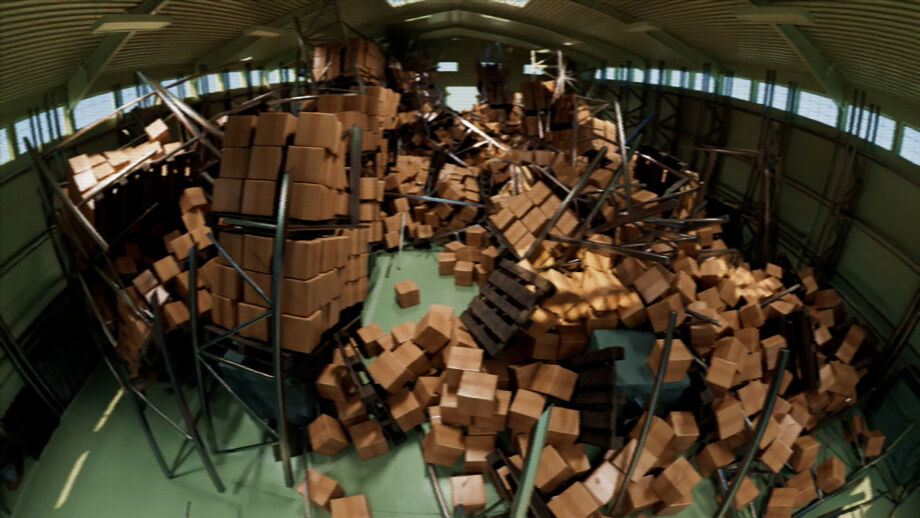
- Smart Bevel — A new bevel system that follows mesh shape instead of topology. Previously, beveling post-Boolean geometry was a pain: the tool would fight edge flow and produce ugly pinches. Smart Bevel handles uneven surfaces cleanly, non-destructively, in world units. Game changers for hard-surface modeling workflows.
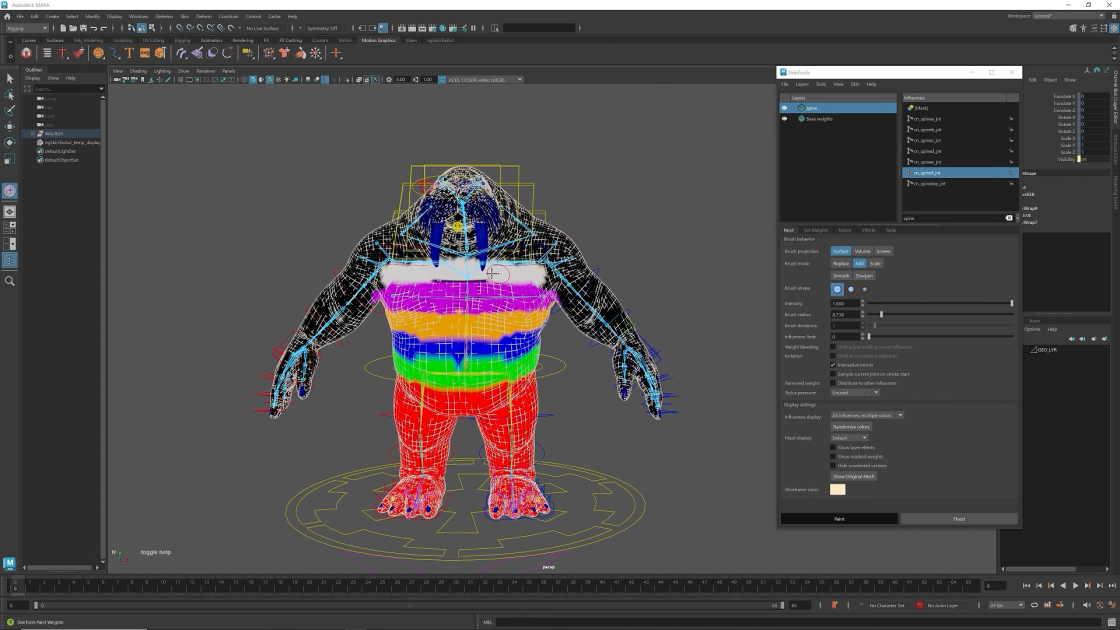
- ngSkinTools — now native — Autodesk acquired the beloved third-party ngSkinTools plugin and baked it directly into Maya 2027. If you’ve ever wrestled with plugin version mismatches on a render farm, you’ll understand why this matters. Layer-based, non-destructive skinning with proper masking and mirror support — no more tracking down the right installer for each machine.
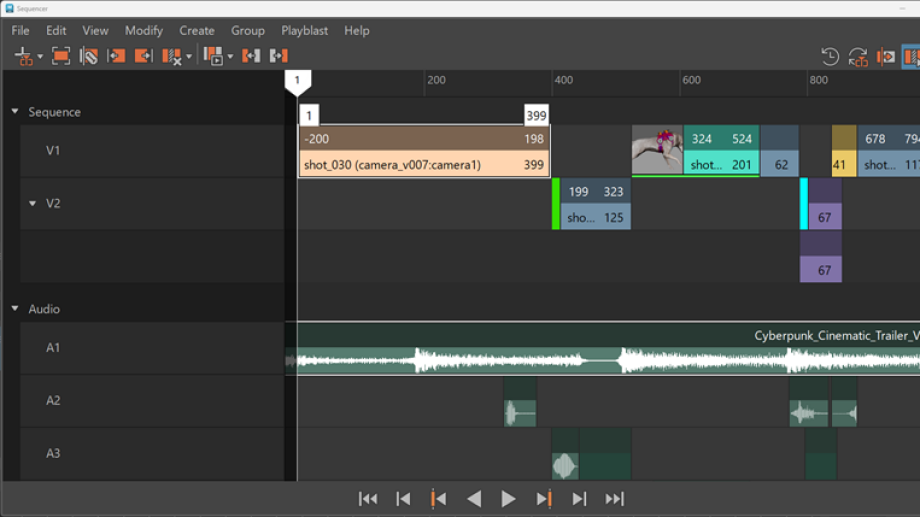
- Rebuilt Sequencer — The legacy Camera Sequencer has been fully replaced with a modern high-DPI timeline. Non-destructive multi-shot editing (trim by dragging edges), synchronized audio playblasts, color-coded shots with automatic thumbnails. Layout artists, this one’s for you.
- Bifrost 3.0 — Surface tension for liquid droplets and splashes, ocean surfaces as simulation guides, new constraint nodes for procedural destruction. Also ships with asynchronous evaluation so sims don’t lock up your viewport.
- Arnold 7.5 — New hair scattering mode, stylized line rendering, enhanced GPU workflows, bloom refinement.
- MaterialX relative paths — A small fix that removes a perennial headache: MaterialX documents now use relative file paths, so textures don’t break when projects move between machines or farm nodes.
Try It / Get It
Maya 2027 is available now through the Autodesk website. The pricing structure remains rental-only:
- Maya: $255/month or $2,010/year
- Maya Indie: $330/year (for artists earning under $100,000/year)
- Maya Creative 2027: Pay-as-you-go from $3/day — new this cycle, ideal for occasional-use scenarios. Note: Bifrost 3.0 is excluded from Creative.
Autodesk also ships the Autodesk Assistant as an experimental feature — an AI chatbot integrated directly into Maya for querying documentation. It’s clearly a support tool rather than a creative one, but it’s a sign of where the product is going: AI embedded at every layer of the workflow, not just animation generation.
IK3D Lab Take
The MotionMaker roadmap reads like a deliberate expanding radius: humans first, then dogs, now horses. The progression isn’t random — it maps to the most common non-human characters in film, games, and commercial work. What’s next? Quadruped big cats? Bipedal creatures? Stylized fantasy beasts?
What makes this compelling isn’t that AI is “replacing” animators — it’s that the tool is eliminating the lowest-value, most time-consuming part of the process: getting believable base motion into a scene. An animator’s time is better spent on performance, emotion, and the details that make a character feel alive. MotionMaker handles the biomechanical plumbing. The artistic magic stays human.
Combined with the native ngSkinTools integration (killing a long-standing pipeline friction point) and Smart Bevel’s Boolean-friendly modeling improvements, Maya 2027 is a release that quietly removes a lot of pain. It’s not as flashy as a text-to-3D model or a new image generator — but for working 3D artists in production, these are the updates that actually change your day-to-day.
Keep an eye on MotionMaker. The archetype library will grow, and when it does, the delta between “animator bottleneck” and “animator as creative director” will keep shrinking.